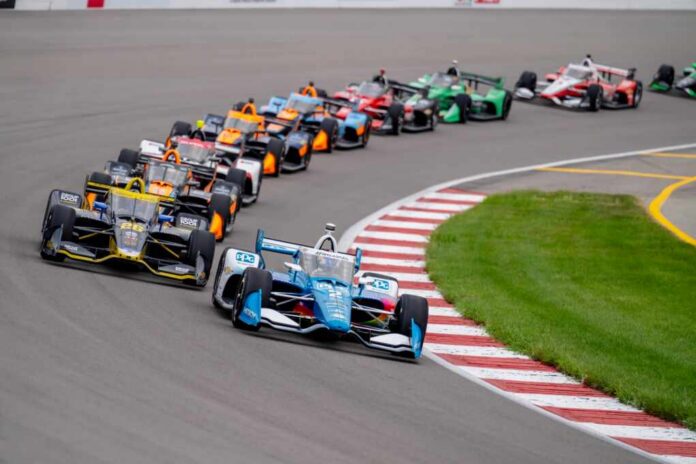
President Donald Trump has ignited a high-stakes showdown between American motorsport and the capital’s bureaucracy with an executive order staging the “Freedom 250 Grand Prix,” an IndyCar street race in Washington, D.C., slated for August 21–23, 2026. The ambitious proposal plans to loop the course around the National Mall, bringing racing near iconic federal landmarks. While the event is promoted as a free, patriotic showcase for the nation’s 250th anniversary, organizers face major hurdles, including securing route approval on federal land and navigating tight planning deadlines.
Story Highlights
- Trump signed a Jan. 30, 2026 executive order directing agencies to stage the “Freedom 250 Grand Prix” IndyCar street race in Washington, D.C., Aug. 21–23, 2026.
- The proposed course is expected to loop around the National Mall, placing racing near iconic federal sites like the Capitol, the White House, and Pennsylvania Avenue.
- Organizers say the event is planned to be free and publicly accessible, with a national broadcast deal on FOX.
- Major hurdles remain, including route approval on federal land, tight planning deadlines, and restrictions such as advertising limits around Capitol grounds.
Trump’s Executive Order Sets the Race in Motion
President Donald Trump signed an executive order on January 30, 2026, instructing federal agencies to organize an IndyCar street race in Washington, D.C., branded the “Freedom 250 Grand Prix.” The race weekend is slated for August 21–23, 2026, as part of America’s 250th anniversary celebrations. Trump framed the event as a national showcase tied to “America 250,” directing officials to move quickly from concept to a workable route and plan.
Transportation Secretary Sean Duffy and Interior Secretary Doug Burgum were identified as key administration players in pushing the concept forward, with the Interior Department’s role especially important because so much of the National Mall and surrounding landmark areas involve federal jurisdiction. The order sets an aggressive timetable: agencies are expected to designate a route within weeks, a pace that makes coordination with multiple governments and security stakeholders unavoidable from day one.
🚨🚨🚨
The Freedom 250 IndyCar race in Washington DC is going to be HISTORIC 🇺🇸🇺🇸🇺🇸@IndyCarOnFOX @Freedom250 pic.twitter.com/keEEhBMILQ
— Monica Crowley (@MonicaCrowley) January 30, 2026
A National Mall Street Circuit Brings Big Symbolism—and Real Constraints
Organizers have described a course that would put IndyCar drivers near the most recognizable symbols of American government, including Pennsylvania Avenue and areas around the Capitol and White House. That spectacle is the point: a high-profile, patriotic event that treats the capital as more than a political stage. At the same time, the setting creates constraints unlike typical street circuits, including security considerations, federal permitting, and limitations on commercial branding in sensitive areas.
IndyCar leadership and owner Roger Penske, who attended the signing, have emphasized the historic nature of bringing top-level American open-wheel racing to the nation’s capital. Reports also point out just how unusual this is for Washington: there has been no modern motor race in D.C., with references to an 1801 horse race under Thomas Jefferson used to underline how rare large-scale racing is in the district. That history raises the stakes for doing it safely and lawfully.
Who’s On the Hook: Federal Agencies, D.C. City Hall, and Congress
The executive order places the Departments of Transportation and Interior at the center of delivery, but the race cannot happen on paper alone. D.C. Mayor Muriel Bowser has publicly welcomed the plan and highlighted potential tourism and economic upside, signaling that local government is inclined to cooperate. Even with city support, federal land use rules and event security needs could force additional approvals, and some reporting suggests Congress may have a say.
Planning is also complicated by the nature of the venue. A street race requires extensive temporary infrastructure—barriers, fencing, track surface preparation, grandstands, medical staging, and controlled access points—while also minimizing disruption to residents, businesses, and federal workers. Those are the kinds of practical details that determine whether “free and open to the public” remains a workable promise or becomes a logistical bottleneck in a city that already struggles with traffic closures.
Free Admission, FOX Broadcast, and an ‘America 250’ Sports Strategy
Administration officials have promoted the event as free for the public, pairing the populist message with a major broadcast platform on FOX. That combination signals the political intent: put national celebration content in front of mainstream audiences without the usual elite gatekeeping, while making the National Mall the literal backdrop. It also fits a broader second-term pattern in which the White House has leaned into high-visibility sports events as patriotic programming for the semiquincentennial year.
Supporters argue that a marquee IndyCar weekend in D.C. could boost tourism and spotlight American industry, engineering, and competition, especially with Penske and IndyCar lending institutional weight. Skeptics, based on the same available reporting, point to uncertainties that remain unresolved: funding specifics, route finalization, and the question of how federal restrictions—like limits on advertising around Capitol grounds—will affect the standard race weekend model. The core idea is clear; the execution is the test.
What to Watch Next as the Deadline Clock Starts
The immediate next step is route designation and interagency coordination, which will determine whether the proposed National Mall concept is viable as described or requires significant revisions. The tight timeline matters because the race is set for late August 2026, leaving limited room for slow-walking decisions, bureaucratic turf fights, or last-minute political objections. If the administration can deliver permits, security plans, and local cooperation, the “Freedom 250” could become a signature public event of America 250.
If those pieces do not come together, the plan risks becoming another headline-grabbing idea that collapses under Washington’s usual dysfunction. For conservative voters who are tired of endless spending fights and government paralysis, the real story is whether federal agencies can execute a clear, patriotic public event without turning it into a costly, overregulated mess. The order has been signed; now the capital has to prove it can actually deliver.
Watch the report: Trump Signs Executive Order to Bring IndyCar to Washington DC
Sources:
- Trump orders IndyCar race on streets of DC as part of nation’s 250th celebration
- Donald Trump signs executive order confirming IndyCar race in Washington D.C.
- President Trump announces plans for IndyCar race in DC ‘Freedom 250 Grand Prix’
- Trump announces IndyCar race will come to D.C. streets for America’s 250th
- Trump wants an IndyCar street race in downtown D.C.