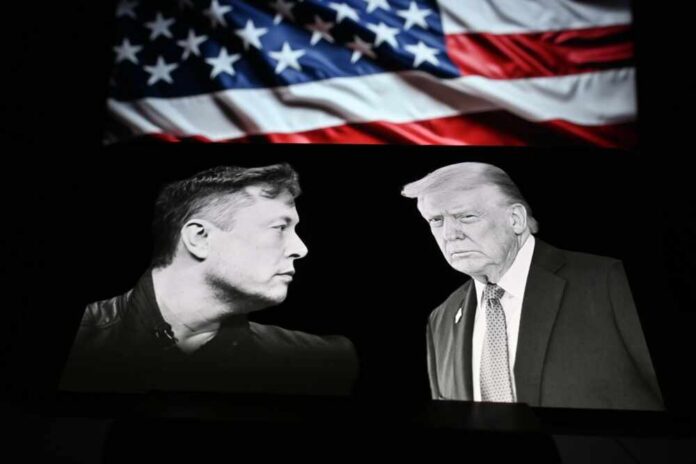
President Trump is heading to Beijing with 16 American CEOs in tow—an unusual show of “economic statecraft” that could either strengthen U.S. leverage or blur the line between national interests and corporate priorities.
Story Snapshot
- The White House says Trump will meet Xi Jinping May 14–15 in Beijing, with a delegation of 16 major U.S. corporate leaders.
- Elon Musk and Apple CEO Tim Cook are among the most prominent attendees, highlighting how central tech and supply chains are to the agenda.
- The administration is signaling plans for formal “board of investment” and “board of trade” structures to systematize U.S.-China economic engagement.
- Reported agenda topics include the Iran conflict, trade disputes, and Taiwan—issues that carry national-security consequences beyond any single business deal.
An Unprecedented CEO Delegation Meets a High-Stakes China Agenda
The White House released a list of 16 CEOs scheduled to accompany President Trump to China for a two-day summit with Chinese President Xi Jinping beginning Thursday, May 14. Reports describe the delegation as spanning technology, finance, aerospace, semiconductors, agriculture, and consumer payments—an unusually large corporate presence for a presidential trip. Cisco was reportedly listed early and later withdrew due to executive unavailability, but the trip’s overall concept remains intact.
That combination—diplomacy plus dealmaking—matters because Washington’s disputes with Beijing are no longer confined to tariffs and trade deficits. Technology restrictions, supply-chain resilience, and geopolitical flashpoints now sit alongside traditional commerce. The administration has framed the summit as a chance to pursue better market access and address imbalances, while also handling security-linked issues that can move markets quickly and alter the strategic environment for U.S. allies.
Why Musk, Cook, and the Tech-Supply Chain Cohort Are Central
The delegation’s most watched names, including Tesla’s Elon Musk and Apple’s Tim Cook, reflect a basic reality: major U.S. technology firms and manufacturers remain deeply exposed to China through sales, production, and supplier networks. Reports also indicate representation connected to semiconductors and advanced technology, areas where U.S.-China competition has intensified for years. Any commitments that affect data, components, or production rules could ripple through prices, availability, and American competitiveness.
From a conservative, limited-government perspective, bringing top executives into the room can be read two ways. On one hand, CEOs understand bottlenecks and can identify practical terms that government negotiators might miss. On the other hand, the bigger the corporate footprint in diplomatic negotiations, the more important transparency and guardrails become—especially when topics overlap with national security.
“Boards of Trade” and “Boards of Investment”: What Structure Signals
One of the clearest policy signals is the administration’s interest in creating formal “board of investment” and “board of trade” frameworks. If implemented, those bodies could turn what is often an ad hoc, crisis-driven relationship into something more routinized, with standing channels for business and government to communicate. Supporters may argue that predictability lowers risk and stabilizes supply chains; critics may worry it entrenches a permanent bureaucracy.
No explanation on how those boards would be staffed, whether Congress would have a role, or how conflicts between corporate incentives and U.S. strategic objectives would be resolved. That uncertainty is why the summit is likely to trigger mixed reactions across the political spectrum. Americans who already suspect the federal government caters to powerful insiders will want to see whether any new structure serves workers and national security—or mainly benefits the most connected companies.
What to Watch After Beijing: Markets, Oversight, and National Interests
In the short term, markets typically react to even small shifts in U.S.-China signaling, especially for firms with heavy China exposure and for sectors like aerospace, chips, finance, and agriculture. The bigger test is accountability: what outcomes are announced, how they are verified, and whether the administration can show tangible benefits for American producers and consumers rather than headline-friendly promises.
Trump to bring Elon Musk, other top CEOs to China for high-stakes Xi summithttps://t.co/5gdU0KqEvG
— Human Events (@HumanEvents) May 11, 2026
Politically, Democrats are likely to criticize the optics of corporate leaders embedded in foreign-policy talks, while many Republicans will focus on whether Trump can extract better terms and reduce strategic risk without inviting further dependence. For voters across the aisle who believe “the system” serves elites first, the summit’s legitimacy will hinge on clarity: which rules change, who wins, who pays, and whether any arrangement protects intellectual property, jobs, and U.S. freedom of action.
Sources:
Elon Musk, Tim Cook to join Trump on China trip