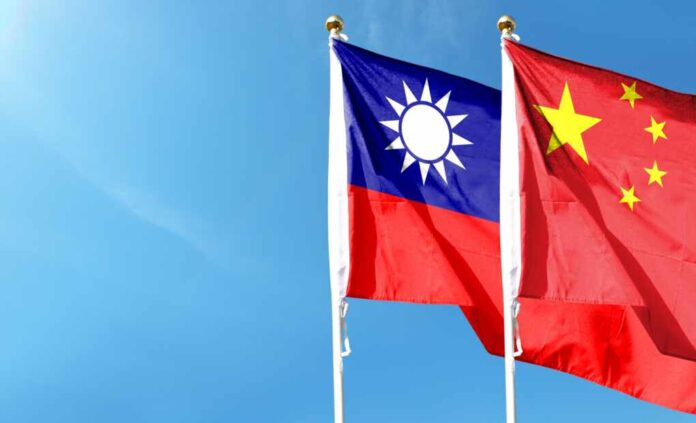
China’s latest military threats against Taiwan raise concerns over regional stability, alarming international observers.
Story Snapshot
- Chinese Defense Minister Dong Jun warns of potential military action against Taiwan.
- China’s military maneuvers near Taiwan have intensified, raising regional tensions.
- The U.S. and allies continue to support Taiwan’s defense capabilities.
- China positions itself as a stabilizing force despite aggressive rhetoric.
Escalating Military Rhetoric from China
On September 18, 2025, Chinese Defense Minister Dong Jun delivered a stern warning during his speech at the Xiangshan Forum in Beijing. He reaffirmed China’s readiness to use military force to prevent Taiwanese independence. This statement is part of a broader pattern of increased military maneuvers and rhetoric from China, which has been conducting regular exercises near Taiwan, showcasing its advanced weaponry. The global community watches closely as tensions rise in the Taiwan Strait.
The timing of Dong’s speech, coinciding with a major international security forum, amplifies its diplomatic impact. China’s dual messaging—advocating for peace while threatening force—has been a consistent theme in its approach to Taiwan. This approach aims to deter foreign intervention, particularly from the United States, which has been a vocal supporter of Taiwan’s defense and autonomy.
🚨Update: Chinese State TV declares that China will reclaim Taiwan! Prepares Chinese public for coming war and possible political sanctions and isolation!!pic.twitter.com/q1tfLLv0tK
— US Homeland Security News (@defense_civil25) May 24, 2024
Historical Context and Current Dynamics
Taiwan, governed separately from mainland China since 1949, operates as a de facto independent democracy. However, China claims Taiwan as a breakaway province and has never ruled out the use of force to achieve reunification. The U.S. supports Taiwan under the Taiwan Relations Act, which commits to aiding Taiwan’s self-defense without formally recognizing its sovereignty. This delicate balance is further strained by China’s recent military advancements and rhetoric.
China’s actions are part of a larger strategy to assert regional dominance while framing itself as a stabilizing force. Despite calls for peace, the military posturing and modernization efforts indicate a readiness to escalate tensions if deemed necessary. The international community, particularly neighboring countries and Western allies, remains cautious of China’s intentions and the potential for a regional arms race.
Implications for Regional and Global Stability
The short-term implications of China’s stance include heightened tensions and the risk of miscalculation in the Taiwan Strait. Long-term, this could lead to an arms race, shifting alliances, and eroded dialogue across the Strait. Economic impacts are also significant, with potential disruptions to global supply chains, particularly in the semiconductor industry, as Taiwan is a key player in this sector.
Regional neighbors such as Japan and South Korea are closely monitoring the situation to prevent spillover effects. The U.S. and allies must navigate a complex geopolitical landscape, balancing support for Taiwan while avoiding direct confrontation. The global markets are sensitive to instability in East Asia, with increased defense spending and diplomatic efforts required to maintain peace and stability.
Watch the report: China to Attack Taiwan Soon? Defence Min issues Big Threat | Warns U.S against Military Interference
Sources:
China’s defence minister urges greater unity to avoid ‘law of the jungle’ | Reuters