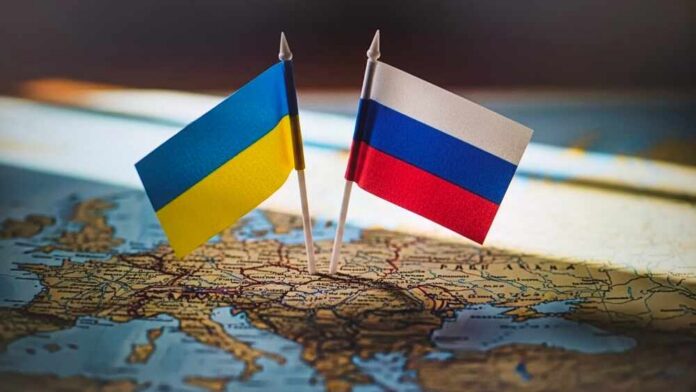
Russian President Vladimir Putin has publicly opened the door to a peace deal with Ukraine—but only if the terms meet Moscow’s conditions and the right people sign the documents.
Story Snapshot
- Putin says Russia is not ruling out a peace settlement with Ukraine, but insists it must be signed by “legitimate representatives” under Ukraine’s constitution, raising questions about President Volodymyr Zelenskyy’s authority.
- Analysts note that Putin’s offer is conditional, tied to Ukraine’s neutrality, no NATO membership, disarmament, and recognition of Russian claims over occupied territories.
- Western and Ukrainian officials remain skeptical, arguing that Russia has repeatedly rejected key elements of peace proposals and has not shown a genuine willingness to end the war.
- Despite the rhetoric of openness, there is no detailed Russian peace text, no concrete de-escalation steps, and no clear third-party verification mechanism, which fuels doubts about Moscow’s sincerity.
- The dispute reflects a broader pattern in war diplomacy: leaders signal conditional openness to peace while setting preconditions that preserve leverage, shift blame, or test the other side’s legitimacy.
Putin’s Conditional Peace Offer
Russian President Vladimir Putin has stated that Russia does not rule out a peace deal with Ukraine but emphasized that any agreement must meet Moscow’s conditions and be signed by “legitimate representatives” under Ukraine’s constitution. Putin’s remarks, delivered in a televised address, suggest that he is willing to negotiate but insists on legal and political preconditions that align with Russia’s long-standing demands. [3] He argued that President Volodymyr Zelenskyy’s legitimacy should be reviewed by lawyers, implying that Ukraine’s leadership may not be the proper party to sign a peace agreement. [3] This framing allows Putin to present Russia as open to dialogue while simultaneously questioning the authority of Ukraine’s current leadership.
The conditions Putin has outlined include Ukraine’s neutrality, a permanent bar on NATO membership, limits on Ukraine’s military capabilities, and recognition of Russia’s claims over Crimea and parts of the Donbas. [1][4] These demands mirror broader Russian positions articulated in previous negotiations, which analysts describe as incompatible with Ukrainian sovereignty. Western and Ukrainian officials argue that such terms would effectively subordinate Ukraine to Russian influence and undermine its independence. [2] Despite this, Putin has suggested that Russia could “find the people who would sign the relevant documents,” indicating that Moscow is not categorically rejecting negotiations but is instead seeking alternative Ukrainian signatories. [3]
Putin’s public statements have been framed by Russian state media as a sign of flexibility, but independent analysts caution that the offer remains highly conditional and lacks concrete details. [5] There is no formal Russian peace text, no detailed ceasefire plan, and no clear verification mechanism, which makes it difficult to assess the proposal as anything more than a rhetorical opening. [4] Moreover, the absence of unilateral Russian concessions or de-escalatory steps on the battlefield further undermines the perception of sincerity. [2] As a result, many observers interpret Putin’s remarks as a tactical maneuver designed to shift blame for the war’s continuation onto Ukraine while preserving Moscow’s leverage.
Ukraine’s Response and Western Skepticism
Ukrainian President Volodymyr Zelenskyy has publicly proposed direct peace talks with Putin, signaling that Kyiv is not rejecting negotiations in principle. [1][2] In an open letter, Zelenskyy invited Putin to engage in direct dialogue, emphasizing that any peace settlement must preserve Ukrainian sovereignty and be acceptable to Kyiv. [1][2] Ukrainian officials have consistently maintained that Ukraine will keep fighting unless the terms of a peace deal are compatible with its territorial integrity and security. [2] Ukrainian Ambassador Olga Stefanishyna has stated that there has never been a “real intention on the aggressor side” to negotiate sincerely, reflecting widespread skepticism about Russia’s motives. [2]
Western governments and think tanks have echoed this skepticism, arguing that Russia cannot accept a peace deal that secures Ukrainian statehood. Analysts point out that Moscow’s demands—neutrality, demilitarization, and recognition of occupied territories—are incompatible with Ukraine’s sovereignty and with the principles of European security. [4] The Atlantic Council and other policy institutes have documented Russia’s repeated rejections of key elements of peace proposals, including Western security guarantees and Ukrainian territorial integrity. As a result, many Western officials view Putin’s latest overture as a continuation of Russia’s maximalist negotiating stance rather than a genuine shift toward compromise.
Despite the skepticism, there is evidence that U.S., European, and Ukrainian officials are actively drafting or revising peace frameworks, suggesting that the negotiation channel remains open. [2][4] The United States has reportedly prepared an updated peace proposal that includes security guarantees for Ukraine, while Kyiv has agreed in principle to certain elements of a deal, leaving only “minor details” to be settled. [2][4] However, Russia has not yet accepted these frameworks, and the absence of a detailed Russian counterproposal makes it difficult to gauge the prospects for a breakthrough. [4] The ongoing stalemate reflects the broader challenge of negotiating an end to a war in which both sides view their core demands as non-negotiable.
The Diplomatic Pattern of Conditional Openness
The Russia–Ukraine peace talks fit a broader pattern in war diplomacy: leaders often signal conditional openness to peace while setting preconditions that preserve leverage, shift blame, or test the other side’s legitimacy. [1][3] In this case, Putin’s emphasis on “legitimate representatives” and his legalistic framing of Zelenskyy’s authority are designed to complicate the negotiation process and undermine Ukraine’s position. [3] At the same time, Ukraine’s insistence on direct leader-to-leader talks and its refusal to accept terms that compromise sovereignty reflect a parallel strategy of maintaining leverage. [1][2] This dynamic creates a situation in which both sides appear willing to talk but are unwilling to make the concessions necessary for a settlement.
Historically, such conditional offers often serve as signaling devices rather than near-term settlement texts, especially when there is no clear military stalemate or credible third-party enforcement mechanism. [1][3] In the Russia–Ukraine conflict, the absence of a detailed Russian peace text, the lack of de-escalatory steps on the battlefield, and the absence of a clear verification framework all suggest that Moscow’s offer is more about shaping the narrative than about achieving a concrete agreement. [4] At the same time, Ukraine’s continued resistance and Western support indicate that Kyiv is not willing to accept a deal that sacrifices its sovereignty or territorial integrity. [2] As a result, the war is likely to persist until one side achieves a decisive military advantage or until external pressures—such as economic sanctions, domestic unrest, or international mediation—force a shift in positions.
#WATCH | Delhi | On Ukraine President Volodymyr Zelenskyy’s open letter to Russian president Vladimir Putin, Rajya Sabha MP Harsh Vardhan Shringla says, “India’s position has been clear that we do not believe that this is an era of war. We want to see peace based on diplomacy and… pic.twitter.com/qH4b9I8M5W
— ANI (@ANI) June 5, 2026
For ordinary Ukrainians, Russians, and Americans, the ongoing stalemate underscores a broader frustration with leaders who seem more focused on political survival and strategic advantage than on ending the bloodshed. [1][3] Both conservatives and liberals in the United States have expressed concern that the federal government and its allies are failing to resolve the crisis in a way that protects American interests and promotes global stability. [1][3] The Russia–Ukraine war has become a symbol of a larger problem: a world in which powerful elites appear to prioritize their own agendas over the well-being of ordinary citizens. [1][3] As the conflict drags on, the question is not whether Putin is open to peace, but whether any side is willing to make the difficult compromises necessary to achieve it.
Sources:
[1] YouTube – Russia open to peace deal with Ukraine if terms are met: Putin
[2] Web – Negotiation News – Cambridge Initiative on Peace Settlements |
[3] Web – Ukraine agrees to peace proposal, with only “minor details” to settle …
[4] Web – Putin cannot accept any peace deal that secures Ukrainian statehood
[5] Web – The Unfinished Plan for Peace in Ukraine: Provision by Provision