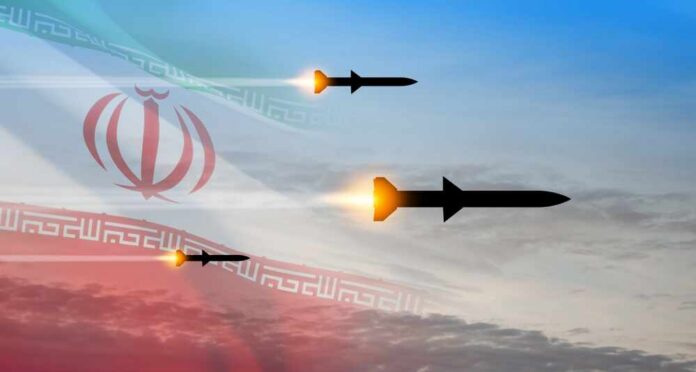
Even after weeks of U.S.–Israeli strikes, Iran’s ruling mullahs still hold enough missiles to threaten our troops, our allies, and global oil routes.
Story Snapshot
- U.S. intelligence and open sources say Iran has lost many missiles and launchers, but still keeps a large, dangerous arsenal.
- Reports indicate Iran may still hold roughly 70% of its prewar missile stockpile and most underground sites, keeping its threat alive.
- Iran’s missile industry is built to quickly rebuild launchers and spread them out, making the regime hard to disarm for good.
- Heavy U.S. interceptor use against Iran’s barrages exposes how years of globalist underinvestment strained our defenses.
Iran’s Missile Arsenal: Hurt, But Still Able To Hit Back
For many Americans, it is frustrating to hear Washington talk about “decimating” Iran’s missile forces while the same radicals in Tehran keep firing and threatening our people. Intelligence shared with Congress and the media shows a mixed picture. Some U.S. and Israeli assessments say coordinated strikes wiped out roughly one‑third to one‑half of Iran’s ballistic missiles and about half of its launchers, sharply cutting its rate of fire.[1] That is real progress, but it is not the full story. Other briefings leaked to reporters say Iran still holds roughly 70 percent of its prewar missile stockpile and about 70 percent of its mobile launchers, along with access to most underground complexes.[5][12] In plain terms, the mullahs took a hard punch, but they kept enough missiles and launch sites hidden, dispersed, or dug back out to keep shooting and to keep every American base and tanker in the region on edge.
This is why U.S. commanders describe Iran’s remaining capability as a “lingering launch” threat rather than a broken one.[7] Before this round of war, open sources and Israeli intelligence put Iran’s total ballistic missile inventory in the thousands, with well over 3,000 missiles of different ranges.[3][4] One Israeli assessment during an earlier campaign said strikes had reduced Iran from about 3,000 missiles to roughly 2,000, still enough to hit bases and infrastructure across the Middle East.[8] Today’s estimates after the latest conflict fall in the same broad range. Some outside analysts argue Iran may have lost around a third of its arsenal, but warn that its remaining stockpile and production base keep it “a significant conventional threat.”[1][4] For a regime that openly calls for “Death to America,” even a reduced arsenal in the low thousands is more than enough to cause chaos if our guard drops or if our leaders misjudge the threat.
Launchers, Tunnels, And A Missile Industry Built For Survival
For missile forces, launchers matter almost as much as the missiles themselves. Israeli and U.S. strikes have focused on Iran’s mobile launch trucks, storage depots, and the infamous “missile cities” carved into mountains.[7] Israeli officials have claimed in past fights that they neutralized more than half of Tehran’s launchers, with later estimates putting two‑thirds of launchers out of action during the Twelve‑Day War.[2] Yet experience shows Iran’s launcher network is designed to bend, not break. A detailed Marine Corps University study of Iran’s missile program found that despite losing many launchers, Iran’s broader production sites, dispersed storage, underground complexes, and mobile deployment tactics stayed active and even accelerated after the 2025 conflict.[2][6] Iranian engineers use low‑cost, locally built transporter‑erector‑launchers and simple platforms that can be rebuilt or replaced faster than Western planners once assumed. Regional reporting after the latest ceasefire describes Iran’s Revolutionary Guard publicly showing off missiles again, talking about “restoring launch platforms,” and doing heavy maintenance work in tunnels and storage sites.[14][15] Experts caution that these displays do not prove massive new production, but they do show a regime working hard to reopen tunnels, repair entrances, and redistribute what it has left.[14] For U.S. forces and our allies, that means the job is not finished when the bombing pauses. The Trump administration’s Pentagon now has to plan for an enemy that can hide, dig out, and re‑field launchers even as we keep pressure on the regime.
This ability to bounce back from strikes ties into Iran’s overall doctrine. Research on Tehran’s “forward defense” strategy notes that the regime has spent decades building the region’s largest mix of short‑ and medium‑range ballistic missiles, land‑attack cruise missiles, and drones as its main tool to offset U.S. airpower and sanctions.[5][8] Analysts say Iran’s industrial base continues to turn out solid‑fuel missiles like the Fateh and Zolfaghar families, which are easier to hide, move, and fire on short notice.[6] Western experts and the International Atomic Energy Agency have also tracked how Iran pushed its uranium enrichment closer to weapons‑grade and spread nuclear‑related work across more than a dozen sites.[8] That combination—large missile forces plus nuclear know‑how—is exactly what the old Obama‑era nuclear deal failed to stop, and why many conservatives backed President Trump when he killed that agreement. Now, with Trump back in the White House, his team faces the long‑term problem that years of weak policy allowed Iran to build hardened tunnels, redundant launchers, and a missile industry that cannot be dismantled in a single campaign, no matter how strong.
Strain On U.S. Defenses And What It Means For American Security
While Iran digs out missiles, Americans are right to ask: what shape are our own stockpiles in after shooting down wave after wave of rockets and drones? Studies from think tanks like the Center for Strategic and International Studies warn that heavy use of Tomahawk cruise missiles and high‑end air defense interceptors against Iran has cut into key inventories.[6][7][20] One analysis says the United States may need three to five years to rebuild stocks of Patriot and Terminal High Altitude Area Defense interceptors and long‑range cruise missiles that were heavily used in this war.[2][20][26] Other research looking at Navy missile use in the Red Sea and in defense of Israel found double‑digit percentage drops in some interceptor types since 2023, including about a one‑third reduction in certain long‑range Standard Missile defenses.[3][21] Commanders like General Dan Caine and other senior officers still insist, under President Trump, that “we have enough for this conflict” and can sustain air‑to‑ground operations “almost indefinitely.”[5][22][25] The concern for many in the national security community is not whether we can finish the fight with Iran—it is whether depleted magazines today could weaken deterrence against a major power tomorrow, such as China. For conservatives who have long warned about reckless spending on everything but core defense and border security, this is a stark reminder: Washington found trillions for woke programs and green boondoggles, yet allowed critical munitions lines to run “just in time.” The result is that as Iran’s theocrats keep enough missiles to threaten ships and bases, America now has to race to expand missile production on a true wartime footing.[6][7][20] That is exactly the kind of serious, constitutional priority—strong defense, secure borders, and energy independence—that many readers expect from this Trump term and beyond.
The bottom line for U.S. families watching this from home is simple. Iran’s missile power is not “gone.” It is hurt, but it is still there, tucked into mountains, tunnels, and mobile launchers, pointed at our troops, our partners, and the sea lanes that keep gas and food prices stable.[1][4][7][11][12] That reality should push our leaders to stay honest about the threat, reject wishful thinking, and focus on what the Constitution actually charges them to do: protect America with real strength, not press releases.
Sources:
[1] Web – MULLAHS KEEP MISSILES
[2] Web – How many long-range ballistic missiles does Iran have left? – Reddit
[3] Web – [PDF] Iranian Ballistic Missile Estimates | JINSA
[5] Web – Table of Iran’s Missile Arsenal | Iran Watch
[6] Web – U.S. Intelligence Shows Iran Retains Substantial Missile Capabilities
[7] Web – Last Rounds? Status of Key Munitions at the Iran War Ceasefire – CSIS
[8] Web – Analysis: Why Iran’s ballistic missile launches are declining
[11] Web – Iran Arsenal Tracker — Every Weapon System in Iran’s Military
[12] Web – Iran retains access to majority of missile launch sites, US …
[14] Web – Exclusive: U.S. can only confirm about a third of Iran’s missile …
[15] Web – Iran’s Missiles After the Ceasefire – الحرة
[20] Web – [NYT] U.S. Intelligence Shows Iran Retains Substantial Missile …
[21] Web – Iran Conflict Drains Critical US Missile Stockpiles, New Report …
[22] Web – US missile depletion from Houthi, Israel conflicts may shock you
[26] YouTube – War in Iran is Chewing Through American Missile Stockpiles