Robert F. Kennedy Jr. is reshaping HHS in ways that could permanently change how Washington regulates medicine, manages its workforce, and decides what “public health” means.
Story Snapshot
- Kennedy has moved to cut HHS staffing by roughly 20%, a major restructuring step with real-world implications for program capacity and oversight.
- HHS has reconstituted federal vaccine advisory panels with allies and vaccine skeptics, signaling a shift in how vaccine policy guidance may be formed.
- The administration is framing its health priorities under the “Make America Healthy Again” (MAHA) banner, positioning chronic disease as a central focus.
- Kennedy has defended the administration’s funding priorities in testimony to Congress, placing budget and staffing decisions at the center of political conflict.
Kennedy’s HHS Overhaul Puts Bureaucracy on Notice
Secretary Robert F. Kennedy Jr. has used his new role to pursue structural changes at the Department of Health and Human Services, including a reported 20% workforce reduction. Supporters see that as a long-overdue check on a federal health bureaucracy that keeps expanding regardless of results. Critics argue it risks hollowing out capacity. The key fact is the direction: the administration is choosing management reform and consolidation over growth.
That staffing push matters because HHS is not a single program; it is the hub for major agencies and grant pipelines that touch almost every American family. A smaller workforce can mean fewer layers of review, faster decisions, and less internal resistance to presidential priorities. It can also mean less institutional memory and fewer personnel to monitor compliance, contracts, and research. The public impact will depend on which offices lose staff and how responsibilities are reassigned.
Vaccine Advisory Panels Become a New Flashpoint
Kennedy has also moved to reconstitute federal vaccine advisory panels, adding allies and skeptics who are expected to press for tougher scrutiny. For voters who believe public health authorities became too centralized and too dismissive during COVID-era policymaking, that change signals a challenge to technocratic consensus. For voters who prioritize continuity and deference to established institutions, it raises fears of politicization. What’s clear is that advisory structures are being treated as policy levers.
Because advisory panels shape recommendations that influence school requirements, insurance coverage norms, and clinical practice, even “advisory” changes can cascade into nationwide effects. The groundwork is being laid to revisit parts of the childhood vaccine schedule, though the specific policy endpoints are not fully spelled out. Until formal rulemaking or updated federal guidance is published, the most measurable development is the personnel and governance shift itself.
“MAHA” Rebrands the Administration’s Health Message Around Chronic Disease
Under the “Make America Healthy Again” banner, the administration has framed its health agenda around chronic disease and system-level incentives. That messaging is politically significant because it redirects attention away from emergency-style public health and toward long-term drivers of cost and quality of life. It also connects to a broader conservative critique: Washington often spends heavily on administration and messaging while patients face high prices, confusing coverage, and uneven outcomes. The MAHA framing suggests a re-prioritization, but details remain limited.
Funding Fights and Oversight Battles Move Back to Congress
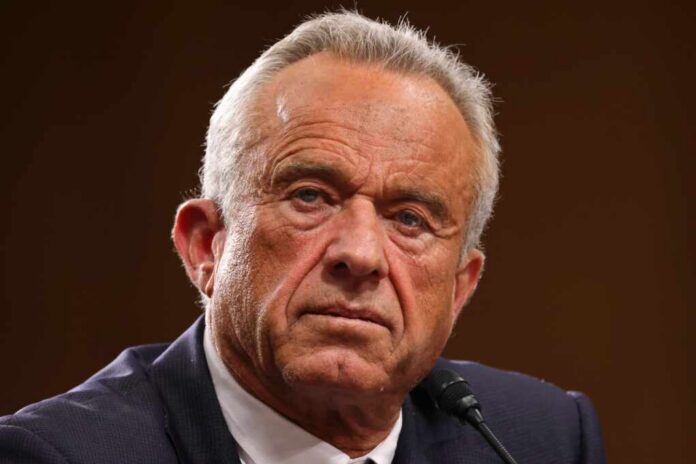
Kennedy has appeared before Congress to discuss the administration’s funding priorities, placing HHS cuts and program direction in the middle of a predictable Washington clash. With Republicans controlling Congress, Democrats have fewer tools to block budgets outright, but they can still use hearings, media pressure, and agency oversight demands to slow implementation. For voters who already believe government incentives reward career protection over results, the coming disputes may reinforce the sense that institutions fight hardest when their own authority is at stake.
NEW: HHS Secretary Robert F. Kennedy Jr. highlighting how the Trump administration is delivering on the change parents across the country voted for:
“We are ending the era of federal policies that fueled the chronic disease epidemic, and replacing them with policies that put… pic.twitter.com/OEiEAZbW8V
— Fox News (@FoxNews) April 16, 2026
The administration’s health story is less about one new law and more about governance: staffing levels, advisory panel composition, and priority-setting under the MAHA label. Those are the kinds of changes that don’t always read as dramatic in headlines but can substantially redirect federal power over time. With limited specifics on the exact “deliverables” Kennedy is highlighting, the clearest verified takeaway is that HHS is being reorganized to align more tightly with Trump’s agenda and management philosophy.
Sources:
RFK Jr. reshaping healthcare at HHS with Trump support