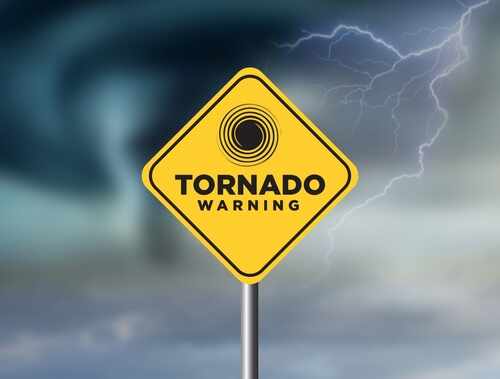
A sprawling, early-season tornado outbreak tore across the heartland so fast that official death and damage totals were still shifting days later.
Story Snapshot
- Severe storms from March 5-10 hammered a roughly 1,500-mile corridor from Texas through the Great Lakes, putting tens of millions in the risk zone.
- National Weather Service surveys tied some of the worst damage to EF2-EF3 tornadoes, with deadly hits in parts of Oklahoma, Illinois, Indiana, and Michigan.
- Reports cited grapefruit-sized hail, destructive straight-line winds, power outages, and flooding concerns—an expensive mix for homeowners, small businesses, and local governments.
- Local emergency declarations and search-and-rescue operations highlighted how quickly routine forecasts can become life-or-death decisions for families.
An early-March outbreak pushes Tornado Alley north
Meteorologists tracking the system described a classic recipe for violent storms: warm, moist Gulf air surging north into a strong cold front, with enough instability and wind shear to fuel supercell thunderstorms. What stood out was timing and reach. Instead of staying mostly in the Southern Plains, the threat arced into the Midwest and Great Lakes, affecting a corridor roughly 1,500 miles long and placing an estimated 63 to as many as 95 million people under some level of alert.
Storm impacts varied by community but shared familiar patterns—roofs removed, walls collapsed, vehicles smashed by large hail, and trees and power poles downed by straight-line winds. Multiple states reported tornado touchdowns, and official counts and ratings were still being refined as survey teams mapped damage footprints. That uncertainty matters because emergency planning, insurance claims, and federal disaster processes often depend on confirmed locations, wind estimates, and the line between tornado and non-tornadic wind damage.
Hard-hit towns face fatalities, entrapments, and basic infrastructure failures
Local accounts underscored how rapidly conditions turned catastrophic in several areas. In Oklahoma, surveys tied at least one deadly tornado near Beggs to EF3-strength winds estimated around 135 to 140 mph. In the Great Lakes region, southern Michigan communities including Union City and the Three Rivers area faced severe damage associated with EF2-EF3 impacts, with officials reporting multiple deaths. Across Illinois and Indiana, buildings were toppled and residents were injured or trapped as debris fields spread across roads and neighborhoods.
Fatality reporting also evolved as counties confirmed details, illustrating why early headlines often change. One Illinois death was tied to the Kankakee County area, while Indiana officials reported two elderly fatalities in Lake Village where a retail building was destroyed and rescues were conducted. Across coverage, the death toll was commonly described as at least six and as high as eight, with the difference reflecting how quickly coroners, sheriffs, and hospitals can validate storm-related deaths amid widespread power outages and disrupted communications.
The government response shows what works—and where trust keeps fraying
The National Weather Service played the central role in warning and verification, issuing alerts, describing environments favorable for intense thunderstorms, and conducting ground surveys that inform EF ratings. Local emergency operations centers and sheriff’s offices handled the immediate work: damage assessment, debris clearance, shelter coordination, and search-and-rescue. Kankakee County activated emergency measures as residents dealt with downed lines and injuries, and fire officials in parts of Michigan described neighborhood-level devastation consistent with violent tornado damage.
Why this matters beyond the weather map: resilience, costs, and accountability
For many Americans—left, right, and politically exhausted—these disasters expose the basics the public expects government to get right: timely warnings, clear communication, reliable infrastructure, and competent recovery coordination. Tornadoes are not partisan, but preparedness choices can be. When communities are still recovering from earlier storms and another outbreak hits before peak season, the strain shows up in stretched responders, delayed repairs, and rising insurance and rebuilding costs that land on families already feeling squeezed by the broader economy.
Severe storms accompanied by tornadoes damage communities from the Plains to the Midwest https://t.co/UnY8z6otAV
— Troy Record (@troyrecord) April 15, 2026
The next steps are practical and measurable: complete NWS surveys, reconcile fatality and injury totals, and stabilize housing and power restoration while additional storm threats shift east. The broader takeaway is also practical: early-season outbreaks widen the window when families need a plan, a weather radio or reliable alerts, and a clear idea of where to shelter. Communities cannot control the atmosphere, but they can control readiness—and citizens can keep demanding competence over excuses.
Sources:
Severe weather outbreak brings tornadoes and destructive storms to the Plains and Midwest
Photos: Midwest, Southern Plains slammed by deadly tornadoes, massive hail, flooding
Major tornado outbreak devastates parts of the US Plains and Midwest