Hezbollah’s brazen rocket attack wounded the son of Israel’s Finance Minister, exposing the terror group’s enduring threat to our key ally despite relentless pressure.
Story Snapshot
- Eight IDF soldiers from the Givati Brigade wounded, including Bnaya Smotrich with light injuries, in a Hezbollah rocket strike near the Lebanon border on March 6, 2026.
- Attack followed Finance Minister Bezalel Smotrich’s vow to make Beirut “look like Khan Yunis,” triggering Hezbollah’s coordinated rockets and drones on multiple sites.
- Israel retaliated with artillery and airstrikes on Hezbollah positions in southern Lebanon and Beirut, underscoring the need for strong defense against Iranian-backed militants.
- Hezbollah warned northern Israeli settlements to evacuate within 5 km of the border, heightening fears of wider conflict and civilian displacement.
Attack Details and Casualties
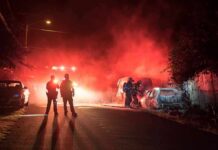
On March 6, 2026, Hezbollah launched rockets and artillery shells at dawn targeting IDF positions in Metula, Manara, Marj, Givat HaEgel, and Yiftah barracks. A rocket struck a Givati Brigade position near the Lebanon border, wounding eight soldiers. Five suffered serious injuries, while three, including Finance Minister Bezalel Smotrich’s son Bnaya, sustained light wounds. Bnaya remains in stable condition after evacuation to Nahariya Hospital by helicopter. This high-profile injury personalizes the conflict’s toll on Israeli leadership families.
Hezbollah’s Coordinated Assault
Hezbollah fighters continued strikes in the morning, firing rocket barrages at Sa’sa’ settlement and deploying kamikaze drones against the Blat site in southern Lebanon. The group confirmed direct hits on Israeli positions and framed the attacks as retaliation for Israeli operations violating Lebanese sovereignty. This multi-location barrage demonstrates Hezbollah’s operational resilience amid ongoing Israeli military efforts along the northern frontier. Sirens sounded in the Krayot area north of Haifa over drone infiltration fears.
Israeli Response and Escalation Cycle
Israel immediately fired artillery and conducted airstrikes on suspected Hezbollah launch sites and infrastructure in southern Lebanon. Reports confirm a wave of strikes hit Beirut and border areas. The attack came one day after Smotrich’s hawkish statement threatening severe consequences for Lebanon, fueling a cycle of rhetoric and retaliation. Prior incidents, like Hezbollah wounding an Israeli officer inside Lebanon, indicate a pattern of intensifying cross-border exchanges raising regional war risks.
Experts note Hezbollah persists as a potent threat despite months of Israeli pressure, challenging assumptions of the group’s degradation. This resilience highlights vulnerabilities in border security and the personal stakes for those defending against terror. Iranian involvement in regional operations amplifies threats to stability, demanding unwavering U.S. support for Israel’s right to self-defense—a principle President Trump champions against globalist appeasement.
Israeli Finance Minister's Son Wounded In Hezbollah Rocket Attack https://t.co/qDL0XDwYXo
— zerohedge (@zerohedge) March 8, 2026
Strategic and Political Ramifications
The wounding of a minister’s son generates domestic pressure in Israel, potentially hardening policies against Hezbollah. Short-term, it forces IDF reassessments of force protection and threat levels. Long-term, sustained exchanges threaten wider conflict involving Iran and U.S. interests, disrupting border economies and displacing civilians. Hezbollah’s evacuation warning signals intent for prolonged aggression, underscoring the failure of weak diplomacy and the necessity of decisive military resolve to protect allies and deter terrorists.
Sources:
Press TV: Smotrich son wounded as Hezbollah rockets, drones pound Israeli positions
Ground News: Israeli minister’s son, other troops injured at Lebanon border
The Cradle: Hezbollah cross-border rocket attack injures son of Israeli finance minister