

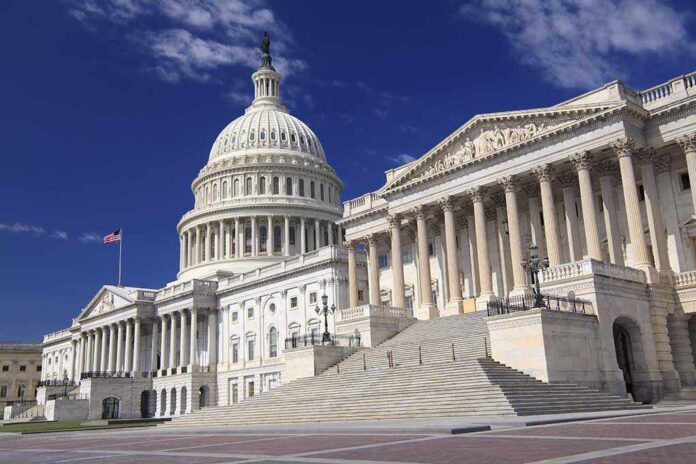
Democrats clinched the 218th House seat and, with Senate gains, are set to control both chambers of Congress in January, reshaping Washington under President Trump’s second term.
Story Highlights
- Democrats won the U.S. House, crossing the 218-seat threshold to secure control.
- Media outlets report Democrats also captured the Senate with flips across several states.
- Speaker Mike Johnson acknowledged Republicans lost the House majority.
- Divided government returns, with Democrats in Congress and President Trump in the White House.
What Changed In Congress And When It Takes Effect
News outlets reported Democrats reached the 218 seats needed to control the House, flipping the chamber from the pre-election Republican edge of 219 to 214. Reports also stated Democrats won Senate control, citing victories in several Republican-leaning or competitive states. These changes take effect when the new Congress is sworn in this January. Live tallies showed remaining uncalled races, so the final House margin was not yet fixed on election night.
Politico reported that Speaker Mike Johnson acknowledged Republicans had lost House control, which signaled the party’s public acceptance of the result. The shift gives Democrats both gavels and committee leadership. That influence will shape hearings, oversight, and floor schedules. At the same time, President Trump retains veto power. Any bill that reaches his desk will need bipartisan support or supermajority votes to become law. That reality sets immediate limits on legislative ambitions.
Where The Senate Map Flipped And Why It Matters
The Associated Press and national outlets pointed to Democratic wins in states such as Texas, Kansas, North Carolina, South Carolina, Ohio, and Iowa, including Josh Turek’s Iowa victory over Ashley Hinson. These results changed the Senate balance and gave Democrats control of committees and the confirmation calendar. That means more say over judges and executive nominees. It also means more leverage on investigations. But most major bills still need 60 votes to move past a filibuster.
Because the Senate’s rules allow the minority to block many bills, chamber control does not guarantee big laws will pass fast. Democrats can steer hearings and markups, but they will likely need Republican votes to clear key hurdles. That is common in a closely divided Senate. It shifts power toward bipartisan deals on must-pass items such as budgets, debt limits, and defense policy. It also raises the odds of stalemates on polarizing issues.
How This Fits Long-Running Midterm Patterns
Historical data show that the president’s party often loses ground in midterms, and many voters treat these elections like a check on the White House. Studies of past cycles find average midterm losses of about two to four Senate seats and several dozen House seats for the president’s party over many decades. Analysts also note that chamber control can swing even when national vote margins are close, because a House majority only requires 218 seats.
Lest we forget, the US now has a divided government: President Trump/Republicans control the executive branch, whereas Democrats control the legislative branch via both chambers – House and Senate – of the Congress
Having a majority in both chambers of Congress gives Dems the… pic.twitter.com/1kKSOqpjkq
— sigma capitalist (@phithetasigma) November 4, 2026
In this case, voters handed Democrats both chambers while leaving President Trump in office. That creates a divided government with sharp oversight and more frequent standoffs. It also opens a lane for targeted deals on infrastructure, drug prices, veterans’ care, and border enforcement if leaders choose compromise. Many Americans on the left and right, frustrated by gridlock and elite infighting, will judge this Congress by whether it can lower costs, secure communities, and keep government honest.
What To Watch Next: Power, Policy, And The Calendar
Democrats will organize both chambers in January, set committee ratios, and pick chairs. Expect quick moves to schedule oversight hearings on spending, ethics, and agency performance. Watch the first funding package deadlines and any attempt to attach border, energy, or health care riders. Also track nominations, where Senate control matters most. One caveat from election night: some races were still being counted, so the exact House margin could shift modestly after certification.
Sources:
youtube.com, nbcwashington.com, theeagleswire.usatoday.com, cbsnews.com, nbcphiladelphia.com, politico.com, presidency.ucsb.edu