Sen. John Fetterman just shattered the usual Democrat script by cheering a U.S.-Israeli strike that wiped out Iran’s top leadership—then daring the media and his own party to explain why anyone should mourn it.
Quick Take
- Sen. John Fetterman defended the Trump-Netanyahu operation that killed Iran’s Supreme Leader Ayatollah Ali Khamenei and dozens of senior regime figures, calling critics “Ayatollah’s apologists.”
- Democrats moved to invoke the War Powers Act to curb the administration, while Fetterman argued the operation fits within existing legal timelines so far.
- The administration briefed congressional leaders and planned broader briefings as the multi-week operation continued, with no U.S. ground troops reported.
- Energy markets reacted with oil-price anxiety, and lawmakers debated whether the strikes prevent a nuclear threat or risk wider escalation.
Fetterman’s blunt message to critics and the press
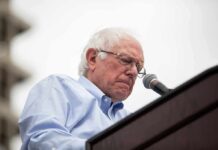
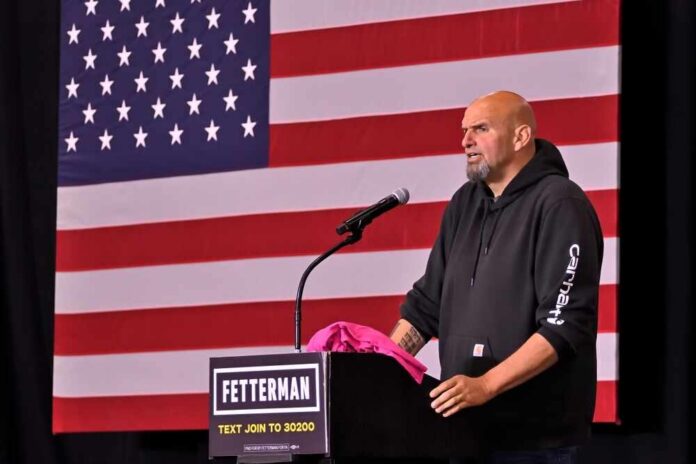
Sen. John Fetterman (D-PA) took a notably aggressive posture after joint U.S.-Israeli strikes in Tehran killed Iran’s Supreme Leader Ayatollah Ali Khamenei—reported as 86 years old—and additional senior regime leaders. Fetterman publicly defended the operation and mocked outrage from the political class, posting and speaking in a way that framed the strike as the removal of an “evil” figure rather than a tragedy. His rhetoric also directly challenged reporters and Democrats pressing him for condemnation.
Fetterman’s stance matters because it lands inside the Democratic caucus rather than outside it. He dismissed criticism as performative and treated the strike as a national-security action aimed at preventing Iran’s nuclear ambitions and curbing Tehran’s longstanding aggression. The available reporting captures him praising President Donald Trump and Israeli Prime Minister Benjamin Netanyahu for executing the operation and arguing that strength, not “sloganeering,” is the only credible deterrent when the adversary is a regime tied to terror and repression.
What happened in Tehran and what the administration says next
An initial wave of strikes in late February 2026 that hit Tehran after intelligence indicated senior Iranian leaders were co-located. The operation was described as moving “ahead of schedule,” with officials indicating it could extend for weeks. The Trump administration’s position, as conveyed in briefings and public discussion, emphasized an “imminent threat,” but the underlying evidence was not fully released publicly in the accounts available.
Administration officials briefed congressional leadership and prepared to brief broader membership as the week progressed. The same coverage also indicated there were no U.S. troops on the ground, a key detail for Americans wary of another open-ended Middle East deployment. For voters who watched the last administration fund ambitious foreign priorities while the border and inflation spiraled at home, the operational question now is whether this campaign remains focused and limited—or expands into something Congress and the public never consented to.
War Powers fight: oversight, timelines, and what’s actually alleged
Capitol Hill’s immediate response centered on the War Powers Act, with Democrats such as Sen. Tim Kaine pushing votes aimed at constraining the White House. Fetterman’s counterargument, delivered in a televised interview, was legal and procedural: under the War Powers framework, presidents can act and then must notify Congress within required timelines, and the window for continued operations is measured in weeks unless Congress authorizes more. On those narrow points, his claim is presented as consistent with the law’s basic structure.
At the same time, critics demanded more proof that the strike was necessary and proportionate, arguing Congress should not be asked to rubber-stamp a major escalation without seeing the intelligence basis. It also shows an unusual coalition dynamic: most GOP figures backed the strikes, but a small number of Republicans supported war-powers limits, aligning with Democrats on oversight even as they diverged sharply on whether the operation itself was justified.
Political fallout: Democrats split, and that split tells a story
Fetterman’s comments exposed a fault line that has been growing for years: populist-leaning voters, including many who prioritize Israel’s security and oppose appeasement of terror-linked regimes, increasingly reject the activist left’s reflexive anti-American posture. Democratic leaders highlighted domestic concerns and warned against “unnecessary war,” while Fetterman and a handful of others argued that letting Tehran advance its nuclear program is the real recipe for a bigger war later—one with higher American costs.
Fetterman Calls Out Reporters After Iran Strike: ‘One of the Most Evil People Was Erased’https://t.co/LSbxkBPZYh
— RedState (@RedState) March 4, 2026
Economic pressure also hovered over the debate. Coverage noted oil-price fears and the potential for broader disruption, which matters to families still sensitive to energy-driven inflation after years of fiscal mismanagement. The hard limitation in the current public record is that the administration’s “imminent threat” rationale is referenced but not fully substantiated with released details. That gap is why war-powers votes and briefings became the immediate battleground—less about sympathy for Tehran’s rulers and more about whether the American people will get transparent justification.
Sources:
Fetterman needles Democrats over Iran strikes opposition
Fetterman blasts Iran strike critics