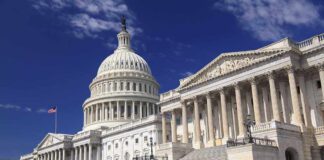
Democrats’ midterm sweep put President Trump’s AI data-center push under the microscope, and markets immediately noticed.
Story Highlights
- Democrats won control of both chambers, boosting chances for aggressive oversight of AI buildouts.
- Trump’s 2025 order speeds permits and offers federal support for large data centers and energy projects.
- Analysts expect hearings and funding fights, not a construction halt, as veto power looms.
- Exit polling tied voter concern to AI and data centers, adding political pressure for scrutiny.
What Changed After The Midterms
NBC News projected that Democrats will control the House and Senate, creating new subpoena, hearing, and appropriations power starting in January. Reuters reported that investors quickly priced in more scrutiny of artificial intelligence infrastructure, with some data center stocks dipping while renewables rose. This shift gives Democrats a platform to question how federal agencies are handling permits, funds, and timelines tied to the rapid buildout. That pressure lands on a White House policy built to move fast.
President Trump’s executive order from July 2025 directs agencies to speed federal permitting for data centers and related energy infrastructure. A White House fact sheet adds that the plan includes possible loans, grants, and tax incentives for very large projects, including those over 100 megawatts, plus supporting grid and fuel infrastructure. These levers help companies scale quickly. They also give Congress specific documents, awards, and approvals to demand and review in public hearings.
Why Congress Has Leverage But Faces Limits
Democrats can call agency heads, request records, and condition or withhold funds to shape how the order is carried out, a power the Congressional Research Service has described in general terms for executive actions. Reuters reported analysts see a wave of hearings and investigations as the most likely near-term outcome. Fortune said any broad new limits would still face President Trump’s veto, a steep hurdle unless Democrats secure supermajorities to override. That makes oversight and appropriations fights the likeliest path.
USA Today reported that more than half of voters told NBC News exit pollsters that artificial intelligence and data centers were a crucial or major factor in their vote, giving new oversight efforts a clear political hook. Still, experts cited by Reuters doubt Congress can directly stop projects already deep in permitting or construction through hearings alone. The result is a clash between a speed-first federal approach and a Congress that can slow, expose, or reshape details, but not necessarily slam the brakes.
How State Results Could Squeeze Projects
Fortune and CNBC reported Democratic gains in key states such as Texas, Ohio, and Georgia could tighten rules, adjust tax incentives, or demand tougher grid studies before data centers connect. CNBC highlighted that a Texas Democrat ran on pausing new data centers until stronger guardrails were in place. State regulators and utilities control where plants and data centers tie into the grid, so local permits, rates, and siting will matter. Republican legislatures may resist big shifts, slowing sweeping changes.
Market moves hinted at this tug-of-war. Reuters said developers of large artificial intelligence facilities took a hit while renewable energy names gained, reflecting bets on more conditions around power and water, and more demand for firm and clean energy sources. That dynamic could rattle oil and gas plans tied to these sites if states and Congress push for fuller cost and impact reviews. But Trump’s order also backs grid buildouts and domestic energy, keeping momentum on the supply side.
What To Watch Next: Oversight, Money, And Timelines
Congress can seek project-level files on federal loans, grants, and tax benefits promised under the executive order to test whether agencies cut corners or ignored required reviews. Committees can press for environmental analyses, grid impact studies, and ratepayer protections, then link future funding to better safeguards. If agencies resist, subpoenas and inspectors general reviews may follow. Hearings will spotlight whether faster timelines traded away local input, water security, and grid reliability.
The Democratic Party’s sweep of Congress has injected uncertainty into global markets. Asian technology stocks fell, the dollar weakened, and Treasury prices rose. Investors are reassessing deregulation, taxes, and artificial-intelligence investment as President Trump’s agenda… https://t.co/BO5PS7LwCi
— ZEROBASE (@zerobasezk) November 5, 2026
The White House can answer by stressing growth, reliability, and national competitiveness. The fact sheets frame the buildout as vital to keep costs in check and keep pace in artificial intelligence. That message may resonate with voters tired of delays and high prices. The likely near-term outcome is not a freeze, but tougher oversight, tighter conditions on federal support, and longer timelines in some states. The deeper question remains who pays the bill and who gets a say.
Sources:
youtube.com, politico.com, cnbc.com, whitehouse.gov, fortune.com, usatoday.com, nbcnews.com, fidelity.com, belfercenter.org