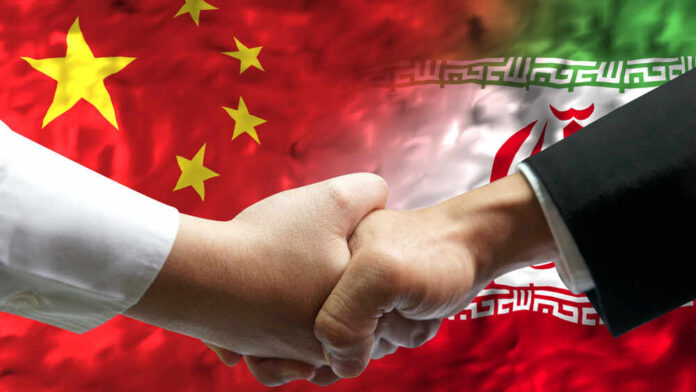
China is actively helping Iran rebuild its ballistic missile program through sanctions loopholes, delivering thousands of tons of rocket fuel ingredients despite international restrictions meant to prevent exactly this kind of weapons proliferation.
Story Snapshot
- Western intelligence confirms 10-12 maritime shipments delivered approximately 2,000 tons of sodium perchlorate to Iran since late September 2025
- China exploits legal loopholes by shipping unsanctioned sodium perchlorate instead of banned ammonium perchlorate, circumventing UN arms embargo
- Current chemical supplies enable production of approximately 500 missiles as Iran rebuilds facilities destroyed in June 2024 Israeli strikes
- China’s two-decade defense partnership with Iran threatens regional stability while undermining American sanctions enforcement
China Exploits Sanctions Loopholes to Arm Iranian Regime
Western intelligence sources documented that Iran received 10 to 12 maritime shipments totaling approximately 2,000 tons of sodium perchlorate from China beginning just days after UN sanctions were reimposed. Beijing deliberately ships sodium perchlorate rather than the sanctioned ammonium perchlorate, exploiting a technical loophole in international arms control agreements. This manipulation of sanctions language allows China to claim legal compliance while actively supporting Iran’s weapons program. Weapons expert Jeffrey Lewis of the Middlebury Institute of International Studies assessed this quantity provides sufficient material to produce approximately 500 missiles.
Iranian Production Capacity Restoration Threatens Israel
Iran has begun rebuilding missile production sites damaged during Israel’s 12-day military operation in June 2024, which severely degraded Tehran’s ballistic missile manufacturing infrastructure. Before the Israeli strikes, Iran maintained capacity to produce more than 200 solid-fuel missiles monthly. Intelligence reports indicate Iran faces a critical bottleneck obtaining planetary mixers, specialized industrial equipment necessary for solid rocket fuel production. China stands positioned to supply not only these mixers but also guidance systems and microprocessors required for modern ballistic missiles, creating a comprehensive technology transfer relationship.
Two-Decade Defense Partnership Undermines American Interests
China’s involvement in Iran’s ballistic missile program extends back to the period following the 1988 Iran-Iraq War. Beijing initially supplied Iran with short-range ballistic missiles, cruise missiles, and anti-ship missiles while training Iranian engineers. By the early 2000s, China and Iran established a long-term defense industrial partnership focused on anti-ship missile systems. This relationship intensified as China became Iran’s primary oil customer, purchasing nearly 90 percent of Iranian crude and condensate exports. The economic relationship provides Tehran with revenue to fund military purchases while giving Beijing leverage over Middle Eastern energy markets.
The Atlantic Council warns that if Iran overcomes equipment limitations and restores production to pre-war levels, the sheer number of missiles produced will make it harder for Israel to conduct pre-emptive strikes. Solid-fuel missiles offer significant tactical advantages because they can be fired faster than liquid-fuel alternatives, reducing Israeli response time. Iranian possession of hundreds of additional missiles would fundamentally alter regional military balance, potentially emboldening Tehran’s proxy forces throughout the Middle East. Israeli officials expressed concern about Chinese intentions while acknowledging the matter carries significant strategic implications for Israel’s security.
Sanctions Architecture Proves Ineffective Against Determined Adversaries
The UN sanctions snapback mechanism triggered on September 29, 2025, explicitly prohibits arms sales and missile-related activity involving Iran. However, Chinese shipments accelerated immediately following sanctions reinstatement, demonstrating Beijing’s calculation that economic relationships with Iran outweigh concerns about international compliance. European intelligence services monitoring maritime traffic documented the continued flow of precursor chemicals despite renewed restrictions. This pattern reveals fundamental weaknesses in the international sanctions regime when major powers choose to circumvent restrictions through technical loopholes rather than honor the spirit of arms control agreements.
The situation exposes how America’s adversaries coordinate to undermine U.S. strategic interests. While the Trump administration inherited this deteriorating situation, the Chinese supply relationship with Iran developed over more than twenty years of bipartisan failure to enforce meaningful consequences. Conservative voters who opposed endless Middle Eastern wars now watch as Chinese weapons proliferation creates conditions for expanded regional conflict. The Biden administration’s failure to prevent sanctions circumvention before leaving office compounded long-standing enforcement problems. American taxpayers face the prospect of increased defense spending to counter Iranian missile threats that China deliberately enables through systematic sanctions evasion.
Sources:
Iran’s Anti-US Military Capabilities Restored by China – The Ettinger Report
Western Intelligence: Iran Rebuilding Missile Program with Chinese Help – Ynetnews
Is China Really Helping Rebuild Iran’s Missile Program? – China MENA Newsletter
Iran’s Military Has Been Destroyed. Only China Can Help Rebuild It. – 19FortyFive