

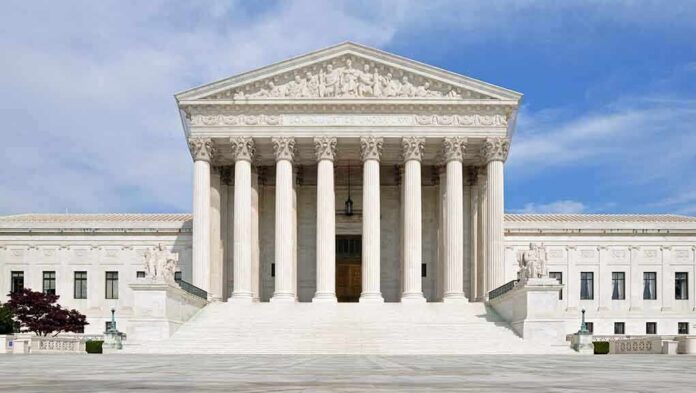
Democrats’ Senate gains have put the Supreme Court’s aging conservative wing under an intense spotlight, yet Justice Samuel Alito says he is not stepping down.
Story Snapshot
- Democrats won control of the Senate, raising stakes for any Supreme Court vacancy.
- Justice Samuel Alito says the election did not change his plan to remain through the term.
- Justice Clarence Thomas has given no public sign he plans to retire.
- The Senate controls confirmations, but justices serve for life or until they retire.
What Changed After The Election
Democrats’ midterm landslide means they will run the Senate next year, shifting power over Supreme Court confirmations. The Senate votes on the President’s nominees and decides if they reach the bench. That leverage matters if a seat opens while President Trump is in office. It also raises the political cost of any retirement by an older justice. Reuters reported the change has focused attention on Justices Clarence Thomas and Samuel Alito, the Court’s oldest members.
The Senate’s gatekeeping power is not new. The Congressional Research Service explains that presidents pick nominees, but senators decide whether they are confirmed. Once confirmed, justices serve for life or until they choose to retire. Most vacancies since the 1950s have come from voluntary retirements, not deaths. That history explains why many in both parties watch the ages of sitting justices so closely during shifts in Senate control.
What The Justices Are Saying Now
Justice Samuel Alito has said the Democratic win does not change his plans. Bloomberg Law reported that he intends to remain on the Court through the current term. He has also said he weighs retirement each term, as anyone his age must, but decided he could still contribute. That stance cools talk of an immediate vacancy before the new Senate is seated. It also signals there is no quick path to a new Trump nominee this year.
Justice Clarence Thomas has not signaled plans to step down. Reuters reported no public indication that he wants to retire. That aligns with past comments that he intended to serve for many more years. With both justices staying put for now, the Court’s conservative majority looks steady in the short term. Still, the political pressure will remain high as the next term unfolds and the new Senate takes power in January.
Why This Fight Resonates Beyond Partisans
Power over the Supreme Court affects real life: speech rules, gun rights, abortion limits, energy rules, and how agencies regulate the economy. Voters on the right fear a Senate that could block or reshape a Trump pick. Voters on the left fear a Court they see as out of step with working families. Many Americans on both sides also see a deeper problem: a system where timing games and elite dealmaking seem to matter more than merit and service.
Academic work suggests retirement timing is not only about politics. Health, personal goals, and respect for the Court also matter. Studies find mixed or limited evidence that justices reliably time exits to match party control. That means today’s pressure may not produce a seat tomorrow. It also means long stretches of stasis are normal, even when political control flips in Washington. The pattern should temper claims of a looming shakeup.
What To Watch Next
Watch the calendar. The current Court term runs into next summer. If a vacancy arises before the new Senate is seated, confirmation math would look very different than after January. Also watch statements from the justices as the term advances. Even small health or schedule notes can be signals. Finally, monitor the Senate’s rules and schedule, which leaders can use to speed up or slow down any nomination fight.
For now, the headline is clear: Democrats have new leverage, but no vacancy. Alito says he is staying through the term, and Thomas has given no sign he is leaving. That reality keeps the Court’s lineup intact while deepening a familiar worry for many Americans. When the stakes are this high, the system can feel like a game played by insiders, with the public left to live under the results—no matter who wins the next round.
Sources:
seattletimes.com, newsweek.com, nymag.com, ms.now