Survival stories in the backcountry rarely hinge on heroics; they turn on minutes, maps, and method. A 72-year-old California hiker found alive after days at the bottom of a steep embankment is a textbook case of how coordinated search-and-rescue (SAR) doctrine, interagency logistics, and terrain-savvy volunteers convert slim chances into an airlift and a hospital bed.
At a Glance
- Ground teams found 72-year-old Kathleen Granbery alive near Cabin Creek after she fell down a steep embankment.
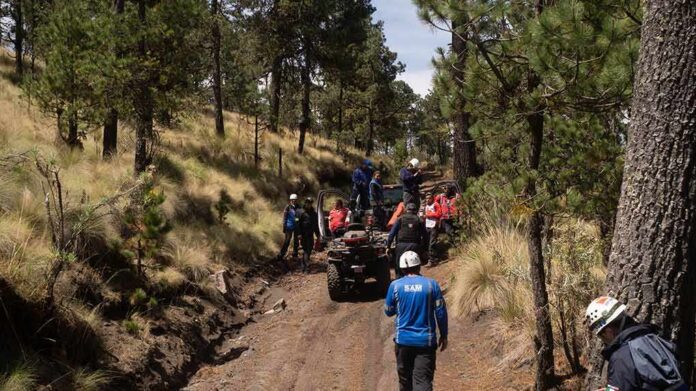
- Deputies from Siskiyou and Shasta counties, volunteer SAR, and California Highway Patrol Air Operations executed the search and hoist evacuation.
- Officials reported multiple injuries consistent with a fall and prolonged exposure; she was airlifted to Mercy Medical Center in Redding.
- The operational timeline indicates several days missing between her Sept. 28 departure and Oct. 4 rescue, consistent with known SAR survivability patterns.
What Happened: A coordinated search, a difficult find, a fast extraction
Authorities launched a joint operation after 72-year-old hiker Kathleen Granbery did not return as expected from a multi-day camping trip that began September 28. Ground teams eventually located her alive on October 4 at the bottom of a steep embankment near Cabin Creek along the Shasta–Siskiyou county interface, a location that explains both the jurisdictional overlap and the complexity of the search grid. Officials described injuries consistent with a significant fall and subsequent exposure in rugged forest terrain. A California Highway Patrol (CHP) helicopter crew conducted the hoist and transported her to Mercy Medical Center in Redding for treatment, an end-to-end sequence that reflects standard SAR escalation once a live subject is located in inaccessible ground.
The initial trigger was ordinary but urgent: a missed return to work that flagged a breach in the expected itinerary. Deputies from Siskiyou and Shasta counties partnered with volunteer SAR teams to canvass trailheads and drainages; those early hours focus on known points, vehicle sightings, and probable paths. When searchers found Granbery’s vehicle and narrowed the area toward Cabin Creek, they realigned to the most likely descent lines and watercourses—where gravity and human behavior often converge—leading to the embankment where she was discovered. Reports characterize the terrain as steep and unforgiving, the sort where a single misstep can carry a hiker well off-trail in seconds.
Mechanism and injuries: Why Cabin Creek makes sense
Falls account for a substantial share of backcountry injuries and immobilizations, particularly on loose, brushy slopes above creeks and tributaries. Officials attribute Granbery’s condition to “multiple significant injuries” from a fall and exposure; that combination is classic in Northern California’s mixed-conifer belts, where temperatures swing, wind funnels down canyons, and hypothermia risks compound even in early fall. Search accounts placed her at the base of a steep embankment near Cabin Creek, a common terminal point for uncontrolled descents. In such settings, a subject’s ability to self-extricate is often nil, and survival turns on access to water, sheltering microterrain (a log, overhang, or boulder), and whether someone is looking in the right drainage.
Operationally, once ground units make a live find in that kind of terrain, the decision tree is straightforward: stabilize, signal aviation, and hoist if a litter carry would be unsafe or protracted. The CHP extraction to Mercy Medical Center fits that model; Shasta County personnel indicated her injuries were non-life-threatening in one account, while other outlets framed her as critical—variability that often reflects evolving assessments between field stabilization and hospital intake reporting. What is undisputed is that she was conscious at discovery and that air evacuation was executed promptly.
Timeline and survival window: Several days missing, consistent with SAR base rates
The core chronology is firm enough to support the central claim of multi-day survival. Granbery departed September 28, failed to appear for work October 2, and was found October 4—an interval that brackets at least several days during which she was out of contact and ultimately immobilized. Local coverage characterized the interval as roughly five to seven days, which is plausible given the departure date and the terrain’s search complexity. California SAR data spanning 748 missions and 952 subjects show 61% of located individuals alive and well and 31% injured, reinforcing that multi-day survival followed by rescue is common enough to be statistically unsurprising when agencies act quickly and search patterns are well designed.
In mountain canyons, water corridors like Cabin Creek are search magnets because subjects drift toward them, by intent or fall. A separate analysis of successful North American wilderness rescues found that 41% began with a hiker wandering off trail; even when the initiating event is a fall rather than a navigation error, the off-trail environment is where most immobilizations occur and where subjects are ultimately recovered. In those cases, 77% of survivors are rescued rather than self-recovering—precisely what happened here.
How SAR doctrine shaped the outcome
Three features of competent SAR stand out in this case. First, interagency coordination shortened the time from report to recovery. Shasta and Siskiyou counties pooled jurisdictional knowledge and volunteer depth—critical at county lines where trail systems, road access, and radio coverage interleave awkwardly. Second, rapid aviation integration converted a high-risk ground carry into a controlled hoist, reducing scene time and exposure for both subject and rescuers. Third, intelligent terrain triage—prioritizing creeks, embankments, and fall lines—aligned the search with how people and physics actually move through mountains. Those elements track with established SAR literature on optimizing search order and resource deployment to minimize expected time to find, then to extract.
Equally important is what SAR does not overcomplicate in the field: perfect certainty about the initial incident mechanism. Investigators may later infer whether Granbery left the trail intentionally (to fish, to explore, to relieve herself) or drifted off inadvertently. For the rescue itself, the operational fact pattern—missing hiker, vehicle located, likely drainages identified, ground teams deployed, air hoist executed—carries the day. That pragmatism is why so many survivors emerge from days-long incidents alive, even when the exact minute-by-minute story remains the subject’s to tell.
72-year-old hiker survives estimated 5-7 days alone in wilderness https://t.co/kt5sIz3ph7
— D.B. Taylor, now with 16% more Hottentot! (@DBTayor) October 7, 2026
Practical takeaways for backcountry hikers in similar terrain
Incidents like this one offer durable lessons for anyone hiking Northern California’s canyon country or analogous terrain. Leave a precise itinerary with a reliable contact and a hard “call if not back by” time; that single act often triggers the search early. Carry a satellite communicator or PLB—activation shaves hours or days off the grid search, particularly near county lines where vehicle logs and cell pings are thin. On steep, brushy slopes, resist “shortcuts” to water; side-hilling and gravelly descents are a leading pathway to uncontrolled falls. If immobilized, make yourself findable: bright garment on a branch, reflective bivy, or a whistle’s three blasts. Most SAR subjects are rescued, not self-recovered; survivability hinges on being located efficiently, not on bushcraft prowess.
Why this one ended in a hoist, not a recovery
The Cabin Creek rescue is not a miracle so much as a demonstration of how modern SAR works when information flows and resources align. A subject who remained conscious, near water and sheltering terrain, within a search radius anchored by her parked vehicle is precisely the scenario SAR planners model. The agencies executed the pattern: define the area, load the likely drainages, push ground teams into the fall lines, and bring the helicopter when a litter would be unsafe. The result—an elderly hiker alive after days in rough country—fits the base rates and best practices, reminding the rest of us that luck favors the prepared, and that preparation in the backcountry now includes not just layers and a map, but the knowledge that a well-run search has a proven playbook.
Sources:
nypost.com, abcnews.com, foxnews.com, yahoo.com, ktiv.com, knoxnews.com, journals.sagepub.com