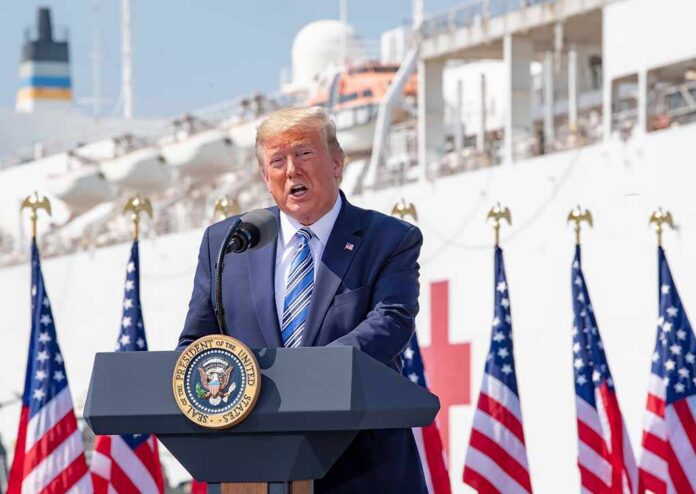
President Trump said Russia will rush 300,000 tons of diesel to market now, with larger waves to follow, to tame high fuel costs ahead of the midterms.
Story Snapshot
- Trump announced staged Russian diesel volumes: 300,000 tons now, 500,000 tons in November, 1,000,000 tons after.
- The U.S. Treasury issued a temporary license allowing specified Russian diesel shipments through April 7, 2027.
- Russia’s deputy prime minister outlined similar export targets, pending refinery conditions.
- The goal is to ease diesel prices and supply tightness before U.S. midterm elections.
What Was Announced and When
On October 9, 2026, President Trump announced that Russia would “immediately” supply over 300,000 tons of diesel to the United States and global markets. He added that 500,000 tons would follow in November, then 1,000,000 tons after that, with a possible extra 3,000,000 tons if Russian refineries allowed it. Media reports framed the move as a clear attempt to boost supply and ease prices before the midterm elections. That timing shaped how the news landed across the political map.
The U.S. Department of the Treasury moved soon after the announcement. Treasury issued a temporary general license that allowed Russian diesel loaded as of October 9, 2026, to move without sanctions exposure through April 7, 2027. This license did not reopen all Russian energy trade. It set narrow terms for certain diesel cargoes, giving shippers, banks, and insurers a defined path to handle covered loads without breaking rules.
Russia’s Stated Capacity and Conditions
Russian officials publicly described matching targets. Reporting attributed to Russian Deputy Prime Minister Alexander Novak said Russia could export 300,000 tons in October, 500,000 tons in November, and 1,000,000 tons in December. Those volumes depended on the status of refineries and ongoing repairs. Earlier disruptions and damage had tightened diesel supplies worldwide, which raised refining margins and pushed prices higher in many places. The conditional nature of the plan mattered because outages could cut actual flows.
Market watchers stressed scale. One analysis noted that 300,000 tons is a small slice of global demand and would cover only a short period of U.S. distillate use if it all landed here. That perspective underlined a risk for the White House. Big-sounding numbers can lose power when set against the size of the U.S. market. Still, even modest extra barrels can calm prices when inventories are thin and shipping lanes are crowded.
Why This Move Matters Now
High diesel prices hit freight, farming, construction, and home heating. When diesel spikes, grocery and goods prices can follow. The administration tied the action to price relief. Reports linked the deal to a push to lower costs for families and businesses before the elections. That is a common pattern in energy policy. Governments sometimes use narrow waivers or licenses to add supply without scrapping wider sanctions frameworks that target hostile behavior.
The Treasury license fit that playbook. It gave a time-limited legal shield for covered cargoes. It aimed to nudge stranded or blocked barrels into the market, which can soften prices at the margin. The Office of Foreign Assets Control maintains broader Russia sanctions and price cap guidance, which still apply outside the license. That balance tries to address voter pain at the pump while keeping pressure on Moscow’s war economy.
Political Crosscurrents and Shared Worries
Conservatives and liberals see different risks. Some on the right resent energy policies that raised costs, and they welcome any move that cuts prices. Some on the left fear leaning on Russian fuel, and they worry about social costs when energy shocks hit the poor hardest. Many Americans in both camps say Washington reacts late and protects insiders first. This episode taps into that shared view that powerful players bend rules when elections loom and working people pay the bill.
Trump Announces Russia Will Supply Millions of Tons of Diesel to Help Lower Fuel Prices. Trump said he reached the agreement during a discussion with Russian President Vladimir Putin.https://t.co/hprs15O899
— Papa Hemingway✝️✡️ 🇺🇸 (@PopHemingway) October 10, 2026
The deal also revives an old concern about reliance on rivals. Europe banned most Russian diesel in 2023 and had to rewire trade flows at high cost. The United States reduced direct Russian energy exposure but stayed linked through global prices. Bringing Russian diesel back, even under narrow terms, may look like a step away from pressure. Supporters argue that cheaper diesel lowers costs for truckers and farmers fast. Critics warn that short-term relief can feed long-term risk.
What We Know and What Comes Next
We know the announcement, the volumes stated by Trump, the Treasury license, and Russia’s stated readiness under refinery limits. We also know the stated goal: ease prices ahead of the midterms. The public record so far does not track individual tankers, customs entries, or price effects. The key tests now are whether cargoes load and arrive as described, whether insurers and banks accept the license’s cover, and whether wholesale diesel prices actually drop in the coming weeks.
Sources:
feedpress.me, rmb.reuters.com, ttnews.com, foxbusiness.com, amp.dw.com, eia.gov, ofac.treasury.gov