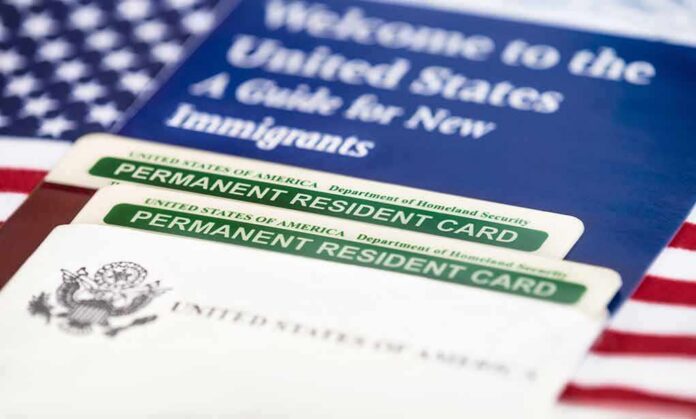
Twenty-two Democratic-led states and cities sued to block President Trump’s tightened “public charge” rule that lets officers weigh use of means-tested welfare when deciding green cards.
Story Highlights
- DHS rule allows officers to consider any means-tested public benefits in green-card decisions.
- States led by New York filed suit to stop the rule before full implementation.
- Administration says the policy protects taxpayers and reinforces immigrant self-sufficiency.
- Effective date set for mid-September with implementation guidance tied to the Federal Register record.
What The New Rule Actually Does
Department of Homeland Security issued a final rule that expands the public charge test. Officers may now consider any means-tested public benefits, not just cash aid, when judging whether an applicant is likely to depend on government support. The rule directs officers to weigh benefit use alongside age, health, family status, finances, education, and job skills. The agency placed the change in the Federal Register, creating a formal record and a path to implement the policy nationwide.
The rule’s language broadens officer discretion to count use of programs like food aid, Medicaid, or housing vouchers as part of a case file. Critics say it is too open-ended. Supporters argue the wider lens closes loopholes that let long-term costs land on taxpayers. The text does not create automatic denials for any single benefit. It adds benefit use to the totality of factors that officers have long reviewed in public charge decisions.
Why The Trump Administration Says It Matters
Homeland Security officials and allied voices say the rule restores a core idea in immigration law. New arrivals should be self-sufficient and not rely on welfare programs. They frame the policy as a common-sense screen that protects public resources and encourages work, savings, and private insurance. Reports summarizing the administration’s stance say officers can review assets, employability, and coverage to make careful, case-by-case calls that put taxpayers first.
The administration also casts the change as a return from the prior narrow standard. That earlier approach, set in 2022, limited the public charge test to a small set of cash supports. The new rule treats means-tested benefits as relevant signals within an existing legal concept, not a novel invention. The department published the final rule and tied its effective date to mid-September, signaling intent to apply it prospectively after notice and comment.
What The Lawsuits Claim And Where They Were Filed
New York City, New York State, and a large coalition of Democratic jurisdictions sued in federal court to stop the rule. They argue it gives officers broad discretion to deny green cards to immigrants who use food aid, health care, or housing help, including mixed-status families with citizen children. Their filings say the guidance is vague, risks inconsistent decisions, and will push families to avoid programs they are legally allowed to use.
Plaintiffs also claim the policy could chill enrollment in programs like Medicaid and the Children’s Health Insurance Program, leading to worse health and food insecurity. They cite fear and confusion among immigrant households as evidence of harm. Those are serious claims, but they address potential behavior, not the legality of considering means-tested benefits as one factor. The court will weigh whether the department acted within the Immigration and Nationality Act’s bounds and gave a reasoned explanation.
How To Read The Fight Through A Conservative Lens
Taxpayers carry the cost when policy blurs the line between safety nets and a welcome mat for dependency. The Trump administration’s rule keeps the long-standing public charge standard meaningful by allowing common-sense evidence into the file: benefit use, finances, and employability. The opponents want courts to forbid officers from seeing that evidence at all. That would shift risk to American families facing high prices, high taxes, and strained services.
What Comes Next And What Is Not Yet Proven
The rule’s effective date and publication are set, but litigation could pause parts of the rollout while courts review the claims. The public record in these sources does not include a full cost study of immigrant benefit use or case-level adjudication data since the change. That means both sides are arguing principle more than measured outcomes. Expect discovery fights over training, denial rates, and how often benefit use actually tips a case one way or the other.
Bottom Line For Readers
The core fact is simple: the federal government can now weigh any means-tested welfare in green-card decisions, and Democratic-led states want a judge to stop it. The administration says this protects taxpayers and rewards self-reliance. The courts will test the rule’s clarity and legal footing. Until then, this is a live contest between open-ended welfare access and a measured gate that screens out likely long-term dependence.
Sources:
politico.com, ny1.com, nydailynews.com, thecentersquare.com, newscord.org, cityandstateny.com