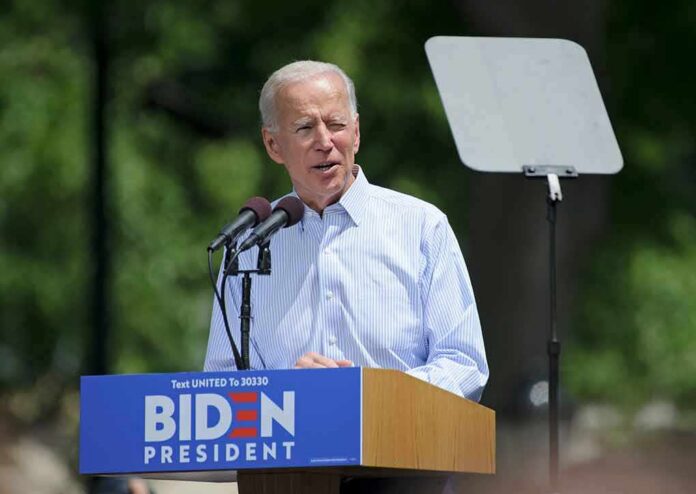
Federal judges have now cleared the Justice Department to release Joe Biden’s secret ghostwriter recordings from the Hur classified-documents probe, putting decades-old “private” conversations on a collision course with public accountability.
Story Snapshot
- A D.C. Circuit panel dissolved its injunction, allowing the Justice Department to release Biden’s interview tapes and transcripts from the Robert Hur investigation to a conservative group.
- Biden had argued these were deeply personal home conversations with his ghostwriter and fought in court to keep them private.
- Federal judges ruled that the public’s interest in understanding a classified-documents probe outweighs Biden’s claimed privacy rights.
- The case highlights how government investigations can turn “personal” records into government property, raising alarms across the political spectrum about privacy and power.
What the new court decision actually does
The United States Court of Appeals for the District of Columbia Circuit has now dissolved its temporary injunction that had blocked release of Joe Biden’s interview recordings tied to Special Counsel Robert Hur’s classified-documents investigation. This means the Justice Department is cleared to provide audio and transcripts to the Heritage Foundation, a conservative group that requested them under the Freedom of Information Act. Earlier orders only paused release while judges reviewed Biden’s emergency appeal; those pauses are now lifted.
The Heritage Foundation’s lawsuit has been moving through federal court for more than two years, focused on whether these materials count as “agency records” that must be released. Biden’s legal team had asked both the district court and the appeals court to block the Justice Department from turning over the tapes, claiming release would cause serious harm. With the injunction dissolved, the Justice Department stands ready to hand over at least redacted versions, unless a higher court steps in at the last minute.
What is on the Biden ghostwriter tapes
Mark Zwonitzer, Biden’s longtime ghostwriter, recorded many hours of conversations at Biden’s home in 2016 and 2017 while helping him write the memoir “Promise Me, Dad.” Biden’s lawyers describe these sessions as candid and deeply personal, more like diary entries than political speeches. The Justice Department obtained the recordings during Robert Hur’s investigation into Biden’s handling of classified documents after his time as vice president, which ended in 2017.
Hur reviewed the recordings as part of a broad probe into how Biden stored and discussed sensitive government information once he returned to private life. Hur ultimately decided not to bring criminal charges, but the tapes and transcripts stayed in government hands as part of the investigative file. That chain of custody is what allowed the Heritage Foundation to seek them under the Freedom of Information Act, even though Biden insists he never meant for anyone beyond his ghostwriter to hear them.
Biden’s privacy fight and why he lost
Biden sued the Justice Department and argued that releasing the recordings would be like publishing someone’s private diary or text messages without consent. His complaint stressed that the conversations took place inside his home and that he had cooperated with Hur only on the understanding that the material would stay confidential. Biden’s team claimed there was no urgent public need to hear decade-old interviews from a man who is now a private citizen and not seeking office again.
U.S. District Judge Dabney Friedrich, who sits in Washington, rejected that argument and ruled that the public’s interest in the material outweighs Biden’s privacy claims. She noted that sensitive details, such as information about Biden’s family and health, could be redacted before release. A divided appeals panel later agreed there is “substantial” public interest in hearing how Biden spoke about his records and memory during a classified-documents investigation, especially given the national debate over unequal treatment of powerful officials.
Why this matters beyond Biden
This fight is part of a broader struggle over who controls information when private conversations become evidence in a government investigation. Freedom of Information Act law often turns on whether materials in an investigative file are true agency records and how judges balance privacy against transparency. Courts regularly use privacy exemptions in the law, but they treat the analysis as a balancing test, not a hard shield that keeps all personal communications secret.
The DOJ was cleared to release audio recordings of former President Joe Biden's conversations with a ghostwriter after two legal obstacles were removed.
The U.S. Court of Appeals for the District of Columbia dissolved a temporary injunction blocking disclosure in a Freedom of… pic.twitter.com/DIHdqhCe5e— NATIVE_AMERICAN_BITCH_FROM_THA_SLAPAHOE_TRIBE 𖧶🪓 (@TRUMPGIRL_STL) July 28, 2026
For many Americans, this case hits several nerves at once. Conservatives who have long felt there was a double standard on classified documents now expect these tapes to show how the system treated Biden compared with others. Liberals worried about government overreach and “deep state” power see how quickly personal home conversations can become public once the Justice Department holds them. Both sides can look at this and wonder how much privacy anyone really has when the government is involved.
What comes next and what to watch for
With the injunction dissolved, the Justice Department can now move ahead with releasing the tapes and transcripts to the Heritage Foundation, with redactions for the most personal details. Biden has already dropped one related lawsuit after the appeals court’s ruling, signaling that his options are closing. Once the audio is out, expect clips to flood social media and television, with partisan outlets cherry-picking lines to support their favorite story about Biden’s memory, honesty, and handling of sensitive information.
For citizens, the deeper question is not only what Biden said, but what this episode reveals about the federal government itself. A system that can transform private home conversations into public records whenever a powerful agency touches them is one that holds enormous control over ordinary lives, too. That reality feeds a growing belief across party lines that Washington’s rules now mainly serve the political class, not the people trying to chase the American Dream.
Sources:
thegatewaypundit.com, abcnews.com, npr.org, foxnews.com, youtube.com, instagram.com