When a prosecutor is accused of turning the criminal docket into a dating pool and helping a sex‑crime suspect slip the leash of law enforcement, the story stops being about one person’s scandal and becomes a case study in how fragile public trust in justice can be.
At a Glance
- Ray County Prosecutor Camille Johnston has been temporarily removed from office after Missouri’s Attorney General alleged a pattern of serious misconduct, including romantic relationships with people tied to her cases.
- The state’s quo warranto petition centers on Johnston’s alleged relationship with illegal immigrant sex‑crime suspect Juan David Gutierrez and claims she helped him evade law enforcement, including by transferring him her car title.
- A judge has issued a preliminary order stripping Johnston of all prosecutorial authority while the case proceeds, though she has not been criminally charged and can fight for reinstatement.
- The case highlights the hard boundaries around prosecutorial ethics: conflicts of interest, misuse of office for personal relationships, and the extraordinary remedy of removing an elected prosecutor.
What Happened to the Ray County Prosecutor
Missouri’s action against Camille Johnston is not a routine personnel matter; it is an institutional decision that the state’s chief legal officer could not wait for the next election to address. In mid‑July, Attorney General Catherine Hanaway filed a petition for a writ of quo warranto, the traditional legal mechanism used in Missouri to challenge whether someone is fit to hold a public office. The petition asks the court to remove Johnston as Ray County Prosecutor based on alleged misconduct and conflicts of interest. A judge responded by granting a preliminary order that immediately barred Johnston from exercising any authority as prosecutor while the case is litigated. Hanaway’s office has stated that Johnston “is no longer Ray County Prosecuting Attorney” for all practical purposes during this suspension.
That interim order is significant. Courts are typically cautious about sidelining an elected official before a full evidentiary hearing. Granting such relief signals that the bench viewed the Attorney General’s allegations as serious enough—and sufficiently supported on their face—to justify temporarily overriding the voters’ choice. At the same time, the order is not a finding of guilt; it is an emergency brake applied while the underlying claims are tested.
The Core Allegations: Romance, Conflicts, and a Sex‑Crime Suspect
The state’s petition and subsequent public reporting describe a pattern of intimate relationships intertwined with Johnston’s official duties. The focal allegation is her relationship with Juan David Gutierrez, an illegal immigrant identified in the legal filings as “J.G.,” who faces felony sex‑crime charges in Ray County. According to Fox News Digital’s summary of the petition, Johnston and Gutierrez had lived together and been involved in a “romantic and intimate relationship” even before she took office as prosecutor on January 1, 2023. Once in office, the Attorney General alleges, she failed to recuse herself from matters involving Gutierrez, despite his status as a sexual‑violence suspect, and did not disclose his whereabouts to law enforcement when they sought to pursue the case.
One claim has understandably captured public attention: that Johnston transferred the title to her personal vehicle to Gutierrez, allegedly enabling him to abscond from authorities. Local coverage has echoed this point, noting that the petition states she gave the car to an undocumented immigrant being prosecuted for sexual assault. In the context of a prosecutor’s duties, such an act is more than a personal favor; if proven, it would be an extraordinary instance of using personal property to interfere with a criminal investigation.
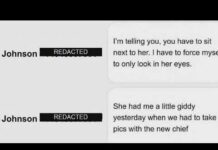
The allegations do not stop with Gutierrez. The Attorney General’s petition reportedly cites additional relationships that posed conflicts of interest: an affair with a criminal defense attorney whose clients were being prosecuted in her county, and an intimate relationship with a man charged in a domestic‑violence case in Ray County. Hanaway has summarized the pattern bluntly, accusing Johnston of using “the court docket as her dating app” and describing courthouse staff as the first to raise concerns about her conduct. Taken together, the portrait is of an elected prosecutor blurring professional and personal boundaries in ways that directly touch active criminal matters.
Workplace Retaliation and Office Culture Allegations
Beyond the romantic relationships, the petition also addresses how Johnston allegedly responded when her conduct began to surface internally. The Attorney General’s filing asserts that Johnston retaliated against an employee who discovered one of the relationships, and that she created a workplace atmosphere of fear and intimidation inside the Ray County Prosecutor’s Office. This detail matters for two reasons. First, retaliation against whistleblowers, if substantiated, is itself a serious ethical breach; it undermines the internal checks that are supposed to catch problems before they become public crises. Second, a culture of intimidation can deter other staff from reporting misconduct, allowing questionable practices to persist unchecked.
For a prosecutor’s office, internal integrity is not an abstract ideal. Line attorneys and administrative staff are the ones who see case files, observe charging decisions, and notice when defendants or their counsel appear to receive unusual treatment. If they believe that reporting a concern will put their job at risk, that pressure can quietly warp the entire functioning of the office.
Quo Warranto: How Missouri Removes an Elected Prosecutor
The mechanism the Attorney General chose—quo warranto—is rooted in Anglo‑American legal tradition. Literally “by what warrant,” a quo warranto proceeding asks a court to examine whether an officeholder has the legal right to continue in that position. In Missouri, it is the tool used when ordinary disciplinary channels are inadequate because the office itself is elective, insulated from direct executive firing. The Attorney General petitions the court, sets out alleged misconduct or disqualification, and seeks an order removing the official.
That structure reflects a balance of powers. Voters select a prosecutor; only a court, upon a petition from the state’s chief legal officer, can declare that the person has forfeited the right to serve. It is deliberately not quick or casual. The preliminary order removing Johnston pending the outcome of the lawsuit shows the process in motion: first, immediate protection of the justice system from what the court views as serious alleged misconduct; later, a full adjudication of whether she should be permanently ousted.
Quo warranto is rare enough that each use becomes a reference point for future cases. When a judge grants temporary removal of a sitting prosecutor, it sets a practical benchmark for what kinds of allegations and evidentiary showings are considered sufficient to override electoral legitimacy, at least on an interim basis.
Prosecutorial Ethics and Why Relationships Matter
To understand why alleged romances loom so large in this case, it helps to step back to the ethical framework governing prosecutors. Prosecutors occupy a unique role: they wield the state’s power to charge crimes, negotiate pleas, and influence sentencing, and they are expected to do so not for personal gain but in the interest of justice and public safety. Ethics rules and professional conduct codes emphasize avoiding conflicts of interest—situations where personal relationships or financial ties could compromise, or reasonably appear to compromise, impartial judgment.
Romantic relationships with defendants, suspects, or defense counsel sit squarely in that red‑flag category. Even if a prosecutor believes they can remain fair, the appearance of bias can be devastating. Defense attorneys can argue that charges or plea offers were impacted by favoritism. Victims may feel their cases were not pursued vigorously. Other defendants may suspect that access to the prosecutor’s personal life is the true currency of justice.
The allegations against Johnston, if proven, would represent a textbook violation of these norms. Living with a sex‑crime suspect whose case is being handled in one’s own office, failing to recuse from related investigations, and allegedly helping that suspect avoid law enforcement by withholding information and transferring property, combine personal conflict with concrete acts that touch the administration of justice. Add intimate relationships with a defense attorney and another criminal defendant, and the pattern raises systemic concerns: charging decisions, plea negotiations, and trial strategies could all be tainted by non‑legal considerations.
The Role of the Attorney General and Case Status
Attorney General Hanaway has made clear that this case is as much about institutional integrity as about one prosecutor’s behavior. Her office has emphasized that Johnston was given an opportunity to resign and declined, prompting the petition for removal instead. Hanaway has publicly committed to pursuing public‑corruption and misconduct cases statewide, framing Johnston’s alleged actions as the kind that demand decisive intervention.
While Johnston has been stripped of authority, the story is not over. The preliminary order bars her from acting “in any official capacity,” from entering the prosecutor’s offices or courthouse except as explicitly authorized, and from conducting prosecutorial business. However, she can still fight the petition and seek reinstatement. As of the reporting referenced here, no criminal charges have been filed against her personally, though the Attorney General’s office has indicated that could change as investigations proceed. Gutierrez’s sex‑crime case, meanwhile, has been charged and is being handled by the AG’s office, with some proceedings reportedly on hold pending an appeal in another matter.
This dual track—civil removal of an officeholder, and potential criminal exposure—is typical in serious public‑integrity cases. Removing the official addresses the immediate risk to ongoing prosecutions; any criminal investigation into the official’s conduct unfolds on its own timeline, governed by evidentiary development and charging standards.
Prosecutor Camille Johnston was removed from her duties-repeatedly violated ethical obligations, failed to disclose conflicts of interest, sleeping w/illegal alien being prosecuted for sexual assault-Accused of Inappropriate Romance https://t.co/lvRso02j6u via @Steadfast Updates
— Marlon Brennan (@marlon_brennan) July 24, 2026
Why This Case Resonates Beyond Ray County
For citizens watching from outside Missouri, the Johnston case illustrates how quickly a local scandal can implicate broader concerns. Allegations of helping an illegal immigrant sex‑crime suspect evade law enforcement tap into national debates about immigration enforcement, prosecutorial discretion, and unequal treatment of defendants. Claims that a prosecutor “used the court docket as her dating app” speak to fears that personal whims, not legal standards, might drive decisions in criminal justice systems that ordinary people depend on.
More broadly, the case underscores how fragile trust in prosecutors can be, and how central ethical independence is to maintaining it. Most prosecutors will never face a quo warranto petition; many spend careers in relative anonymity, quietly handling difficult cases. But when an elected prosecutor is accused—by the state’s own Attorney General—of turning the office into a “personal playground” and repeatedly violating ethical obligations, it reminds the public that oversight mechanisms matter. Removal proceedings, professional‑conduct investigations, and, where appropriate, criminal prosecutions are the ways a system polices itself when the gatekeeper is alleged to have misused the gate.
The outcome of the Johnston case will eventually clarify whether these allegations are sustained in court, partially supported, or rejected. The process itself already delivers one lesson: when misconduct and conflicts of interest intersect with prosecutorial power, the stakes are high enough that institutions will move swiftly to contain the damage, even before the final verdict is in.
Sources:
youtube.com, ago.mo.gov, mirror.co.uk, facebook.com