

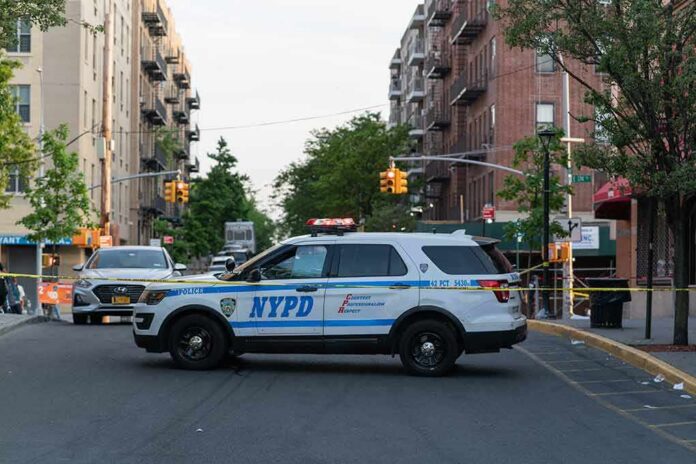
NYPD asked the public for help finding a man who raped a 21-year-old at knifepoint, and the few released details raise real questions about safety and transparency in New York City.
Story Snapshot
- Police confirmed a 21-year-old woman was raped at knifepoint in Manhattan and are seeking tips.
- No arrest or suspect description has been released yet, and the case remains open.
- Similar knifepoint attacks in recent years show this is not an isolated pattern.
- Public data gaps, including a date discrepancy, limit accountability and trust.
What Police Confirmed So Far
New York City Police Department Crime Stoppers posted that a 21-year-old woman was raped at knifepoint in Manhattan. The post said the attack happened in the evening and urged people to share tips with the Sex Crimes Hotline or Crime Stoppers. The update did not include a suspect name or a clear description. Police said the investigation is active, and no arrest has been made. The appeal confirms the crime and the ongoing search.
The Crime Stoppers post lists phone lines and calls for the public’s help. That signals police see community tips as vital in these cases. Officials often do that when they lack a clear lead. The post’s brevity leaves many questions. People want to know the exact location, what the suspect looked like, and if cameras caught the attack. Those details were not included in the public post.
Missing Details And A Date Discrepancy
The social post cites June 14, 2026, while some public chatter mentions June 27. That mismatch adds confusion and feeds doubt about what happened and when. Police have not released a public incident report that settles the date. They have not shared a suspect sketch, clothing notes, or clear images. Those gaps can slow tips and weaken trust. The facts we do have come from the official Crime Stoppers appeal.
Lack of detail is not new in sex crime cases. Police often hold back facts to protect victims and the case. But too little information can backfire. People begin to think leaders do not level with them. That view cuts across politics. Both right and left worry that institutions guard themselves first. Clear updates, even brief ones, show respect to victims and the public. A simple timeline and suspect basics would help here.
Pattern Of Knifepoint Attacks And Why It Matters
New York has seen other knifepoint rapes where police at first lacked a suspect. In one case last year, a 23-year-old woman was attacked by a stranger in her apartment in Queens, with no arrest reported at first. That case, like this one, relied on public tips and patience as detectives worked leads. Patterns like these show how weapons and surprise raise fear and risk in city life.
Police are searching for a "sicko" who raped a woman at knifepoint in Greenwich Village during the early morning hours last month.
The 21-year-old woman was near West 10th Street and 5th Avenue around 4:40 a.m. on June 27 when an unidentified man approached her.
The "creep"… pic.twitter.com/e783dYV8mO
— Crime In NYC (@Crime_In_NYC) July 8, 2026
Clear law enforcement follow-through matters. When prosecutors secure convictions, it shows the system can still deliver. Manhattan’s district attorney announced a prison sentence in a separate case for a man who raped two women at knifepoint, proving these cases can be solved and punished when evidence is strong. That outcome underscores why timely tips, DNA testing, and video all matter to move cases forward.
Public Safety, Trust, And The System We Have
People across the spectrum fear walking home at night and doubt leaders’ priorities. They see rising costs, crowded courts, and slow lab work. They hear about cases with little follow-up. Some think the powerful get protection while regular people get silence. Police can push back on that by sharing verified facts fast, even if they are limited. A post that clarifies the date, gives a suspect summary, and notes next steps would help.
Here is what helps now. First, share any tip, even small details, with police. Second, demand a basic case timeline and clear corrections when dates shift. Third, press for resources that speed DNA testing and video review so dangerous offenders are found sooner. These are not partisan asks. They are baseline functions of a system that should put victims first, tell the truth, and fix what is broken.
Sources:
nypost.com, youtube.com, instagram.com