Inside a Michigan mall food court, a fight between young men turned into deadly gunfire, exposing once again how easy it is for anger and handguns to shatter ordinary life in seconds.
Story Snapshot
- Two young men were killed and a third wounded after a dispute erupted into gunfire at Fairlane Town Center in Dearborn.
- Police say the shooting was not random, and that the people involved knew each other and came armed with handguns.
- Witness stories clash on whether the spark was a fight or a theft attempt, feeding public doubt and fear.
- The case fits a larger national pattern where youth conflicts and easy gun access turn malls, schools, and streets into danger zones.
What Police Say Happened Inside the Dearborn Mall
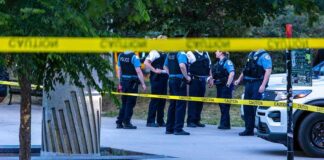
Dearborn Police Chief Issa Shaheen said three people were shot during a dispute inside the Fairlane Town Center mall, leaving two dead and one injured. One victim died at the scene, and another died after being taken to a hospital. The third young man was taken to a hospital with gunshot wounds. The chief stressed this was not a random attack on shoppers, but a conflict between people who already knew each other and came armed into a crowded public space.
Chief Shaheen said both “sides” in the dispute brought handguns with them into the mall, and the gunfire started after a fight escalated. He described the victims as young males in their late teens or early twenties, close in age to his own children. That detail hit home for many parents and grandparents listening. They see a place meant for everyday life—shopping, food, teenagers hanging out—turn into a scene where kids carry guns as if violence is just part of normal life.
Witness Confusion and Rumors Fuel Public Distrust
Witness accounts from local television outlets draw a messy picture of how the shooting began. One witness told WXYZ-TV that she saw two young men arguing and fighting before shots rang out. Another witness, identified as Ella in a FOX 2 Detroit report, said she saw a man try to steal from a woman, pull a gun, and then fire when others stepped in. These clashing stories—fight versus theft—have made it hard for the public to feel they fully understand what happened.
At the same time, Chief Shaheen pushed back on social media rumors claiming the shooting started with a purse snatching robbery, saying police did not believe that was the motive. He also warned that the investigation is still early and that no final motive has been confirmed. Police have interviewed multiple people and taken some into custody for questioning, but they have not publicly named suspects or laid out clear charges yet. That silence, even if legally necessary, feeds the feeling among many Americans that institutions hide more than they tell.
Why This Fits a Larger Crisis of Youth, Guns, and Public Spaces
This Dearborn shooting is not an isolated freak event. Federal research shows that nearly 6,000 youths aged 15 to 24 were killed with firearms in 2020 alone. Studies find that young people who often get into serious fights or group conflicts are much more likely to carry handguns. That pattern matches Chief Shaheen’s description of two groups arriving armed, already locked into some ongoing dispute, and turning a food court into a battlefield.
@CBS Crime
2 dead, 1 injured in shooting at Fairlane Town Center in Dearborn, Michigan, police say
By Joseph Buczek
Updated on: July 3, 2026 / 5:48 PM EDT / CBS Detroit
–All three victims are young men, believed to be in their late teens or early 20s, Shahin said.
Great…— Joseph SPI (@joseph_spi) July 4, 2026
Researchers also describe an “ecology of danger” in some communities, where many teens see daily life as hostile and expect others to mean them harm. In those settings, carrying a gun can feel like basic self-defense, even while it makes lethal outcomes more likely. Urban Black and Latino youths are far more likely to witness gun violence or hear gunshots than their white peers. When conflicts break out in malls, schools, or parking lots, kids raised in that reality may reach for a gun before they think about backing down.
Shared Frustration with Institutions That Fail to Prevent Violence
For many Americans on the right and the left, this incident taps into a deeper anger with how leaders handle crime and safety. Conservatives often see this kind of youth gun violence as proof that past “soft-on-crime” policies, weak border control, and a focus on ideology over personal responsibility have made public spaces less safe. Liberals often see the same events as proof that growing inequality, lack of opportunity, and discrimination have left young men feeling trapped, with guns becoming a tragic outlet.
Yet both sides increasingly agree on one core point: the federal government and many state institutions are not solving the problem. Congress passed some youth gun measures after the Uvalde school shooting, including stronger checks for buyers under 21. But shootings in malls, schools, hotels, roads, and even police lobbies in places like Dearborn have continued. Each case triggers promises, press conferences, and talking points—and then life returns to a tense “normal” where parents wonder if a food court or concert could become the next crime scene.
What This Dearborn Case Tells Us About the Road Ahead
For families in Michigan and across the country, the Fairlane Town Center shooting is another reminder that safety now feels like a gamble, not a guarantee. People of all politics see elites and agencies arguing about blame while local communities absorb the losses—funerals, trauma, kids afraid to go to the mall. The conflicting witness stories and limited details from police in Dearborn show both the need for careful investigation and the cost of slow, partial communication, which breeds rumors instead of trust.
Gun violence research suggests that real progress will require more than one new law or one more press conference. It will mean facing the reality that many young men see their environment as hostile, their future as dim, and guns as normal. It will also mean demanding more transparency and competence from leaders who talk about safety yet preside over a country where everyday places feel like possible war zones. Until that gap closes, shootings like the one in Dearborn will keep echoing the same message: ordinary Americans are paying the price for systems that refuse to change.
Sources:
washingtontimes.com, katu.com, clickondetroit.com, facebook.com, fox2detroit.com, aol.com, instagram.com, ojjdp.ojp.gov