Standing in front of fighter jets days before Independence Day, Vice President JD Vance told U.S. troops that Iran’s navy is “at the bottom of the ocean” and its nuclear program “destroyed,” even though no independent evidence has yet been provided to back up those sweeping claims.
Story Snapshot
- Vance praised pilots at Naval Air Station Oceana and said Trump’s Iran war goals have already been met.
- He claimed Iran’s conventional navy is sunk and its nuclear program pushed farther from a bomb than in 20–30 years.
- He framed recent bombings and a fragile ceasefire as “leverage” that created three days of free commercial shipping.
- Critics say the speech fits a growing pattern of political leaders making bold military claims to troops without clear proof.
Vance’s message to troops: clear missions and a claimed victory over Iran
Vice President JD Vance spoke to sailors and Marines at Naval Air Station Oceana in Virginia Beach as the country headed into the Fourth of July weekend and as talks continued over a permanent end to the war with Iran. He told the service members that they had offered deep sacrifice for the nation and said they should expect one thing in return: clear missions. “We tell you exactly what we want you to accomplish. That is what this administration has promised,” Vance said, drawing a direct contrast with past wars he implied were fought with fuzzy goals.
Vance then described what he said were the three core tasks President Trump gave the air wing that returned from combat in May. First, he said, the president ordered the destruction of Iran’s conventional military, telling the crowd that “their navy is at the bottom of the ocean” and that Iran now has “no ability to project power like they did even 12 months ago.” Second, he said the mission was to destroy Iran’s nuclear program, claiming U.S. intelligence now shows Iran is farther from building a nuclear bomb than at any point in the last twenty to thirty years.
Bombs, ceasefire, and “leverage” in ongoing Iran negotiations
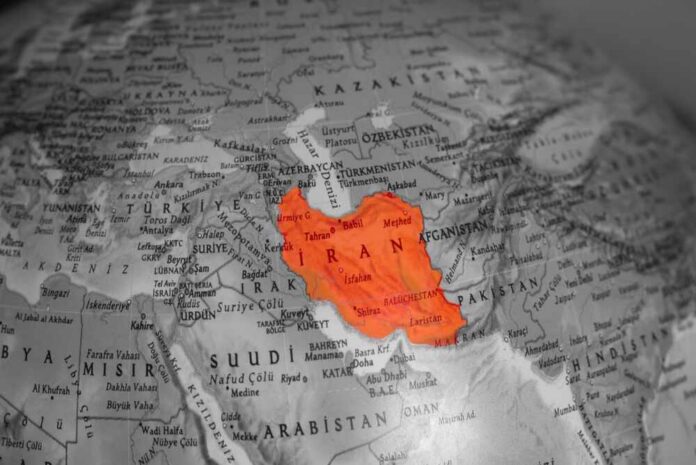
Vance tied those battlefield claims to a larger political story, arguing that Trump is now negotiating from a position of strength. He told the audience that the administration recently “dropped some bombs” because Iranian forces were shooting at commercial ships, and said that after the strikes, “we’ve had free commercial transit for the last three days.” Speaking to reporters after the visit, he described a fragile ceasefire that is still holding and said technical negotiators from Iran, Qatar, and other countries are meeting in Doha to work through details, including keeping commercial traffic safe.
At the same news gaggle, Vance warned that the United States could resume war if the ceasefire ends without a deal and if Iran restarts dangerous activities. He said Trump “maintains a lot of options,” including fresh airstrikes, but promised the president would not send troops back in unless there is a clear purpose. If Iran tries to rebuild its nuclear program or resume shooting at commercial vessels, Vance said, “that’s going to change our calculus,” and he argued the prior strikes mean “the president’s got options again because of you.”
Big claims, missing proof, and the politicization of military speeches
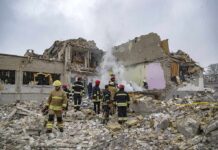
So far, there is no public Pentagon assessment, satellite imagery, or international inspection report in the available record that confirms Iran’s entire navy is “at the bottom of the ocean” or that its nuclear program has truly been “destroyed” to the extent Vance described. His statements about Iran’s nuclear progress rest on his own reference to U.S. intelligence estimates, but no underlying data has been released. Likewise, the claim of fully “free commercial transit” for three days after recent bombings has not yet been matched with detailed shipping or Navy reports.
That gap between rhetoric and documentation worries people across the political spectrum who already feel disconnected from Washington. Research on Trump-era speeches shows a sharp rise in violent language and dramatic talk about conflict, used to rally supporters and frame policy fights. Other work on political speech in the armed forces warns that turning military settings into backdrops for partisan messages breaks long traditions of keeping the armed forces separate from day-to-day politics. Senator Jack Reed, for example, has criticized Trump for using bases as rally sites and for trying to turn the military into a political tool.
Why this speech hits shared frustrations about war, truth, and the “deep state”
For many conservatives over 40, Vance’s promise of clear objectives speaks to real anger over past “endless wars” where missions seemed to drift and victory was never defined. His message that Trump will not send troops into combat without a tight goal pushes back on fears of open-ended nation-building and massive spending that do little for everyday Americans. At the same time, his bold, unverified talk about destroying another country’s navy and nuclear program feeds concern that leaders treat war like a talking point instead of a grave last resort.
Older liberals, who worry about “America First” policies, civilian deaths abroad, and the growing gap between rich and poor, hear something different in the same speech. Vance’s framing of airstrikes as “leverage” in negotiations sounds like the government using force to manage headlines as much as to secure peace. Both sides share a deeper fear: a federal government run by elites who make huge claims, demand trust, but rarely share enough hard proof to let citizens judge for themselves. In that sense, Vance’s visit to Oceana highlights not only the bravery of U.S. troops, but also a wider struggle over truth, accountability, and who really benefits when bombs fall in someone else’s country.
Sources:
military.com, youtube.com, facebook.com, instagram.com, rev.com