China’s new ethnic unity law claims the right to punish speech worldwide, putting American citizens, allies, and even lawmakers in the crosshairs of Beijing’s ideology.
Story Snapshot
- China’s ethnic unity law asserts power over foreign citizens and groups for speech and activism done outside China.
- Beijing calls this “legitimate” and says it follows international practice, while critics warn of transnational repression.
- United Nations experts and the European Parliament say the law threatens minority cultures and basic human rights.
- The law deepens forced assimilation of groups like Uyghurs and Tibetans and expands China’s reach beyond its borders.
Beijing Says Its Law Reaches Beyond China’s Borders
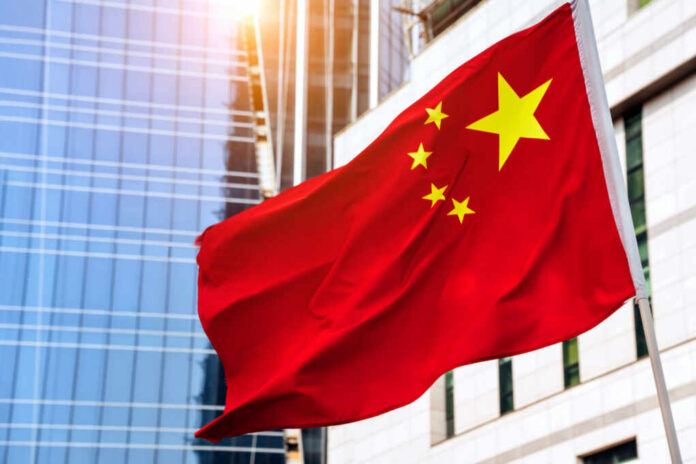
Chinese leaders now openly say their new ethnic unity law applies to people outside China’s borders, including non-Chinese citizens who speak out on ethnic or religious issues.[3] The law’s Article 63 states that organizations and individuals outside the territory of the People’s Republic of China who carry out acts “aimed at the PRC” that undermine ethnic unity or create ethnic division will be held legally responsible.[5] That means a journalist, pastor, scholar, or activist speaking in Washington, Tokyo, or Taipei could be treated as a criminal under Chinese law simply for defending persecuted minorities.
Vice Minister of Justice Hu Weilie defended this global reach at a June news conference, rejecting the term “long-arm jurisdiction” as “unobjective and legally unfounded.”[2] Hu argued that all countries have the right to stop separatist activities and maintain social cohesion through domestic laws and claimed the provision is based on China’s national conditions and is “consistent with international practice.”[1] In plain terms, Beijing wants the world to accept that it can police speech and advocacy on ethnic issues wherever they occur, so long as it says those words “target” China.
Law Anchors Xi’s Assimilation Agenda At Home And Abroad
The ethnic unity law is not only about borders; it locks in a shift from local autonomy to hard-line assimilation for China’s 55 recognized minority groups.[4] Analysts note the statute codifies Xi Jinping’s policies on ethnic affairs, pushing a single, “shared” Chinese identity over diverse languages, cultures, and religious traditions.[6] That means more Mandarin-first schooling, stricter ideological teaching, and pressure on faith communities to follow Communist Party doctrine.[7] United States lawmakers have warned the law gives state power to a campaign to “forge” one national identity and punishes those accused of “damaging ethnic unity,” from Uyghurs and Tibetans to Mongols and Hui Muslims.[13]
United Nations human rights experts have also sounded the alarm. In an April letter, eight UN special rapporteurs warned that the law could turn “temporary” regional experiments in places like Tibet and Xinjiang into binding nationwide orders.[12] They said this would seriously harm linguistic, cultural, and religious rights and autonomy for ethnic groups, including Uyghurs, Tibetans, and Mongols.[12] The experts highlighted Article 20, which forces parents to teach minors to love the Communist Party and the Chinese nation, and Article 54, which urges citizens to report acts seen as undermining ethnic unity.[12] Together, they say, these rules build an ideological enforcement model that tightens Party control inside families and communities and lays the groundwork for wider surveillance.
Global Critics See Transnational Repression, Not Normal Law
Outside China, many governments and rights groups view the extraterritorial clause as a tool of transnational repression aimed at diaspora communities and foreign voices.[1] The European Parliament has passed a resolution calling for the law’s repeal, saying it threatens the survival of minority cultures like those of Uyghurs and Tibetans.[1] United Nations High Commissioner for Human Rights Volker Türk warned the law could restrict freedom of religion and culture and potentially violate at least a dozen human rights treaties China has signed, including the International Covenant on Economic, Social and Cultural Rights and the International Covenant on Civil and Political Rights.[4]
Human rights researchers point to existing patterns to show how this law could be used in practice. Groups tracking Chinese security activities have documented more than one hundred overseas “police service stations” in over fifty countries, which they say are used to monitor and pressure Chinese nationals and critics abroad.[2] Analysts argue the ethnic unity law now gives a broader legal cover for that behavior by framing ethnic policy as a matter of national security, not human rights.[2] Within this frame, assimilation of minorities is treated as a condition for stability, and those who resist—whether in Xinjiang or on American soil—can be painted as threats to “unity.”[9]
Why This Matters For Americans, Allies, And Free Speech
For Americans who care about the Constitution, religious freedom, and open debate, China’s ethnic unity law is a direct challenge to core values. By claiming legal authority over foreign citizens who criticize Beijing’s treatment of minorities, China is asserting power far beyond its borders and into free societies.[10] Commentators warn that Uyghur and Tibetan activists, Chinese dissidents, scholars, journalists, and human rights defenders living in Europe or North America may now face new legal risk if they are targeted by Beijing’s long-arm claims.[13] While China cannot enforce its criminal code in the United States without cooperation, the law still raises dangers, including travel risks, family pressure, and use of economic leverage to silence critics.
I would advise that most people do not jump to conclusions, exaggerate facts, make unfounded inferences, or mislead the public.
I discussed this issue with some friends in China's legal community, and their views were as follows:
China has indeed passed the Law of the People's…— Jack Wu (@0012015Jackwu) June 24, 2026
Conservative readers recognize this pattern: a one-party regime writes sweeping laws, wraps them in the language of “order” and “unity,” then uses them to crush dissent and export fear. United Nations experts and independent researchers are urging free nations to press China to suspend or repeal the law or amend it to meet human rights standards.[12] For the Trump administration and its allies, this controversy underscores why strong borders, energy independence, and a clear-eyed stance on China are vital. When Beijing claims it can punish speech in our own countries, Americans see the stakes: either we defend our freedoms, or hostile regimes will try to write the rules for us.
Sources:
[1] Web – China says ‘legitimate’ to apply new ethnic unity law beyond its …
[3] Web – China rejects ‘long-arm jurisdiction’ criticism of new ethnic unity …
[4] Web – Ethnic Unity and Progress Law – China Law Translate —
[5] Web – China rejects ‘long-arm jurisdiction’ criticism of new ethnic unity …
[6] Web – New PRC Ethnic Unity and Progress Law enforces assimilation of …
[7] Web – China has pushed back against the “long-arm jurisdiction” label …
[9] Web – China’s New Ethnic Unity Law: From Autonomy to Assimilation
[10] Web – Draft Ethnic Unity Law Intensifies Language and Cultural … – CECC |
[12] Web – China Says It Has a Right to Target People Overseas With New Ethnic …
[13] Web – China’s New Ethnic Unity Law and Its Global Implications