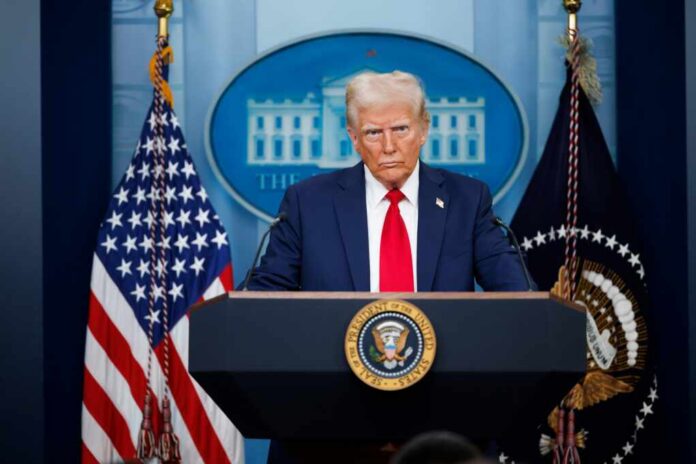
As Iran hurls missiles at Israel and the ceasefire hangs by a thread, President Trump’s quiet push for Israeli restraint is testing how far America should go to avoid a wider Middle East war without tying our allies’ hands.
Story Snapshot
- Trump told reporters he would call Benjamin Netanyahu and urge Israel not to retaliate after Iran’s latest missile barrage.
- Reports say Trump’s goal is to protect a hard‑won ceasefire and push toward a broader peace deal with Tehran, not to abandon Israel.
- Critics question whether restraining Israel undermines deterrence, even as the administration warns Iran of devastating force if it escalates.
- The episode highlights the tension between avoiding endless wars and ensuring America and its allies are never seen as weak.
Trump’s Call to Netanyahu: Restraint After Iran’s Missile Strike
After Iran launched missiles toward Israel in violation of the fragile ceasefire, President Donald Trump said in a television interview that he was “going to call Bibi right now and tell him not to retaliate.”[1][5] He argued that the Iranian strikes “didn’t hurt anybody” and warned that another Israeli strike would only keep the cycle going “like the last 47 years, or the last 3,000 years.”[1] Trump framed his message as an attempt to stop a fresh spiral of tit‑for‑tat attacks.[1][2][5]
Reporting from Radio Free Europe/Radio Liberty and others backs up that this was not just rhetoric for the cameras but a line Trump carried into private diplomacy.[5] A senior United States official told one outlet that Trump believed he had persuaded Netanyahu to hold off because the two sides were “close to doing something good in terms of a deal.” According to this account, Netanyahu “pseudo‑agreed” to delay retaliation, even as Israel’s military signaled it was prepared to respond if needed.[2][5]
Ceasefire, Diplomacy, and Conservative Concerns About Deterrence
The timing of Trump’s advice is tied directly to a ceasefire that ended the so‑called Twelve‑Day War between Iran and Israel in June 2025, which the United States and Qatar helped broker. Trump has repeatedly described that ceasefire as a platform for a “real end” to the conflict, saying he does not want just another temporary pause but a durable settlement that protects American interests and regional stability. Supporters argue that counseling restraint now is aimed at preserving that leverage for a larger deal with Tehran.[5]
For many conservatives, the word “restraint” raises a red flag if it sounds like the old pattern of pressuring Israel while allowing America’s enemies to test red lines with impunity. Trump’s own record complicates that picture. He authorized massive joint United States–Israeli strikes on Iran earlier in the war, aimed at crippling its nuclear and missile capabilities and degrading its military infrastructure.[3][4][7] Analysts note that regional leaders, including some Arab Gulf states, even urged Trump not to stop too soon, pressing him to further weaken Iran’s forces.[6] That history suggests his current caution is not rooted in pacifism but in war‑weariness and negotiation strategy.
Did Trump’s Advice Protect the Ceasefire or Tie Israel’s Hands?
Trump has publicly insisted that his goal is to avoid an even larger war, warning that Iran was preparing major attacks if the United States and Israel did not act first earlier in the conflict.[3] In one account, he explained that he ordered strikes because he believed Tehran was going to attack the United States if negotiations failed, saying, “If we didn’t do it, they were going to attack first.”[3] Now, with a ceasefire in place but under strain, he argues that another Israeli response could “blow up” a near‑final deal with Iran.[1][5]
The evidence that his advice alone preserved calm is mixed. Reports indicate that Israel has continued to prepare options and has conducted strikes at other points in the conflict despite outside pressure.[2][7] Analysts caution that live crisis coverage compresses cause and effect, making it hard to prove whether Trump’s call changed operational timelines or simply coincided with Israeli decisions that were already under review. There is no public, on‑the‑record Israeli confirmation that Trump’s message determined their course of action, and much of what is known relies on journalist accounts and unnamed officials rather than formal transcripts.[1][2]
Balancing “No More Endless Wars” With Strength Against Iran
Conservatives who backed Trump to end globalist misadventures face a real tension in moments like this: how to back a tough line on Iran without sliding back into another open‑ended Middle East war. Trump has warned Iran that any major retaliation would be met with “force that has never been seen before,” promising overwhelming military power if American or allied lives are targeted.[4] At the same time, he has highlighted the economic and strategic cost of extended conflict, arguing that targeted strikes and leverage at the negotiating table serve the United States better than permanent deployments and nation‑building.[3][4]
When will Trump stand up to Netanyahu? Last night President Trump was humiliated by Israel.
The President told Israel not to retaliate against Iran, he said to FT ‘I call the shots, he doesn’t call the shots’. Netanyahu ignored his advice & attacked Iran. Why are there never…— Raibeart #YES 🏴🇪🇺 (@RaibeartAlba) June 8, 2026
For voters at home, the stakes go beyond foreign policy theory. Every missile exchange risks spikes in oil prices and shipping disruptions in the Strait of Hormuz, which can feed the high energy costs and inflation families already feel.[5] A wider war could drag American forces back into another long campaign, with all the financial and human costs that entails. Trump’s bet is that a mix of hard power and carefully timed restraint can secure a tougher deal with Iran while keeping American troops out of another endless quagmire—a strategy that will be judged by whether it truly deters Tehran without weakening Israel or emboldening other adversaries.[3][4][6]
Sources:
[1] Web – Trump says he told Israel not to retaliate for Iranian strike
[2] Web – Trump Says Netanyahu ‘Won’t Have Any Choice’ But To Accept US …
[3] Web – Trump says Netanyahu will do “whatever I want” on Iran, and he’s “in …
[4] Web – Gauging the Impact of U.S.-Israeli Strikes on Iran
[5] Web – Trump was warned Iran could retaliate across the Persian Gulf
[6] YouTube – Trump Says He Was Surprised By Iran’s Retaliation After U.S.-Israel …
[7] Web – The Problem With the Idea That Netanyahu Made Trump Attack Iran