Ukraine quietly removed one of its most important diplomats just as war-time corruption questions and strained ties with Washington are mounting.
Story Snapshot
- President Volodymyr Zelensky dismissed Ambassador Olha Stefanishyna to the United States by formal decree.
- The move came during a wider government reshuffle and before Kyiv named a replacement for the key Washington post.
- Stefanishyna says she asked to step down for personal reasons, but she is also under anti-corruption investigation.
- The episode feeds global worries that war, money, and opaque decisions are reshaping Ukraine’s politics behind closed doors.
Zelensky’s Decree And A Key Diplomat’s Exit
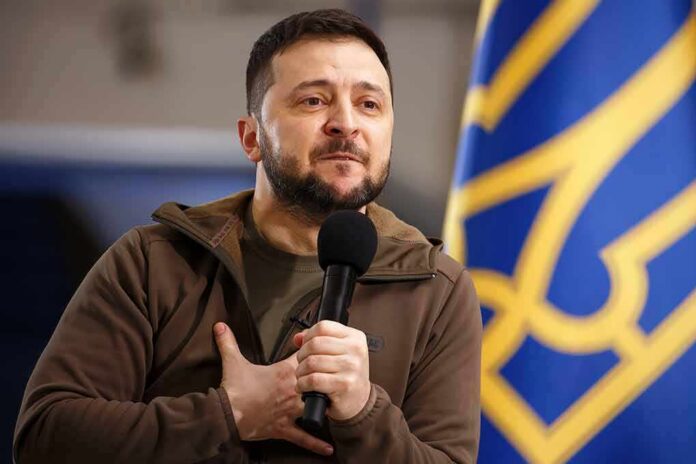
President Volodymyr Zelensky signed a decree dismissing Olha Stefanishyna from her role as Ukraine’s ambassador to the United States, ending her roughly year-long tenure in Washington. The decree, numbered 696/2026, was published on the presidential website and confirmed by Ukrainian and international media. There is no public explanation in the decree itself, and no new ambassador has yet been officially named to take over this vital post. For a country that depends on United States weapons, money, and political backing, a sudden vacancy in Washington matters.
Stefanishyna is not a minor figure. She previously served as a deputy prime minister focused on Ukraine’s ties with Europe and the North Atlantic Treaty Organization. As ambassador, she lobbied United States lawmakers for more Patriot missile systems and other air defenses to counter Russian attacks. Her removal came less than a week after Zelensky’s latest visit to Washington to press for more military support, raising questions about why a trusted envoy was sidelined at such a sensitive moment. For American readers who worry about where billions in aid are going, that timing feels far from routine.
Government Reshuffle And Personal-Choice Narrative
Ukrainian officials and several news outlets frame the dismissal as part of a larger reshuffle of top posts in Kyiv. In recent weeks, Zelensky has replaced the prime minister and the defense minister and signaled a broader rotation of ambassadors. Supporters say this kind of turnover is normal in wartime and helps keep the government flexible. Stefanishyna herself wrote on Facebook that leaving the post was her own decision, driven by personal circumstances, and that she had completed key goals she set for her time in Washington. She even shared a formal letter asking to be relieved of duty.
Ukrainian public broadcaster Suspilne and other outlets report that Stefanishyna told reporters Zelensky did not ask for her resignation. One well-known Ukrainian analyst said the ambassador’s wish to step down actually pushed Zelensky to accelerate his broader government reshuffle. On the surface, this paints the picture of a respected official choosing to leave after a demanding year abroad. Yet the lack of detail about those “personal circumstances,” combined with the vacant post and ongoing war, leaves many observers uneasy. In an era when citizens in many countries feel leaders rarely tell the whole story, this kind of vague explanation invites doubt.
Anti-Corruption Investigation And Asset Questions
At the same time, Ukrainian and international media say Stefanishyna has been under investigation by national anti-corruption bodies. The Specialized Anti-Corruption Prosecutor’s Office opened a case in 2025, after a journalistic probe claimed people close to her received valuable assets from the state Asset Recovery and Management Agency. Those assets reportedly included the historic Trade Unions Building in Kyiv, a property that carries both financial and symbolic weight. The National Anti-Corruption Bureau is also said to be reviewing alleged irregularities in her asset declarations.
So far, Stefanishyna has not been formally charged with a crime. Reports say she promised to address questions about her asset declarations separately, suggesting she knows the issue will not simply fade away. For many Americans, this sounds familiar: a high official leaves, says it was “personal,” while watchdogs continue to dig into money and property deals. Ukrainians, who have lived through years of corruption scandals, are also used to seeing investigations linger without clear outcomes. The mix of war, giant aid flows, and half-explained asset cases fuels the sense that ordinary people are kept in the dark while insiders trade posts and wealth.
Wartime Diplomacy, Aid Fatigue, And Deep-State Fears
Stefanishyna’s removal comes as Ukraine struggles to hold United States attention and support in a changing political climate. Under President Trump’s second term, reports say United States arms deliveries to Ukraine have fallen sharply, and many voters question open-ended foreign commitments. Kyiv is pushing hard for more Patriot systems and other weapons, while Congress and the White House face pressure at home over inflation, border security, and government debt. When a key Ukrainian voice in Washington suddenly exits, it adds to a sense of drift and confusion on both sides of the ocean.
For conservatives and liberals in America who already distrust elites and “deep state” insiders, this story hits familiar nerves. A president under pressure moves a top envoy without giving a clear reason. An ambassador under investigation insists her exit is purely personal. Anti-corruption agencies work behind closed doors as giant aid packages move through distant capitals. Whether one blames globalists, war hawks, or corrupt local officials, the result feels the same: everyday citizens see powerful people trading posts and influence while the real costs of war and economic strain fall on them.
Sources:
thegatewaypundit.com, reuters.com, xinhuanet.com, scmp.com, yahoo.com, youtube.com, facebook.com, instagram.com