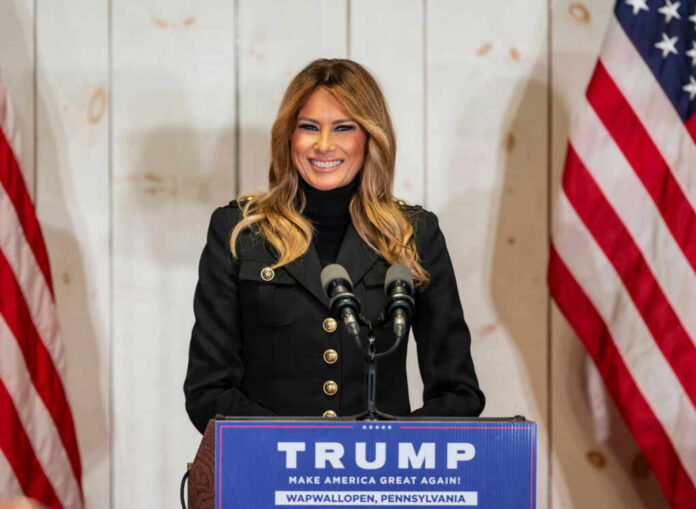
While U.S. bombs and Iranian missiles dominate headlines, a different kind of battle is playing out at the United Nations—one that puts America’s credibility and constitutional interests under a global microscope.
Story Snapshot
- First Lady Melania Trump is set to chair a UN Security Council meeting, a first for a sitting U.S. first lady.
- The session’s theme—children, technology, and education in conflict—lands during an active U.S.-Iran military conflict.
- The U.S. holds the rotating Security Council presidency for March 2026, with Ambassador Mike Waltz supporting the session.
- U.S.-UN tensions remain high, including reported U.S. arrears and U.S. withdrawals from major UN agencies.
A Historic Gavel Drop Amid an Active Middle East War
Melania Trump is scheduled to preside over a United Nations Security Council meeting at UN headquarters in New York on Monday, March 2, 2026, at 3 p.m. The meeting is titled “Children, Technology, and Education in Conflict,” and it comes at a volatile moment: a U.S.-Iran conflict is actively unfolding, with Iran retaliating through missile and drone attacks across the Middle East after a U.S.-Israeli campaign began over the weekend.
The symbolism is unavoidable. The Security Council is the UN’s most powerful body on peace and security, and the chair’s gavel—usually held by ambassadors—will be held by the U.S. first lady. U.S. officials have framed the session as part of America’s focus on the council’s work and the stated topic, while the White House simultaneously signals that military operations against Iran could continue for weeks.
What the Council Meeting Is—and What It Is Not
The agenda centers on children caught in conflict zones and how technology affects education and protection during war. Under-Secretary-General Rosemary DiCarlo is expected to brief members, according to UN scheduling details. Even with a focused theme, Security Council meetings do not automatically produce binding outcomes; results depend on negotiations and, ultimately, votes—where permanent members, including the United States, retain veto power. That matters for Americans wary of foreign bodies “setting rules” for the U.S.
Melania Trump’s role is procedural but high-profile: chairing the session, managing the speakers’ list, and steering the meeting through its formal steps. Supporters will read this as smart use of the rotating presidency to highlight civilian harms in war, especially involving children. Critics will argue the timing undercuts the message. Either way, the headline is real and measurable: the U.S. is putting a first lady at the center of a global security forum during a live conflict.
The U.S.-UN Rift: Money, Mandates, and National Sovereignty
This meeting lands amid an openly strained U.S.-UN relationship. Reports cite Washington as holding roughly $4 billion in arrears to the UN for the regular budget and peacekeeping operations, while UN leadership has warned of financial strain. At the same time, the Trump administration has pulled support from some major UN agencies, including the World Health Organization and UNESCO, and reduced funding to other programs—moves aligned with a broader skepticism that the UN consistently serves U.S. interests.
For conservative Americans, the key issue isn’t pageantry—it’s leverage and sovereignty. The U.S. remains a permanent Security Council member and a major financial contributor, meaning it can influence outcomes while also being asked to subsidize bureaucracy. The administration’s posture suggests it wants the UN doing less social engineering and more core security work. The tension is that UN institutions often push broad policy agendas that many U.S. voters did not authorize and that can collide with constitutional limits at home.
Diplomatic Optics vs. Reality During the Iran Conflict
International Crisis Group analysts have highlighted the contradiction diplomats will notice: the U.S. is promoting a meeting about children, education, and peace while simultaneously boycotting or defunding UN offices working on related themes. That critique gains traction because it points to an observable mismatch between rhetoric and resource choices. Still, the same analysts also suggest most Security Council members are likely to “play nice” during Melania Trump’s appearance, because few governments want to jeopardize bilateral ties with Washington over a meeting with limited immediate consequences.
The bigger reality is that the Iran conflict will dominate private conversations in the building regardless of the formal topic. Iran’s leadership situation has been described as uncertain following the initial strike, and the region is reacting in real time to retaliatory attacks. Any council discussion of children in conflict zones will be colored by the day’s battlefield developments—making the session a test of whether the UN can address human costs without turning into a stage for political blame-shifting.
How Trump’s “Board of Peace” Changes the Diplomacy Equation
President Trump has also advanced a parallel diplomatic effort described as a “Board of Peace,” which reportedly held an inaugural session in Washington with countries pledging funds and personnel to rebuild Gaza. That approach signals a preference for ad hoc coalitions and results-driven commitments over UN process. For Americans frustrated by decades of globalism and blank-check spending, the appeal is straightforward: smaller groups, clearer accountability, and fewer layers of bureaucracy between taxpayer dollars and outcomes.
JUST IN – Melania Trump to chair UN Security Council as Iran war rages https://t.co/N1yl092UxO pic.twitter.com/zBH3HOrUWv
— Insider Paper (@TheInsiderPaper) March 2, 2026
What remains unclear, whether Monday’s Security Council session will produce any concrete action beyond speeches and statements. The long-term trajectory of the Iran conflict is also uncertain, including how it will reshape U.S.-UN relations. But the moment is telling: the Trump administration is willing to use the UN spotlight when it suits U.S. messaging, while still challenging the institution’s funding demands and broad political agenda—an approach many conservatives see as overdue.
Sources:
Melania Trump to chair UN Security Council as Iran war rages
Melania Trump to chair UN Security Council as Iran war rages
FLOTUS in NYC: Melania Trump to chair U.N. Security Council meeting
March 2026 Monthly Forecast: Overview