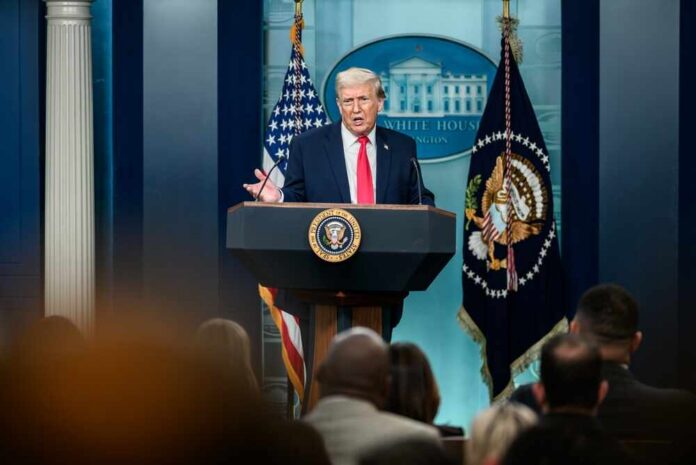
President Trump, furious over underperformance, eyes more Cabinet firings after ousting AG Pam Bondi, raising fears of first-term chaos returning to threaten midterm victories.
Story Snapshot
- Trump considers removing Labor Secretary Chavez-DeRemer and Commerce Secretary Howard Lutnick for generating negative attention.
- Bondi ousted on April 1, 2026, ending 15 months of unusual second-term stability.
- White House denies issues, claiming full presidential support for targeted officials.
- Moves aim at economic messaging reset ahead of 2026 midterms.
Bondi Ouster Sparks Cabinet Review
Attorney General Pam Bondi departed on April 1, 2026, prompting President Trump to scrutinize other Cabinet members. Sources describe Trump as very angry, targeting officials who underperformed or drew excessive negative attention. Labor Secretary Chavez-DeRemer and Commerce Secretary Howard Lutnick now face discussions, though no decisions are final. This follows 15 months of relative stability in Trump’s second term, contrasting sharply with first-term volatility. Conservatives watching closely hope changes strengthen America First priorities without distracting from economic gains.
Targeted Secretaries on Thin Ice
Labor Secretary Chavez-DeRemer defends her record by highlighting efforts to stand up for American workers. Commerce Secretary Howard Lutnick, previously spared, remains under consideration for removal to refine economic messaging. White House spokesperson Taylor Rogers insists both perform well and retain Trump’s full support. Trump holds ultimate authority, often pondering firings before backing off. Such dynamics echo past patterns where leaks test reactions amid political pressures. Supporters value decisive leadership but caution against instability eroding GOP momentum.
Historical Turnover Contrasts Current Stability
Trump’s first administration recorded 92% turnover in top positions by January 2021, with rapid exits like National Security Advisor Michael Flynn in February 2017 and HHS Secretary Tom Price in September 2017. Multiple roles saw serial changes, including Homeland Security secretaries transitioning from John Kelly to Kirstjen Nielsen and acting officials. Trump framed these as smart testing of appointees. Second-term Cabinet held steady for 15 months until Bondi’s exit and prior implied departure of Kristi Noem. This relative calm aided Republican dominance approaching midterms.
Precedents include “resigned under pressure” cases like Secretary of State Rex Tillerson in March 2018 and Interior Secretary Ryan Zinke in December 2018. High first-term serial turnover affected 45% of A Team departures twice or more, such as short tenures like Anthony Scaramucci. Current deliberations signal potential substantive remake, the largest yet in this term.
Midterm Strategy Drives Potential Shakeup
Discussions occur amid an ominous political landscape with November 2026 midterms nearing, where Cabinet stability bolsters GOP control. Trump eyes easier confirmations post-election if Democrats gain seats. Short-term shifts could boost economic messaging, like ousting Lutnick, but risk signaling instability. Long-term, major changes reshape policy execution in Labor and Commerce, influencing trade and employment. American workers stand to benefit from focused leadership, aligning with conservative demands for results over drama. White House pushes back publicly to manage optics.
Sources:
Trump weighs more Cabinet changes after Bondi ouster
Tracking Turnover in the Trump Administration