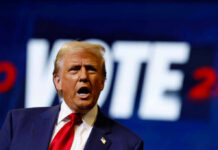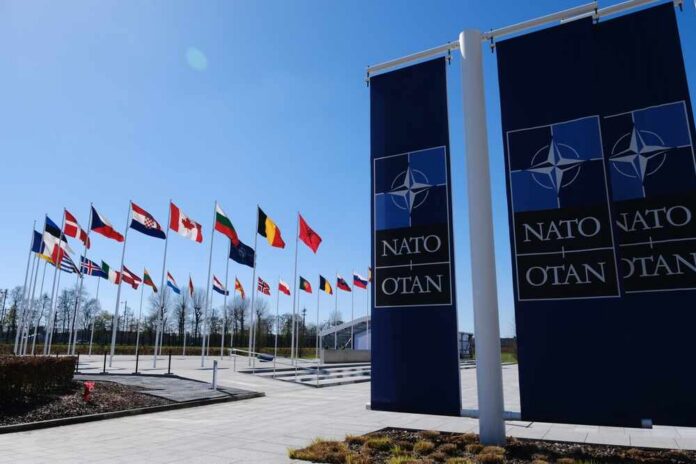
President Trump demands NATO allies police the Strait of Hormuz after Iran’s closure, refusing to let America bear the burden alone in this critical oil chokepoint battle.
Story Snapshot
- Trump blasts NATO as “cowards” for not securing the Strait, insisting the U.S. does not need it while prepping military options.
- Iran’s missile and mine attacks have effectively closed the Strait, spiking global oil prices in week four of the U.S.-Israel war.
- U.S. strikes hit Iran’s nuclear sites, navy, and air force; Pentagon readies ground troops and Kharg Island targeting.
- No verified 48-hour ultimatum to Iran, but Trump pressures for quick reopening without endless U.S. commitment.
Trump’s Firm Stance on Strait Security
President Trump posted on Truth Social late Friday, calling out NATO allies for failing to police the Strait of Hormuz. He stated the U.S. does not rely on the waterway and urged others to step up. This comes amid Iran’s disruptions through missiles and mines, closing the 21-mile-wide chokepoint that carries 20% of global oil. Trump’s approach prioritizes American strength, avoiding the globalist traps of past administrations that overextended U.S. resources. Allies like the UK provide base access but resist full involvement, highlighting NATO’s reluctance.
War Enters Critical Fourth Week
The U.S.-Israel conflict with Iran began early March 2026, escalating after Trump’s March 3 order for maritime trade insurance. U.S. and Israeli strikes targeted Iran’s nuclear enrichment facility on March 21, along with its navy and air force, with no radiation leaks reported. Iran retaliated by hitting Israel, wounding over 90 and targeting the Dimona nuclear center. The Strait’s closure via tanker attacks and infrastructure threats has caused oil prices to skyrocket, punishing global consumers weary of foreign oil dependence. Trump’s leadership ensures decisive action against threats to energy security.
Military Preparations and Ally Pressures
Pentagon sources confirm preparations for ground forces, a potential Kharg Island strike, and nuclear material extraction by Joint Special Operations Command. Defense Secretary Pete Hegseth and Gen. Dan Caine oversee these efforts, with the White House affirming all options remain open. Trump claims the war is militarily won and eyes winding down operations, but seeks $200 billion for expansions. He criticizes NATO’s hesitation, echoing frustrations with alliances that expect America to foot the bill while eroding U.S. sovereignty. This stance protects taxpayers from endless wars.
Tensions exist between Trump and Israeli PM Benjamin Netanyahu on strategy, yet coordination continues. Iran defends its actions as sovereignty protection, using asymmetric tactics like drones. U.S. public polls show opposition to ground troops, reflecting war fatigue from prior mismanaged conflicts.
Economic and Global Impacts
Oil shocks disrupt supplies short-term, with long-term risks of regime change or nuclear proliferation. Gulf states, shipping firms, Israelis, and Iranians face direct hits. Energy sectors suffer as Kharg Island, key to Iran’s exports, looms as a target. Maritime trade proceeds under insurance but at high risk. Trump’s policy shifts burden to allies, countering the overspending and globalism that fueled inflation under Biden. This common-sense approach safeguards American families from skyrocketing gas prices and foreign overreach.
Sources:
CBS News live updates on Iran war, U.S.-Israel gas and oil prices, Trump-Netanyahu, Strait of Hormuz
1News: Trump talks of winding down Iran war but is that happening?
USNI News: Report to Congress on the Iran conflict and Strait of Hormuz