Thai police’s aggressive actions at the Cambodia border ignite international tensions, challenging peace efforts in the region.
Story Snapshot
- Thai police use tear gas and rubber bullets against Cambodian civilians on September 17, 2025.
- Incident marks the first major escalation since a July ceasefire.
- Cambodian Prime Minister calls for UN intervention, accusing Thailand of aggression.
- Dispute is rooted in historical territorial conflicts and unclear borders.
Escalation at the Disputed Border
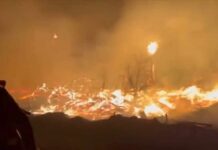
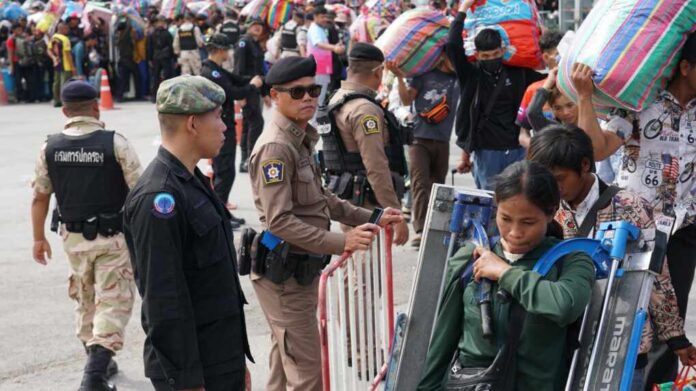
On September 17, 2025, Thai police took severe measures by firing tear gas and rubber bullets at Cambodian civilians near a disputed border area. This incident reignited tensions in a region already fragile from past conflicts. Cambodian villagers attempted to remove barbed wire laid by Thai forces, leading to the confrontation. Both governments have reported injuries, with Cambodian Prime Minister Hun Manet accusing Thailand of expanding its conflict zone and seeking intervention from the United Nations. This marks the first significant escalation since a ceasefire was declared in July.
The border dispute between Thailand and Cambodia is deeply rooted in historical tensions and ambiguous colonial-era treaties. In 1962, the International Court of Justice awarded the Preah Vihear temple to Cambodia but left the status of adjacent lands unresolved. This decision has fueled ongoing disputes, with significant flare-ups occurring in 2008, 2011, and most recently in 2025. The border remains heavily militarized, with both sides maintaining outposts in contested areas, making civilians vulnerable to violence.
«Armed Thai troops and riot police equipped with sticks, shields, and other gear re-entered the barbed-wire fence in Prey Chan village, O’Bei Choan commune, O’Chrov district, Banteay Meanchey province. On the afternoon of September 17, 2025, they used tear gas against Cambodian… pic.twitter.com/aaSwPhzUrE
— Agence Kampuchea Presse (@KampucheaPresse) September 17, 2025
Key Stakeholders and Motivations
The primary players in this conflict include the Thai police and military, the Cambodian civilians and monks residing in disputed areas, and both governments. Thailand’s priority is maintaining security and territorial integrity, while Cambodia focuses on protecting its sovereignty and citizens. ASEAN, with Malaysia as chair, has been mediating the ceasefire and monitoring mechanisms, although their enforcement power is limited. The United States and China also exert pressure on both nations to de-escalate tensions due to their strategic interests in the region.
Cambodia’s Prime Minister Hun Manet has taken diplomatic steps by sending a letter to the United Nations, urging them to address Thailand’s actions. Thailand, however, maintains that the area in question is within its jurisdiction, leading to a stalemate. Both sides accuse each other of provocation, and the risk of military confrontation remains high, despite open diplomatic channels.
Impacts and International Reactions
The recent clash has significant short-term implications, including the heightened risk of renewed armed conflict and further civilian injuries. The incident has drawn international attention, causing diplomatic escalation between the two nations. Long-term, the border instability may strain bilateral relations and impact regional security. ASEAN’s credibility as a conflict mediator could also be affected. The local economies in the border regions are likely to suffer due to the disruption of trade and cross-border commerce.
The involvement of civilians in the conflict increases the risk of internationalization, complicating efforts to resolve the dispute peacefully. As the situation develops, all eyes remain on the actions of both governments and the international community’s response to maintain peace in the region.
Watch report: Thai police fires rubber bullets at Cambodian civilians
Sources:
Silobreaker: Geopolitical analysis and timeline
Encyclopaedia Britannica: Historical context and conflict summary