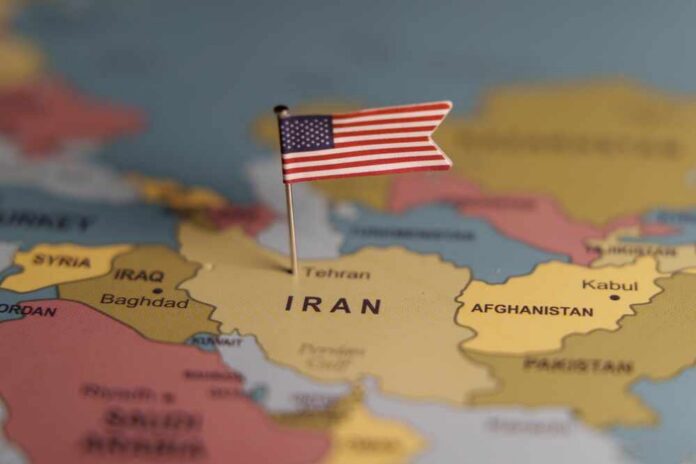
President Trump’s blunt dismissal of “war crime” worries over striking Iran’s power grid is igniting a high-stakes debate about American leverage, civilian protections, and how far Washington should go to stop Tehran’s nuclear ambitions.
Quick Take
- Donald Trump said he is “not worried” that bombing Iran’s power plants could be labeled a war crime, while arguing Iran pursuing nuclear weapons is the real moral offense.
- The White House is using the threat of broader infrastructure strikes—power plants and bridges—as leverage tied to a “make a deal” message.
- Iranian leadership signaled retaliation risks, including warnings that attacks on Iranian power infrastructure could trigger reciprocal strikes impacting Gulf states.
- The episode underscores a familiar American frustration: major national-security decisions collide with legal constraints abroad and public weariness of new wars at home.
Trump’s remark puts civilian infrastructure back at the center of Iran policy
President Donald Trump addressed questions on April 6, 2026 about whether U.S. strikes on Iran’s civilian power plants could violate international law. Trump rejected the premise, saying he was not worried about war-crimes accusations, and reframed the issue around Iran’s nuclear trajectory. In the same line of argument, he characterized allowing Iran to have a nuclear weapon as a “war crime,” sharpening the administration’s deterrence message.
Trump also referenced potential attacks on bridges and power plants while indicating he would not “go further” because other options could be worse. That language matters because it signals escalation control—telegraphing capability without revealing full intent—while still trying to force Tehran to reassess the cost of delay. At the same time, Trump reportedly acknowledged political reality at home, noting the public’s desire to see wars end rather than expand.
Negotiating with threats: maximum pressure meets domestic war fatigue
Coverage of the administration’s posture suggests a leverage-first approach: the U.S. signals potential strikes if Iran refuses to “make a deal,” with ceasefire and negotiation discussions lingering in the background. This resembles earlier “maximum pressure” logic—raise the perceived cost to the adversary while offering an off-ramp. For conservatives who favor peace through strength, the appeal is straightforward; for skeptics, the risk is miscalculation when threats outrun diplomacy.
Democrats and critics are likely to argue the rhetoric flirts with unlawful targeting or needlessly inflames tensions. Republicans, holding unified control of Congress in 2026, face a different challenge: oversight without undermining negotiating leverage or operational security. That tension feeds a broader, cross-partisan distrust of Washington’s national-security machinery—supporters worry about “deep state” drift toward endless conflict, while opponents fear executive overreach with too little transparency.
International law questions hinge on military necessity and civilian harm
International humanitarian law generally restricts attacks on civilian objects unless they provide definite military advantage and expert concern that power plants are typically protected civilian infrastructure. That does not automatically settle any specific case—facts like dual-use functions, operational context, and precautions taken often drive legal judgments—but it explains why the “power plants” framing triggers immediate war-crimes talk. Trump’s comments, by contrast, treat the nuclear threat as overriding.
The practical U.S. dilemma is that modern conflicts blur lines between civilian systems and military capability, especially where electricity supports command, air defense, and industrial capacity. Still, the political downside is predictable: images of blackouts and civilian hardship can harden global opinion against U.S. actions, even when Washington argues self-defense. That reputational cost is one reason administrations historically speak carefully about targets—something Trump’s direct style tends to upend.
Retaliation risk: Gulf allies and energy markets sit close to the blast radius
An adviser to Iran’s supreme leader warned that attacks on Iranian power plants would be met with reciprocal strikes affecting Gulf states, a reminder that regional partners could become collateral targets in a fast-moving escalation. That scenario matters beyond the Middle East because energy infrastructure threats can ripple into global oil pricing, shipping risk, and inflation pressures back home. For Americans still angry about high living costs, foreign crises that spike energy prices land as kitchen-table pain. Americans on both sides of the aisle increasingly want accountability and results, not another open-ended conflict framed as inevitable.
Sources:
Trump says he would “take the oil” in Iran, but the American public wants an end to war
Trump shrugs off war crimes concerns over bombing Iran civilian sites
Iran war live updates: Trump deadline, power plants, bridges, ceasefire push, Air Force rescue