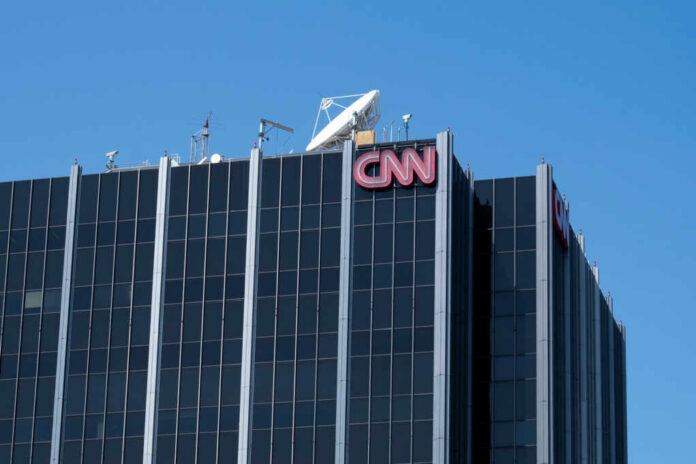
Don Lemon’s claim that Trump “played CNN like puppets” lands because it mixes media self-criticism with a larger warning about how outrage becomes business.
Quick Take
- Lemon said Trump’s coverage became “good for business” for CNN, even as it distorted the news cycle.
- He also argued that newsrooms now censor themselves because of fear, greed, and corporate pressure.
- His account includes a disputed timeline error about his time on “The Daily Show,” which weakens parts of his story.
- Separate data show Trump-era cable news ratings rose across major networks, not just CNN.
Lemon’s Core Claim About CNN and Trump
Don Lemon told Trevor Noah that CNN knew Trump was “playing” the network and that his attacks were “good for business.” Fox News reported that Lemon said Trump’s tweets quickly became the biggest story in a shrinking news cycle[1]. Mediaite published the same exchange and said Lemon added that CNN executives may have understood the dynamic early, even if they never told staff what to say[3].
That argument fits a long-running complaint from media critics on both the left and right. They say major outlets often chase the loudest political figure because conflict sells attention. Lemon’s point is not backed by internal CNN memos in the material provided, so it remains his personal account rather than proven fact. But his version is concrete enough to explain why the claim drew so much attention.
Why the Story Resonates Beyond One Podcast
Lemon also widened the critique beyond Trump. In the podcast discussion and transcript material, he said news organizations practice self-censorship because of “fear and greed,” and he pointed to a CBS journalist whose immigration detention segment was pulled even after vetting[3]. He also described pressure he faced at CNN over his South African accent, saying viewer backlash pushed him to change how he spoke on air[3].
Those details matter because they show the complaint is not only about Trump. It is also about how corporate media can pressure reporters to sound polished, predictable, and safe. That theme connects with broader distrust of elite institutions. Many viewers on the right see bias and coordination. Many on the left see corporate incentives and weak editorial courage. Lemon’s comments tap both fears at once.
What Weakens Lemon’s Case
The biggest weakness in Lemon’s account is accuracy. The research package says he described 17 years at CNN and seven years on “The Daily Show,” even though “The Daily Show” is not a CNN program[3]. That inconsistency does not erase his main point, but it does raise questions about how carefully he is telling the story. A second weakness is that his CBS example lacks names, dates, and other details needed to verify it.
One of CNN’s best-known former anchors is making an admission that conservatives have argued for years. Appearing on Trevor Noah’s What Now? podcast, Don Lemon said CNN executives recognized early on that Donald Trump was dominating the news cycle and benefiting from the…
— Common Sense with Chad Law (@chadparkerlaw) June 26, 2026
There is also a larger counterpoint. Harvard Shorenstein Center data on Trump’s first 100 days found that 41 percent of news stories were about Trump, and 80 percent of the newsmaker voices were Republican[10]. That suggests Trump drove coverage partly by being an unusually dominant political figure. Washington Post reporting using Nielsen data also found cable news viewership rose in the Trump era across CNN, Fox News, and MSNBC[12].
What the Broader Data Suggest
The broader record does not prove CNN singled out Trump for ratings, but it does show how political media works in a high-conflict era. The Shorenstein Center findings suggest Trump generated huge amounts of coverage on his own[10]. Nielsen-based ratings data show the entire cable news business benefited from the Trump cycle[12]. CNN also said it was the number one digital news outlet in the United States for 2024, which shows its audience growth was not tied to one story alone[11].
That leaves Lemon’s remarks in a familiar gray zone. His comments are hard to dismiss because they match what many people already suspect about modern media: attention, money, and politics often pull in the same direction. But the evidence in this package stops short of proving a hidden CNN strategy to elevate Trump on purpose. It supports a narrower claim instead: Trump dominated the news, and media companies were built to reward that dominance.
Sources:
[1] Web – Don Lemon Admits Trump Is a ‘Media Genius’ Who Played CNN Like a …
[3] Web – One of the most interesting parts of this conversation with Don was …
[10] Web – Don told me he’s 60 and I genuinely didn’t believe him. Some people …
[11] Web – News Coverage of Donald Trump’s First 100 Days
[12] YouTube – I’ve studied 1000’s of polls. This is Trump’s biggest midterm red …