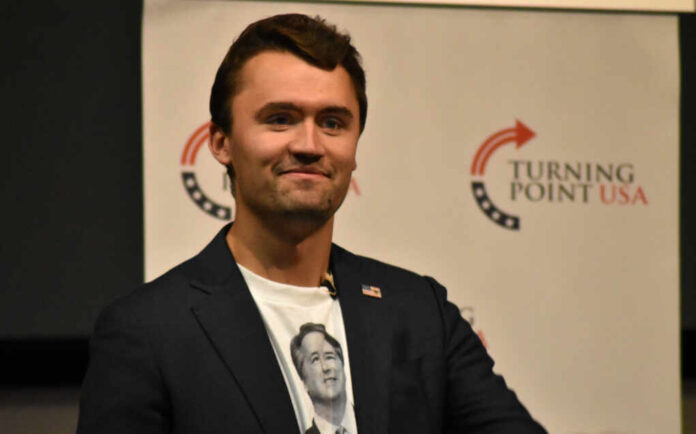
From the moment conservative activist Charlie Kirk was assassinated, partisan leaders immediately began blaming opposing sides—and experts say that rushing such blame risks fueling more political violence.
At a Glance
- Charlie Kirk, co-founder of Turning Point USA, was shot and killed in Orem, Utah; authorities have arrested 22-year-old Tyler Robinson in connection with the shooting.
- Robinson is not affiliated with any political party, had not voted in recent general elections, but had recently expressed negative views about Kirk.
- Evidence includes carved phrases on bullet casings (e.g., “Hey, fascist! Catch!”) suggesting political symbolism and possibly meme culture influence.
- Experts warn that assigning political blame before facts are clear contributes to a “spiral of violence,” especially in a polarized environment where extreme rhetoric is normalized.
The Case and the Context
Charlie Kirk was shot and killed on Wednesday at Utah Valley University in Orem. Law enforcement later arrested Tyler Robinson, 22, a Washington, Utah resident. Although he is a registered voter, he reportedly had not participated in the past two general elections and was not affiliated with a political party. Authorities say Robinson had recently grown more politically vocal, particularly against Kirk.
Court filings show Robinson carved messages into his ammunition, including one casing reading “Hey, fascist! Catch!” Other messages appear drawn from internet meme culture and gaming.
Watch now: Security camera footage captures suspect in Charlie Kirk’s death walking on the day of the shooting
Experts’ Warnings On When Blame Precedes Evidence
Experts caution against jumping to conclusions about who is responsible or what motive lies behind political violence. Robert Pape of the University of Chicago says this is exactly how violence spirals.
Political scientist Bruce Hoffman notes the FBI has created a classification called Nihilistic Violent Extremism to encompass attackers who don’t fit neatly into known ideological or partisan boxes. The increase in “lone wolf” actors with unclear or mixed motivations complicates assigning blame.
Arie Perlinger of UMass-Lowell argues that alcohol-grade political rhetoric—strong demonization of rivals, vitriol in social media—is creating an ecosystem that treats violence toward political opponents as more permissible.
Why Immediate Political Narratives Are Problematic
Distortion of facts: Early claims often reflect what people want to believe rather than what the evidence supports. The early framing of the Kirk killing by some politicians blamed the radical left—despite no verified political organizational link at that stage.
Polarization escalation: When leaders start pointing fingers, it can deepen divisions and stir extremists. Some voices on the conservative side, including Steve Bannon and Alex Jones, reacted by calling for “war” after Kirk’s death.
Undermining justice: If public opinion is set by partisan narratives before an investigation concludes, it can skew both perception and possibly legal fairness.
What to Look For Going Forward
The legal filings and evidence: what Robinson himself says, what his associations are, whether ideology or group affiliation played a role.
Statements from public figures: whether they retract early claims once more facts emerge.
How media frames the story: whether coverage emphasizes facts over speculation.
Sources