Ohio’s rush to lock voter ID rules into its constitution shows how both parties use election law to protect power more than voters.
Story Snapshot
- Ohio senators passed a measure to put a photo voter ID amendment on the November ballot, with strong backing from Donald Trump and state Republicans.[1][4]
- The amendment would not create new ID rules; it would mostly copy current Ohio law into the state constitution and make it harder to change later.[3][4][6]
- Critics on the left and right say the measure ignores mail-in voting rules and could distract from deeper election problems while politicians claim victory.[1][3][5]
- The fight reflects a wider trend where both major parties harden election rules they like, feeding public anger that the “rules of the game” are rigged from the top.[3][5][7]
What the Ohio Senate Just Did and Why It Matters
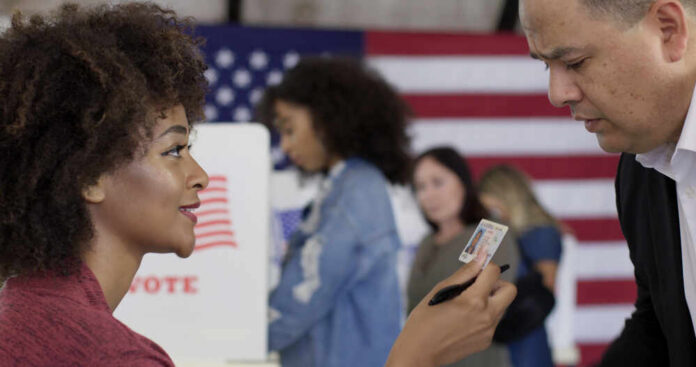
The Ohio Senate passed Senate Joint Resolution 10, a measure that would ask voters this November to add photo identification requirements for voting directly into the state constitution.[3][4] The resolution says electors must provide identification to vote and lists driver’s licenses, state ID cards, United States passports, military IDs, and similar government IDs as acceptable forms.[4] The amendment will appear on the ballot if the Ohio House reaches the required three-fifths vote, or sixty members in favor.[3]
Current Ohio law already requires photo identification for in-person voting, both on Election Day and during early voting, and has done so since 2023.[1][3] Under existing rules, most Ohioans use a state driver’s license or ID, a United States passport or passport card, or a military ID to vote in person.[3][4] News reports and even some voting-rights advocates note that, if the amendment passes, no in-person voting steps will change right away because the constitutional language simply locks in what is already being done.[3][6]
Supporters Say They Are Securing the System for the Long Term
Republican sponsors say they want to “enshrine” voter ID in the constitution to protect it from future lawmakers, courts, or activist campaigns that could try to roll it back.[4][6] They argue that making photo ID a constitutional rule will give Ohio “long-term security” in its elections while keeping access, since the forms of ID listed are widely held and the General Assembly could add more types in the future.[4] Supporters also point to national polling showing broad support for voter ID laws.[2][5]
Nationally, thirty-six states already request or require some form of identification at the polls, which makes photo ID feel normal to many voters instead of extreme.[5] That wider trend helps explain why Ohio Republicans are not only keeping their 2023 law but also trying to lock it in at a higher legal level.[3][5] Many conservatives see this as a way to guard against what they view as past lax rules, worries about noncitizen voting, and a political class that moves the goalposts whenever it benefits them.[6][7]
Critics Say the Amendment Is Redundant and Misses the Real Weak Spots
Voting-rights groups and some lawmakers argue that the proposal mostly repeats existing law and does not fix deeper problems.[3][6] They point out that photo ID is already required for in-person voting, and there is no evidence of widespread voter fraud in Ohio elections.[3][5] Some critics warn that writing operational details into the constitution can make future reforms harder, even if technology changes or if lawmakers later agree that different ID options would better balance security with access.[3][6]
One key concern from both left-leaning and some right-leaning voices is that the amendment does not change rules for voting by mail.[1][3][5] Under current law, mail-in voting uses looser identification standards than in-person voting, and the new measure leaves that structure in place.[1][3] Some conservatives online call this a half-measure, saying real fraud risk is in absentee systems, while many liberals see the focus on in-person ID as political theater that does little for integrity but can make it easier to brag about “cracking down.”[1][5]
Fast-Tracked Politics and Growing Public Distrust
Reports describe the voter ID amendment as “fast-tracked,” with the Senate introducing and advancing it within weeks and the House considering final approval on a tight schedule.[1][3] That speed, combined with heavy pressure from national figures like Donald Trump, who publicly urged Ohio Republicans to get the amendment on the ballot, adds to the feeling that election rules are being used as political weapons rather than careful policy.[1] Many citizens on both sides already suspect that insiders rewrite the rules whenever it helps their own team stay in charge.
This isn’t a win. VOTE NO OHIO. This amendment doesn’t include voter ID for mail-in ballots. Why propose such a half-baked amendment? Mail-in ballots are where the steal comes into play. Fix it to require identification for all voters.
— KLeighB (@kleighb07) June 9, 2026
This Ohio fight also connects to a larger pattern in Washington, where the proposed Safeguard American Voter Eligibility, or SAVE, America Act would layer new federal photo ID and citizenship checks on top of state systems.[7] Critics say that bill could wrongly flag legal voters or share private data too widely, while supporters frame it as another security step.[7] Taken together, these battles show how both parties keep raising the stakes on process rules while core economic and social problems—like rising costs, unfair access, and a widening wealth gap—remain unsolved, feeding the sense that the system works for the few, not the many.
Sources:
[1] Web – JUST IN: Ohio State Senate Passes Bill to Put Voter ID Amendment on …
[2] Web – Ohio Legislators Introduce Joint Resolutions Enshrining Voter ID …
[3] Web – Ohio’s New Election Laws | LWV Ohio
[4] Web – Ohio Senate advances photo voter ID amendment measure
[5] Web – [PDF] Secure And Fair Elections – Ohio Attorney General
[6] Web – Voter ID Laws – National Conference of State Legislatures
[7] Web – Ohio must enshrine voter ID in its constitution