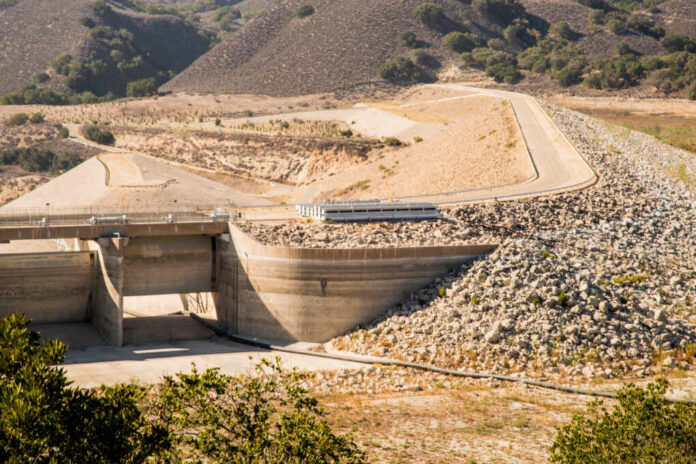
Los Angeles is preparing to drain a key 117‑million‑gallon reservoir for a second time, less than two years after deadly wildfires exposed just how catastrophic empty hydrants can be for families and their homes. LA’s Santa Ynez Reservoir, which was empty during the deadly 2025 Palisades Fire, is scheduled to go offline again for more repairs. Residents who watched hydrants run dry and thousands of homes burn are suing and demanding real accountability, arguing that city officials ignored common sense fire risk and timing. The fight over Santa Ynez shows how mismanaged infrastructure and bureaucracy can endanger lives and property.
Story Highlights
- LA’s Santa Ynez Reservoir, empty during the deadly 2025 Palisades Fire, is scheduled to go offline again for more repairs.
- Residents who watched hydrants run dry and thousands of homes burn are suing and demanding real accountability.
- State regulators defend strict health rules, while critics say City Hall ignored common sense fire risk and timing.
- The fight over Santa Ynez shows how mismanaged infrastructure and bureaucracy can endanger lives and property.
City plans second shutdown of a critical firefighting lifeline
Los Angeles officials plan to once again take the Santa Ynez Reservoir in Pacific Palisades offline, even though the covered 117‑million‑gallon facility sits at the center of a community still rebuilding from the January 2025 Palisades Fire. The first shutdown began in early 2024, when the Los Angeles Department of Water and Power (LADWP) drained the reservoir after discovering a significant tear in its floating cover and moved ahead with a relatively modest repair contract.
When wind‑driven wildfires tore through Pacific Palisades on January 7–8, 2025, fire crews opened hydrants to find water pressure collapsing just as flames reached neighborhoods. Hydrants in parts of the area lost pressure or ran dry while Santa Ynez sat empty above them. At least a dozen people in the Palisades area died and thousands of homes were destroyed countywide, turning a hidden infrastructure decision into a deadly, visible disaster for ordinary families.
The reservoir that was empty during the Palisades Fire, which sparked major backlash, needs to be drained again. #cawater https://t.co/mdm05XaGu2
— Maven (@MavensNotebook) December 19, 2025
Public health rules versus basic common sense fire protection
State and regional regulators later concluded that draining Santa Ynez had been required to protect drinking‑water quality, since the damaged cover could have allowed contamination into the treated supply. After a ten‑month review, they argued that local pipes and system hydraulics would still have been overwhelmed even if the reservoir were full. At the same time, they conceded that having a major storage facility offline clearly reduced resilience and likely shortened the window of usable pressure for firefighters on the front lines.
Specialists and residents have questioned why such a large outage was scheduled across an extended dry stretch and heading into peak wind season in a known wildland‑urban interface. Civil‑engineering specialists note that urban water systems are typically designed for household use and routine fires, not multi‑day megafires crossing several neighborhoods. Critics argue that this makes it even more important to avoid voluntarily sidelining major assets during high‑risk months, especially when state leaders constantly stress climate‑driven fire danger.
Angry homeowners, lawsuits, and political fallout in deep‑blue LA
Homeowners in Pacific Palisades and other fire‑hit communities have responded with lawsuits and visible protests targeting LADWP and City Hall. Some residents have posted yard signs calling for Mayor Karen Bass to resign, insisting that the decision to let a vital reservoir sit empty during fire season crossed the line from bad luck into preventable negligence. They argue that city leaders found money and urgency for favored political causes, yet failed to prioritize basic life‑and‑property protection in a high‑tax, high‑regulation city.
LADWP insists it followed the rules, emphasizing that urban systems are not built to extinguish large‑scale wildfires and that air tankers do most of the suppression work in events like the Palisades and Eaton fires. The utility points to “key leadership changes,” including a new head of water operations and a new procurement officer, as signs it has learned from the crisis. Residents counter that leadership reshuffles mean little when the same infrastructure weaknesses and scheduling decisions are about to be repeated.
National spotlight, competing narratives, and demands for reform
The image of dry hydrants in a wealthy, heavily regulated coastal enclave quickly drew national attention and clashing narratives. Some political figures used the episode to highlight what they view as chronic California mismanagement and misplaced environmental priorities. Others tried to blame “misinformation,” pointing out that no major reservoir had truly been dry for decades and that Santa Ynez had only been offline since 2024. What united many observers, however, was frustration that layers of bureaucracy failed families when it mattered most.
Technical commissions and academic specialists now call for serious investment in larger mains, redundant storage, and smarter pressure management in fire‑prone corridors. They also urge new rules tying maintenance schedules to evolving fire seasons so that critical assets are not sidelined right when Santa Ana winds and bone‑dry fuels make disasters most likely. For conservatives, the Santa Ynez saga underscores why local control, accountability, and practical risk management matter more than slogans about climate while government agencies repeat the same dangerous patterns.
As Los Angeles prepares to drain Santa Ynez again, nearly a year after the Palisades Fire, residents are left wondering whether anything truly changed beyond talking points and press conferences. The episode is a warning sign for communities nationwide: when unelected bureaucrats and big‑city political machines treat essential infrastructure as an afterthought, ordinary Americans pay the price in lost homes, shattered neighborhoods, and avoidable danger the next time sirens wail and the hills ignite.
Watch the report: Why was 117-million-gallon reservoir not used during Palisades firefight?
Sources:
- Pacific Palisades reservoir may go offline again nearly a year after deadly fire
- L.A.’s hydrants ran dry during the fires. Residents are still demanding solutions
- LA to shut down vital reservoir again — one year after devastating wildfires
- Santa Ynez Reservoir Cover Replacement Project Status