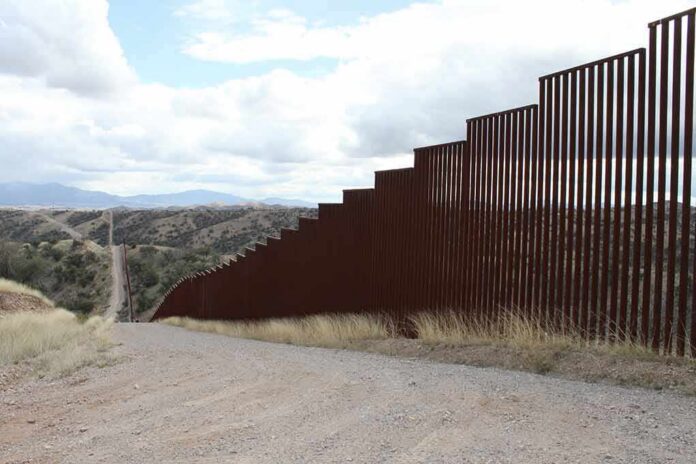
The Supreme Court voted 8-1 to let President Trump’s administration resume border wall construction through Texas’s Big Bend region, tossing out a federal judge’s order that had frozen the project for weeks.
Story Snapshot
- The Supreme Court ruled 8-1 to lift an injunction and allow wall construction to resume in Big Bend.
- The ruling reverses a lower court order from Judge Kathleen Cardone that had paused building across the sector.
- The administration pointed to more than 89,000 apprehensions across the roughly 517-mile sector from 2021 to 2025.
- Ranchers, a river guide, and environmental groups warned the project would permanently damage one of the country’s most remote landscapes.
- Independent research on whether border walls actually cut down crossings remains mixed and sector-specific.
Supreme Court Lifts the Construction Freeze
The Supreme Court’s order allows the Department of Homeland Security to resume building border barriers and related infrastructure while the underlying lawsuit keeps moving through the courts. The justices sided with the Trump administration’s request to summarily reverse the lower court’s block, handing the government a clear win in a fight that had stalled work for weeks.
The decision does not end the lawsuit. It only lifts the pause, meaning construction can continue even as challengers keep pressing their case in the lower courts over whether the government followed the law when it issued waivers for the project.
How the Fight Reached the Justices
Judge Kathleen Cardone issued a preliminary injunction on October 2, blocking border barriers, roads, and related ground-disturbing work in the sector until the government complied with applicable laws. The Department of Homeland Security filed an emergency application with the Supreme Court on October 21, asking the justices to stay her order and summarily reverse it.
Cardone had found the challengers were likely to win on at least one of their claims and faced a real risk of serious, irreparable harm. Later reporting said she found that officials exceeded their authority when they issued the waivers that cleared the way for construction in the first place.
The Government’s Case for Building
The administration leaned on a specific legal tool: waiver authority held by the Secretary of Homeland Security to bypass certain laws for border infrastructure. Officials cited more than 89,000 apprehensions across the sector between fiscal years 2021 and 2025 as evidence of ongoing enforcement need.
In its filing, the government argued its border-security and operational interests “vastly outweigh any aesthetic, recreational, or cultural injuries” raised by the plaintiffs. That framing set up a direct clash between national-security priorities and the protection of a landscape many consider irreplaceable.
Ranchers and a River Guide Describe What’s at Stake
River guide Danny William Miller testified that a wall across his property would block his access to the river and permanently alter the desert landscape, comparing it to “a bullet to the head.” He said his work would shift from showing clients wilderness to showing them what he called “a tour of the military industrial complex.”
Hudspeth County rancher Bill Guerra-Addington said a border barrier would be “a death sentence” for his ranch on the Texas-Mexico border, telling reporters the project was “taking the river away from us.” Their testimony became central evidence in the district court’s original decision to pause construction.
In an 8-1 ruling, the Supreme Court allows the Trump administration to continue building a border wall through Big Bend National Park and West Texas. Justice Jackson was the lone dissent.
— Tangle (@TangleNews) November 9, 2026
Environmental Groups Call the Waivers Unprecedented
The Center for Biological Diversity said the government’s waiver strategy marked the first time in U.S. history that federal officials cast aside a broad set of environmental laws, including protections tied to national parks, endangered species, and wild rivers, inside a park setting.
Dustin Rynders of the Texas Civil Rights Project said the government called no witnesses and presented no evidence of high illegal entry in Big Bend or harm from a temporary construction pause during an earlier hearing, calling the administration’s later Supreme Court filing a “hail mary.” Opponents also argued the region’s remoteness already deters crossings better than any barrier could.
Research on Wall Effectiveness Remains Divided
Independent studies on whether border walls reduce migration reach conflicting conclusions. Some economic research found fencing cut migration from certain Mexican municipalities by roughly 27 percent, with even steeper drops in some interior areas. Other researchers found no clear effect on refugee or migrant flows over decades, and some concluded barriers can push people toward riskier crossing routes instead of stopping them.
That split matters in Big Bend specifically, since opponents say the sector has historically carried the lowest traffic along the entire southwest border. Whether a wall changes outcomes there, or simply reshapes one of the nation’s most remote landscapes, remains an open question the Supreme Court’s order does not resolve.
Sources:
cbsnews.com, courthousenews.com, republic.land, yahoo.com, aljazeera.com, www1.krgv.com, azcentral.com