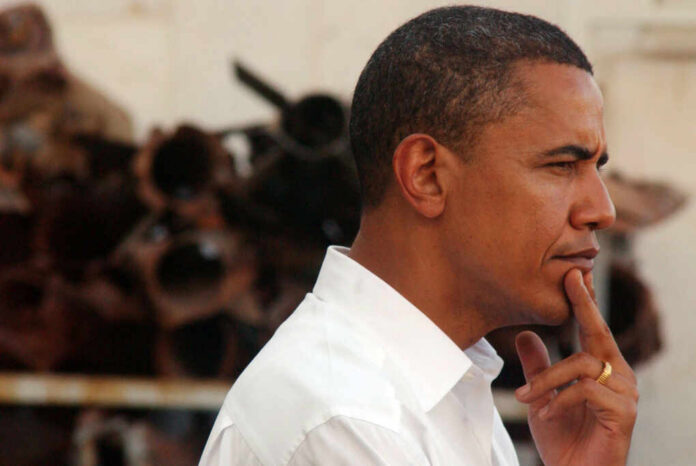
Former President Barack Obama inserted himself into a Virginia redistricting referendum that could hand Democrats four House seats and potentially flip control of Congress, raising concerns about partisan manipulation of electoral maps just months before the 2026 midterms.
Story Snapshot
- Obama released a video urging Virginia voters to approve a redistricting referendum on April 21, 2026
- The measure would grant the Democrat-controlled state legislature temporary authority to redraw congressional districts through 2030
- Democrats could flip up to four House seats, potentially transforming Virginia’s delegation from 6-5 Democratic to 10-1
- Republicans currently hold a razor-thin House majority that hangs in the balance
- Over 1 million Virginians cast early votes as polls show a narrow 52-47% margin favoring the referendum
Obama’s Eleventh-Hour Appeal
Barack Obama released a video message on April 17, 2026, exclusively shared with ABC News, calling on Virginia voters to approve a constitutional amendment that would transfer redistricting power from a nonpartisan commission to the Democrat-controlled state legislature. The former president framed the referendum as necessary to “level the playing field” against what he characterized as Republican gerrymandering. His appeal comes just days before the April 21 vote, with early voting concluding on April 18 after more than 1 million Virginians had already cast ballots. The timing and urgency of Obama’s intervention underscore the high stakes for Democrats seeking to regain congressional power.
Partisan Power Grab or Fair Redistricting
The referendum would allow Virginia’s Democratic-controlled legislature to redraw congressional maps through the 2030 elections, bypassing the current nonpartisan commission established to prevent gerrymandering. Democrats argue this is necessary to counter Republican-favoring redistricting conducted in 2025, which they claim unfairly reconfigured nine seats. However, critics see this as a transparent power grab that undermines the nonpartisan process Virginia voters previously endorsed. The proposed Democratic map would reconfigure four seats to lean left, potentially shifting the state’s congressional delegation from a narrow 6-5 Democratic advantage to a lopsided 10-1 split. This raises fundamental questions about whether elected officials should control their own district boundaries—a practice both parties have exploited nationwide.
National Implications for House Control
Virginia’s referendum carries consequences far beyond state borders. Republicans currently maintain a slim House majority, making every seat crucial for maintaining control through the 2026 midterms. If Democrats successfully flip four Virginia seats, they would significantly improve their chances of reclaiming the House, potentially blocking President Trump’s legislative agenda for the remainder of his term. A Washington Post-Schar poll from late March showed 52% of likely voters supporting the measure versus 47% opposed, indicating a competitive race. The involvement of Obama, who remains highly popular among Democratic voters, signals the national party’s recognition that Virginia could determine congressional control. This scenario exemplifies a broader concern: politicians manipulating electoral rules to serve partisan interests rather than allowing fair representation.
The Gerrymandering Cycle Continues
Virginia’s redistricting battle illustrates a persistent problem in American politics—both parties engage in gerrymandering when opportunity permits, while condemning the practice when opponents do the same. Obama himself has previously criticized gerrymandering for polarizing politics, yet now advocates for a process that would give one party unilateral control over district lines. The referendum would grant temporary legislative authority through 2030, potentially entrenching partisan maps for multiple election cycles. Similar battles have erupted in North Carolina and other states, demonstrating how redistricting has become a primary tool for political parties seeking advantage rather than fair representation. Many Americans across the political spectrum recognize this as part of a larger pattern: elected officials prioritizing partisan power over democratic principles, perpetuating a system where politicians choose their voters instead of voters choosing their representatives.
WATCH: Obama Films Desperate Video Pleading with Virginians to Approve Redistricting Referendum That Could Flip Up to Four House Seats to Democrats https://t.co/9CdvW9W2NY #gatewaypundit via @gatewaypundit
— Don Hum (@DonHum3) April 18, 2026
The Virginia referendum represents more than a local redistricting dispute—it symbolizes the ongoing struggle between partisan interests and fair electoral processes. Whether voters approve or reject the measure on April 21, the controversy highlights how both major parties have contributed to a system where political elites manipulate rules to maintain power, leaving ordinary citizens questioning whether their votes truly matter or simply serve predetermined partisan outcomes.