When a plumbing fixture becomes a constitutional fight, you’re not really arguing about faucets; you’re arguing about what “neutrality” means in public space, and whether accommodating a predictable human need counts as favoritism or simply good operations.
The Short Version
- DFW already had ablution (wudu) stations airside in Terminal D; a proposal to add a pre-security pair became a flashpoint over religion and neutrality.
- Governor Greg Abbott framed such facilities at government-owned airports as illegal favoritism and threatened funding reviews; DFW shelved the evaluation amid the pressure.
- Airport defenders argued the stations are neutral, safety- and sanitation-minded fixtures that anyone can use, akin to prayer rooms or family rooms.
- The dispute exposes a durable policy fault line: when and how a public facility may make targeted accommodations without breaching constitutional neutrality.
What was actually proposed — and what already existed
Start with the facts before the rhetoric hardened. Dallas Fort Worth International Airport has operated small ablution stations inside its international terminal since 2019. These are low, purpose-built basins that let travelers wash feet and lower legs without soaking counters and floors — a common need for observant Muslims before prayer but, as a fixture, usable by anyone who prefers not to balance on a sink. In mid-2026, the airport said it was evaluating an internal proposal to expand that service by adding one men’s and one women’s station in existing restrooms on the pre-security side of the same terminal. The plan had not been approved, and the airport emphasized no taxpayer dollars would be used if it moved forward.
That modest scope — one additional set, in the same international terminal — is central to understanding the operations case. Terminal D hosts the bulk of long-haul flights and the airport’s interfaith spaces; it is where demand for leg and foot washing predictably concentrates. The proposed basins would have addressed observed behavior (people attempting to wash in standard sinks) that leaves floors wet and counters stressed. Proponents framed the change as housekeeping and safety, not orthodoxy: keep water off the tile, reduce slips, reduce maintenance. That’s an unremarkable facilities rationale in an environment that already differentiates fixtures — bottle-fillers beside drinking fountains, adult changing tables, pet-relief areas — to steer common behaviors into safer channels.
Why it became a constitutional fight
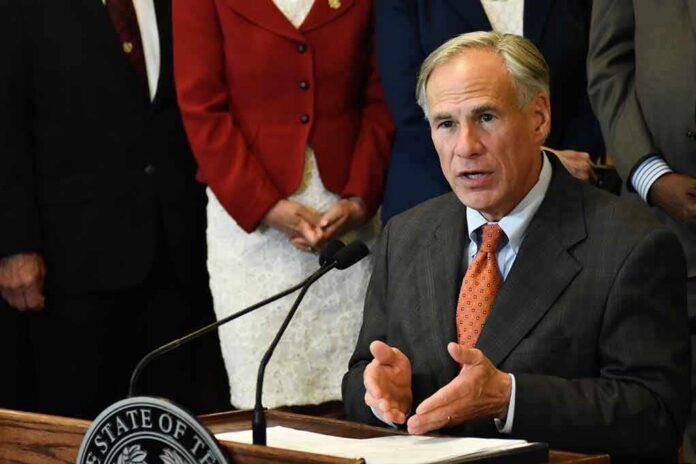
The controversy ignited when Texas Governor Greg Abbott declared such “Muslim-only” washing stations illegal at government-owned airports and threatened to review and potentially revoke state grants, referring DFW and Houston’s Bush Intercontinental to the U.S. Department of Transportation. His argument, posted publicly, was blunt: a public facility cannot favor one religion over others; building religion-specific fixtures is unconstitutional discrimination. Within hours of that escalation, DFW announced it would stop considering the expansion.
The governor’s position treats an ablution basin as a sectarian exclusivity device. The opposing view treats it as a neutral, universally accessible fixture designed around a known use case — comparable in principle to interfaith prayer rooms common at major airports, which are religion-accommodating without being religion-excluding. Civil-rights advocates in Texas called the uproar manufactured and emphasized that the proposed basins would have been available to any traveler, with a safety and sanitation justification independent of worship. In parallel, some commentators with airport-operations experience underscored the mundane risk management logic: if people will wash anyway, provide a low basin and floor drain, and the restroom stays dry and safer for everyone.
The legal lens: neutrality, accommodation, and line-drawing
Strip away the politics and you land in well-traveled legal terrain. The First Amendment forbids government endorsement of religion, but it does not require government facilities to be inhospitable to religious practice. The jurisprudential hinge is neutrality: government cannot promote or prefer a faith, yet it may allow or facilitate access on evenhanded terms. In public-accommodation analysis and human-rights guidance, “reasonable accommodation” describes modest, targeted adjustments that remove practical barriers to lawful activity without imposing undue burden or compromising the institution’s mission. That framework is familiar in workplace Title VII contexts and in facilities design where small changes can integrate minority practices into shared spaces.
Applied to an airport restroom, two questions matter. First, is the fixture open to everyone on the same terms, or is it restricted to a faith class? Second, does providing it materially advance safety, sanitation, or passenger flow — core airport functions — without creating a parallel, exclusionary space? A plumbed, low-height basin in a public restroom that anyone can use looks, on its face, neutral and functionally justified. A locked, faith-credentialed room would not. That distinction is where many facilities quietly draw the line: allow and serve, but do not segregate or compel.
Operations versus optics: why targeted fixtures attract outsized heat
Airports are full of differentiated amenities that reflect the statistical mix of travelers and the realities of long-distance travel: nursing rooms, pet-relief areas with hose bibs and drains, family restrooms with adult changing tables, bottle fillers for the surge in reusable bottles post-security. Each addresses a behavior that, unmanaged, creates mess, crowding, or risk. Ablution is no different in kind — a water-intensive routine that, if performed at a counter-height lavatory, predictably leads to puddles and strains fixtures. From an engineering standpoint, the remedy is standard: move the activity lower, put the drain where the water goes, protect the surrounding surfaces, and reduce slip hazards.
But optics carry their own gravity. A fixture associated with a minority religion is visually legible as identity, not just as design. Its low cost and physical specificity make it an easy target for claims of “special treatment,” especially in polarized climates where public space is a stage for cultural argument. The legal test doesn’t turn on social-media resonance, but administrators know that optics can trigger interventions — including funding threats — that swamp the original operational calculus.
What the DFW episode teaches policymakers
Three lessons travel beyond this airport. First, precision in scoping and messaging matters. DFW’s eventual clarifications — that the idea was under internal evaluation, akin to existing basins already in service since 2019, and not a taxpayer-funded project — arrived amid a storm, not before it. In today’s environment, small facilities changes implicated in cultural narratives require anticipatory communications: who can use it, where it will be, what problem it solves, and how it maintains neutrality.
Second, policy should be grounded in function-first neutrality. If a fixture demonstrably improves safety and sanitation for a behavior that will occur, and it is open to all users, the government’s interest is not in suppressing it because many users share a faith identity, but in ensuring deployment does not create exclusivity. That is the same logic that supports interfaith quiet rooms without theological décor and family restrooms without gatekeeping — accessibility without endorsement.
How an airport can design for accommodation without favoritism
For facilities planners navigating this terrain, design and policy details do the heavy constitutional lifting. Place ablution basins inside ordinary public restrooms, clearly open to all. Use universal pictograms that denote leg/foot washing rather than sectarian labels. Integrate with slip-resistant flooring, local drains, and ventilation exactly as you would a mop sink or shower alcove. Publish an operations memo tying the fixture to safety metrics — reductions in wet-floor slip incidents, maintenance hours, or counter replacements — and track those outcomes. If the amenity is privately funded, document the terms and ensure no donor control over access or signage. These are the quiet mechanics of neutrality: openness, context, and purpose.
Administratively, couple the fixture with a broader set of nonsectarian amenities and rules: interfaith quiet spaces that prohibit proselytizing, lactation rooms, adult changing tables, bottle fillers. The pattern signals the institution’s mission — safe, efficient travel for a plural public — rather than a tilt toward any creed. When scrutiny comes, the record shows a consistent design philosophy aimed at reducing hazards and friction, not advancing a theology.
The cost of conflating accommodation with endorsement
Threatening to defund a hub airport over a pair of plumbed basins is a political choice with operational consequences. Airports operate on thin margins of time, space, and risk; they make hundreds of small design calls to channel messy human needs into predictable, safer behaviors. If every targeted fixture is vulnerable to claims of “special treatment,” administrators will either stop solving foreseeable problems or push those problems into the shadows — where they persist as slips, cracked counters, and frictions that slow everyone down. That is not neutrality; it is avoidable inefficiency dressed as principle.
None of this inoculates an airport against genuine Establishment Clause pitfalls. A dedicated, faith-exclusive room on public property with state-funded buildout and religious iconography is a different analysis than a low basin in a public restroom. The hard work is in drawing principled lines and documenting the functional reasons for the choices on the neutral side of that line. Done well, such accommodations do not advance religion; they steward a shared space where people with different obligations can move through without injuring themselves or each other.
Due to public outrage the DFW Airport cancelled its plan for Muslim foot washing stations. GREAT! Yet Boston's Logan Airport already has 4 Muslim foot washing stations & an Islamic prayer room. Where's the outrage & the media? If it's wrong for DFW, it's wrong for Logan! #mapoli
— Jeff Kuhner (@TheKuhnerReport) August 17, 2026
Bottom line
The DFW episode did not reveal a novel constitutional principle; it revealed how quickly a minor facilities decision can be recast as favoritism when it bears visible ties to a faith practice. The underlying expert view is straightforward: a universally accessible, function-justified fixture placed within a common area is a reasonable accommodation consistent with neutrality. Conflating that with endorsement does not protect public space; it makes it less safe, less civil, and less competent at the job it exists to do.
Sources:
zerohedge.com, texastribune.org, fox4news.com, dailysignal.com, aviationpros.com, dallasexpress.com, keranews.org, x.com, facebook.com, instagram.com