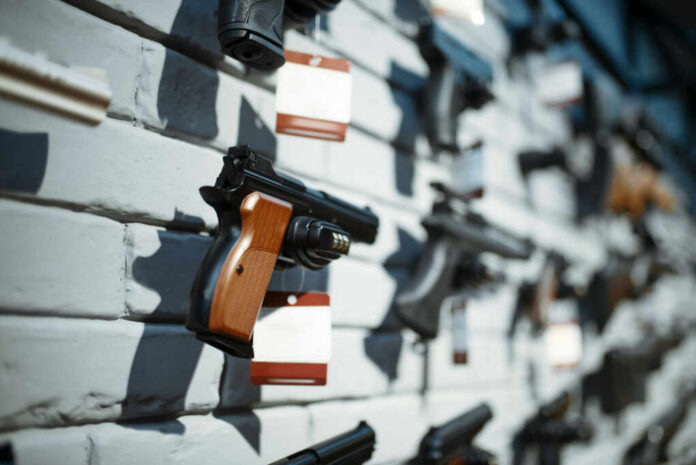
Virginia’s new “ghost gun” law doesn’t just target criminals—it pulls ordinary gun owners and home builders closer to government databases, setting up a fresh Second Amendment showdown.
Story Snapshot
- Gov. Abigail Spanberger signed four firearm-related bills on April 11, with the package taking effect July 1, 2026.
- HB40 bans manufacturing, selling, and possessing certain unserialized privately made firearms labeled “ghost guns.”
- Other new laws expand domestic-violence-related firearm restrictions and increase civil exposure for gun businesses accused of negligent practices.
- Virginia Republicans argue the package won’t stop mass violence and say lawmakers should prioritize mental health and violent offenders.
- The Trump administration’s DOJ has warned Virginia officials about potential legal action tied to Second Amendment protections.
Virginia’s gun policy shifts fast under Spanberger
Governor Abigail Spanberger signed four gun-control bills into law on April 11, 2026, marking a major change from the prior administration in Richmond. Similar proposals had been vetoed by former Gov. Glenn Youngkin, but the new governor aligned with gun-control advocates and moved the package across the finish line. The measures are scheduled to take effect July 1, creating a short runway for gun owners, dealers, and law enforcement to interpret compliance requirements.
Former state senator Adam Ebbin, long associated with pushing a “ghost gun” ban, is part of the political backstory because he resigned earlier this year to join the governor’s Cannabis Control Authority. That personnel detail may sound like inside baseball, but it highlights how quickly legislative priorities can shift when the executive branch changes hands. For frustrated voters, it also reinforces a recurring concern: big policy changes often move faster than the public can realistically digest.
HB40 targets unserialized firearms and parts-kit builds
The centerpiece bill, HB40, bans the manufacture, sale, and possession of so-called untraceable firearms that lack serial numbers. In practical terms, the law is aimed at privately made firearms, including some produced through 3D printing or assembled from parts kits. Supporters argue the policy closes a tracking gap for police investigations. Critics counter that “ghost gun” is a political label for common home-building practices, and they question whether criminals will comply.
One near-term impact described in the available reporting is that making, assembling, or importing an unserialized firearm becomes a criminal offense once the law takes effect. Another compliance issue involves serialization through a Federal Firearms Licensee, which functionally means more interaction with regulated channels and records. From a limited-government perspective, this is where the debate gets hottest: when “public safety” is achieved by expanding monitoring and paperwork, law-abiding citizens often feel like the default suspects.
Domestic-violence provisions expand restrictions and transfer options
Spanberger’s package also included bills focused on domestic violence and protective orders. HB19 is described as closing an “intimate partner loophole,” while HB93 addresses how firearms may be transferred when someone is subject to a protective order or convicted of misdemeanor domestic violence. These provisions are frequently framed as narrow, victim-protection measures rather than broad gun control. Even so, critics typically worry about due process, especially when protective orders can involve fast-moving court actions.
Manufacturer and dealer liability raises stakes for the gun industry
Another signed bill, HB21, increases accountability for firearm manufacturers and dealers by targeting “negligent business practices.” Backers argue this deters irresponsible sales channels and helps communities respond to harm. Opponents see a familiar strategy: use litigation pressure and compliance risk to squeeze lawful commerce, even when the actors being regulated are not the ones committing violent crimes. The policy question is whether liability standards will be clearly defined or invite broad, expensive legal fishing expeditions.
Assault-weapon bill deadline and a looming federal court fight
As of April 13, Spanberger had not yet acted on HB217, a proposal that would ban assault-style weapons and magazines holding more than 15 rounds. Virginia procedure described in reporting indicates the bill could become law automatically if the governor takes no action by a late-night deadline. That uncertainty matters because it affects what the July 1 landscape looks like for gun owners and retailers—and because it compounds the sense that major restrictions can arrive through procedural momentum rather than open persuasion.
Virginia Governor Signs Law Banning 'Ghost Guns' https://t.co/uTzrK2wC90
— zerohedge (@zerohedge) April 14, 2026
The legal endgame may be decided outside Virginia. The Trump administration’s Department of Justice has warned state officials about potential legal action connected to Second Amendment protections. The reports do not fully detail the DOJ’s legal theory, so the strongest conclusion for now is simply this: a state-level crackdown on privately made firearms is on a collision course with a federal government that is signaling it may test the limits in court. That fight will shape how far states can go.
Sources:
Ghost guns, manufacturer liability, loopholes targeted in new VA firearm laws
SB881 (Virginia Legislative Information System) — Bill Text