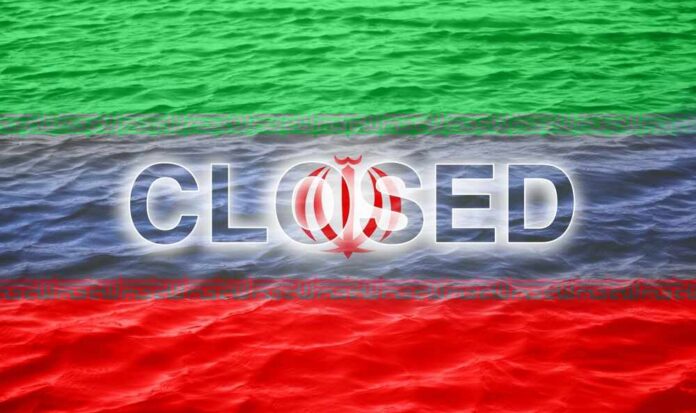
U.S. Navy launches blockade of Iranian ports and Strait of Hormuz at 10 a.m. ET today, thrusting America into direct confrontation with a regime long defiant of international norms.
Story Snapshot
- U.S. Central Command confirms blockade operations began precisely at 10:00 a.m. Eastern Time on April 13, 2026, targeting all vessels entering or leaving Iranian ports.
- President Trump ordered the action immediately after U.S.-Iran peace talks collapsed in Pakistan without agreement, ending a fragile two-week ceasefire.
- Non-Iranian ships can still transit the Strait, but U.S. Navy will interdict vessels paying tolls to Iran and destroy Iranian mines, prioritizing free global passage.
- Oil prices surged sharply as markets fear supply disruptions through the chokepoint carrying 20% of world energy supplies.
- Iran threatens retaliation, calling U.S. moves piracy, heightening risks of wider conflict.
Blockade Launch After Failed Diplomacy
President Trump announced the blockade on Sunday following the breakdown of high-level negotiations in Pakistan. U.S. Central Command formalized the start for Monday at 10:00 a.m. ET. The action responds to Iran’s effective closure of the Strait of Hormuz after U.S.-Israeli strikes initiated conflict on February 28. This two-week ceasefire now hangs in the balance as maritime restrictions escalate. Trump emphasized preventing Iran from collecting tolls and profiting from oil sales selectively. The U.S. Navy enforces impartially against vessels of all nations bound for Iranian ports or coastal areas.
Operational Details and Strategic Focus
U.S. Central Command specified that ships traveling between non-Iranian ports may transit the Strait of Hormuz freely. Navy forces interdict every vessel in international waters that paid tolls to Iran. Trump directed mine-clearing operations against devices Iran allegedly placed in the waterway. This targeted approach distinguishes the U.S. blockade from total closure, aiming to restore navigation without broader disruption. Allied nations may join, though specifics remain undisclosed. Such measures uphold American interests in secure sea lanes vital to global trade.
Rocky Weitz, Professor of Maritime Practice at Tufts University, analyzed expected outcomes, highlighting enforcement challenges in this critical chokepoint. The impartial stance frames the blockade as maritime security, not aggression, aligning with principles of limited but firm action against threats to freedom of navigation.
Iranian Threats and Market Fallout
Iran’s Revolutionary Guard labeled U.S. actions piracy and vowed to retain Strait control, threatening to trap violating vessels. This rhetoric echoes Iran’s history of leveraging the waterway in conflicts. Global energy markets reacted swiftly, with oil prices rising sharply on fears of supply interruptions. The Strait handles 20% of world energy, amplifying economic stakes for oil-dependent economies and consumers worldwide.
The Strait of Hormuz Blockade Has Officially Begunhttps://t.co/gIUbgbLDjm
Like my writing? Check out my first book: Gaslight, How the Democratic Party Lost Its Mind to Radical Leftism and Abuses Voters in the Process, available now on Amazon! https://t.co/xq9qOueHUl pic.twitter.com/XoTLws4Cdz
— Amy Curtis (@RantyAmyCurtis) April 13, 2026
Short-term risks include direct U.S.-Iran naval clashes and shipping uncertainty. Long-term, the blockade could spark regional instability, disrupt commerce, and undermine the ceasefire. International shipping firms and regional nations face heightened vulnerabilities. Both conservatives and liberals share frustration with elite-driven foreign entanglements that burden American families with higher energy costs and insecurity, diverging from founding principles of avoiding endless wars while defending liberty.
Sources:
Navy Times: US Navy to blockade Strait of Hormuz effective immediately, Trump says