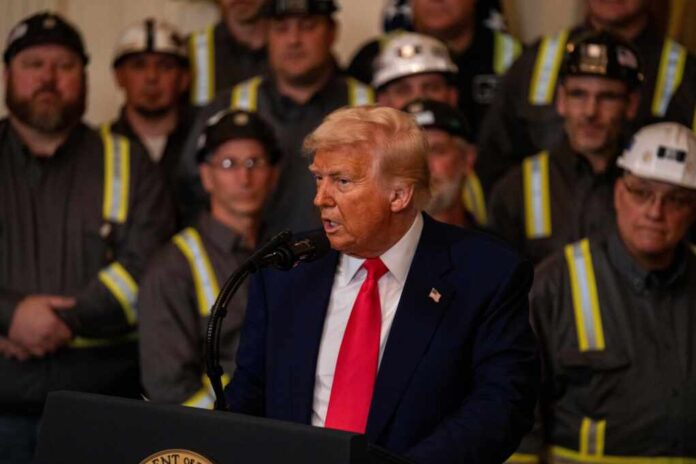
President Donald Trump has declared his intention to send National Guard troops to Chicago, setting up a fierce confrontation with Governor J.B. Pritzker and Mayor Brandon Johnson, who both oppose the deployment.
At a Glance
- President Trump announced on September 2, 2025, that he intends to deploy National Guard troops to Chicago, saying “we’re going in,” though offering no timeline.
- Illinois Governor J.B. Pritzker called Trump’s remarks “unhinged” and refused to request federal assistance, accusing the president of staging a political spectacle.
- Chicago Mayor Brandon Johnson echoed opposition, urging a focus on addressing illegal gun trafficking rather than militarizing the city’s streets.
- The move mirrors Trump’s previous federal interventions in cities like Washington, D.C., which faced legal pushback and questions under the Posse Comitatus Act.
Federal Defiance Versus Local Resistance
President Trump’s announcement on September 2, 2025, shredded the usual cooperative tone of federal‑state law enforcement efforts. At a White House press event, Trump said unequivocally, “Well, we’re going in. I didn’t say when,” framing the intervention as a constitutional duty to protect American citizens.
But Governor Pritzker wasted no time firing back, condemning Trump’s comments as “unhinged” and categorically rejecting any unilateral national‑guard deployment. He accused the president of turning public safety into a “reality game show,” and affirmed, “No, I will not call the president asking him to send troops.”
Watch now: ‘We’re Going In’: Trump Threatens to Send National Guard to Chicago
Mayor Johnson aligned with the governor, arguing that the true roots of Chicago’s violence lie in the inflow of firearms from out‑of‑state—and that martial posturing won’t solve it. City officials are bracing for legal action if Trump attempts to proceed without state approval.
A Broader Strategy—and Legal Minefield
This episode in Chicago is far from isolated. It follows Trump’s recent federalization of law enforcement in D.C., invoking emergency powers to take control of the Metropolitan Police Department and deploy the National Guard—moves that triggered local lawsuits and sprawling protests.
Legal scholars are raising alarms over the absence of precedent and statutory grounding. The Posse Comitatus Act generally prohibits active-duty military from enforcing domestic laws—a hurdle Trump could attempt to bypass by federalizing state Guard units or citing emergency authority.
Local and state leaders—including Pritzker—have described Trump’s action as an abuse of power, warning that turning cities into political battlegrounds under the guise of crime-fighting undermines democratic governance.
Sources