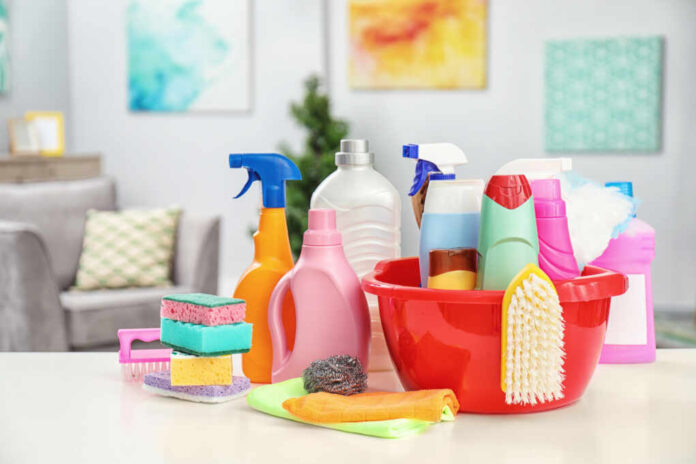
Everyday disinfectants and common furniture chemicals, long thought safe, are now revealed to be silently attacking vital brain cells, raising alarms about a hidden environmental assault on family health. A groundbreaking Case Western study, published in late 2025, screened 1,800 chemicals and identified quaternary ammonium compounds (QACs) in cleaners and organophosphate flame retardants (OPFRs) in furniture as top threats to oligodendrocytes, the cells that insulate nerves essential for brain function. The findings, supported by other 2025 research linking widespread exposures to rising rates of conditions like Multiple Sclerosis, autism, and Parkinson’s, demand immediate scrutiny of lax regulations and a shift toward family-first policy reforms.
Story Highlights
- Case Western study reveals QACs in cleaners and OPFRs in furniture damage oligodendrocytes, linking to MS, autism, and nerve disorders.
- Post-COVID disinfectant surge exposes families to brain-damaging QACs, with lab tests showing cell death in mice and human models.
- PFAS, PCBs, and TCE in water, cookware, and air double MS risk and tie to Parkinson’s, per 2025 studies.
- Children and low-income households are hit hardest, demanding President Trump’s administration prioritize safer products over industry profits.
Case Western Breakthrough Exposes Household Chemical Dangers
Researchers at Case Western Reserve University screened 1,800 chemicals and identified quaternary ammonium compounds (QACs) in disinfectants and personal care products, plus organophosphate flame retardants (OPFRs) in furniture and electronics, as top threats to oligodendrocytes. These cells insulate nerves essential for brain function. Lab experiments on human cells, brain organoids, and mice demonstrated QACs trigger cell death while OPFRs halt maturation. National data correlates higher exposure with worse child neurological outcomes like autism spectrum disorders.
Paul Tesar, director of the Institute for Glial Sciences, called these chemicals a previously unrecognized risk. Erin Cohn, lead author, highlighted oligodendrocytes’ unique vulnerability compared to neurons. The study, published in Nature Neuroscience in late 2025, urges scrutiny of products Americans rely on daily for cleanliness and safety, especially after COVID-driven disinfectant overuse.
They are killing us!
Common household chemicals linked to increased risk of serious neurological condition https://t.co/FZB6DfJKzo #FoxNews
— Dr. J Brown (@DrJBrown5) December 23, 2025
Historical Chemical Exposures Fuel Rising Neurological Crises
Household chemicals trace back decades, with PCBs banned in 1979 yet persisting in the environment, and PFAS originating in 1940s industrial uses like non-stick cookware. QACs proliferated pre-COVID but exploded during the pandemic, while OPFRs replaced earlier banned flame retardants. Neurological diseases like MS, autism, Alzheimer’s, and Parkinson’s affect millions, with environmental factors accounting for 80-90% of cases beyond genetics. U.S. preschoolers face widespread exposure to brain-disrupting substances.
Precedents include pesticides linking to neurodevelopmental disorders and PFAS causing anxiety and memory issues in animal studies. TCE, a solvent regulated since the 1970s, crosses the blood-brain barrier and lingers in air and groundwater. These patterns underscore how unchecked chemicals erode family health, contrasting President Trump’s push for deregulation that prioritizes American vitality over bureaucratic overreach.
2025 Studies Confirm Widespread Risks Across Chemicals
October 2025 Neurology journal analysis of Medicare data nationwide linked ambient TCE exposure to Parkinson’s disease. Uppsala University’s study found PFAS and PCBs double MS odds at high blood levels, stressing chemical mixtures and gene interactions. UC Davis July 2025 research exposed U.S. preschoolers to hormone-disrupting chemicals harming brain and immune development. Kim Kultima emphasized complex environment-inheritance dynamics, while Dr. Marc Siegel noted environmental triggers as likely despite correlation limits.
No new bans followed these findings, leaving families vulnerable. Industry groups like the American Chemistry Council defend PFAS minimization without addressing oligodendrocyte damage directly. President Trump’s EPA, building on 2024 PFAS water limits, faces calls for action to shield citizens from these pervasive threats without stifling innovation.
Impacts Demand Family-First Policy Reforms
Children risk autism, IQ loss, and ADHD; adults face MS, Parkinson’s, and Alzheimer’s, with low-income communities suffering from old furniture and polluted water. Short-term, awareness drives product avoidance and labeling; long-term, regulations could cut disease rates and spur industry reformulation in disinfectants, electronics, and furnishings. Economic costs include EPA testing and liability for manufacturers, fueling political pressure for “forever chemical” accountability.
President Trump’s America First agenda aligns with curbing these risks through targeted oversight, rejecting globalist leniency that burdened families under prior administrations. Longitudinal human data gaps persist, but lab and population evidence demands vigilance to protect conservative values of strong families and personal responsibility from invisible chemical erosion.
Watch: Brain Damage from Everyday Cleaners? What Science Reveals
Sources:
Exploring the link between household chemicals and neurological disorders
Common household chemicals pose new threat to brain health
Common household chemicals linked to increased risk of serious neurological condition
Researchers find forever chemicals impact the developing male brain
AAN Press Release on TCE-Parkinson’s
Barrow study: Ambient TCE exposure suggests link to Parkinson’s disease risk nationwide
New study: US preschoolers exposed to broad range of potentially harmful chemicals
Behind the Numbers: Linking Pesticides to Neurological Disorders