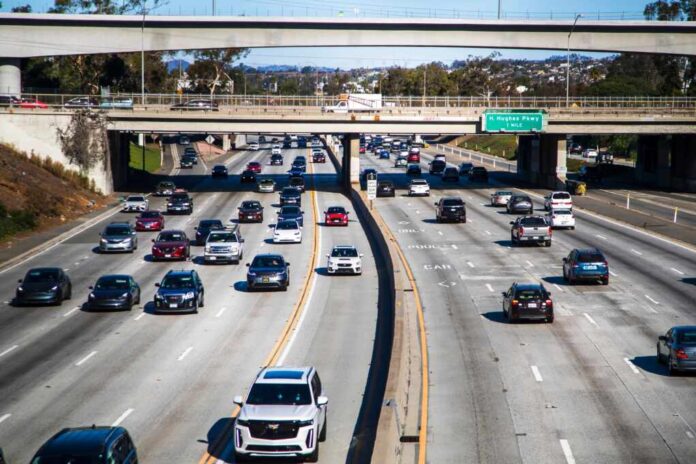
On January 1, 2026, California’s Assembly Bill 1014 ushered in significant changes to the state’s speed limit regulations. This law allows Caltrans and local agencies to set speed limits 5–10 mph below the traditional 85th percentile rule. The change is aimed at improving safety in school zones, business districts, and high-injury corridors. However, this shift has raised concerns about potential government overreach and its impact on driver autonomy and local economies.
Story Highlights
- California’s AB 1014 allows speed limits below traditional levels for safety.
- New rules target school zones and high-risk areas to reduce crashes.
- Grace period introduced for modest speeding violations.
California’s New Speed Limit Law: A Change for Safety or Overreach?
On January 1, 2026, California’s Assembly Bill 1014 ushered in significant changes to the state’s speed limit regulations. This law allows Caltrans and local agencies to set speed limits 5–10 mph below the traditional 85th percentile rule. The change is aimed at improving safety in school zones, business districts, and high-injury corridors. However, this shift has raised concerns about potential government overreach and its impact on driver autonomy and local economies.
Major change to California highway speed limit law comes into effect https://t.co/LjfD2WPPoB pic.twitter.com/VJWBGw9Vrb
— New York Post (@nypost) January 1, 2026
AB 1014 and Its Implications for Road Safety
The law represents a departure from the longstanding “85th percentile rule,” which set speed limits based on the speeds of 85% of drivers under free-flow conditions. While this method aimed to reflect natural driving behaviors, it often resulted in high speeds on roads with significant pedestrian traffic and accident risks. By reducing speed limits in targeted areas, AB 1014 seeks to lower crash rates and improve safety for vulnerable road users. Critics argue that such measures could lead to increased government control over individual freedoms.
Grace Period and Enforcement Challenges
To ease the transition, a 30-day grace period will be provided for modest speeding violations, allowing drivers to adjust to the new limits without immediate penalties. This approach aligns with broader safety initiatives such as the Vision Zero campaign, which aims to eliminate traffic fatalities. Despite these intentions, there are concerns about the potential for confusion during the grace period and the effectiveness of enforcement strategies.
Furthermore, the law’s implementation requires a revised California Manual for Setting Speed Limits by March 2026. This manual will guide local agencies in applying the new criteria, ensuring consistency statewide. However, questions remain about the adequacy of these guidelines in addressing diverse local conditions.
The broader implications of AB 1014 extend to economic and political spheres. While the initial grace period may reduce fines temporarily, the expansion of automated enforcement could lead to increased penalties and revenue for the state. Politically, the law represents a contentious shift towards data-driven traffic safety policies, which may face challenges from those advocating for individual freedoms and limited government intervention.
Watch the report: New California traffic laws take effect Jan. 1: What drivers need to know
Sources:
- Safer Speed Limits and a New State Manual: Assembly Bill 1014 Updates California’s Speed Limit Setting Process
- Speed Limits to Self‑Driving: 2026 California Traffic Safety Laws Every Driver and Worker Should Know