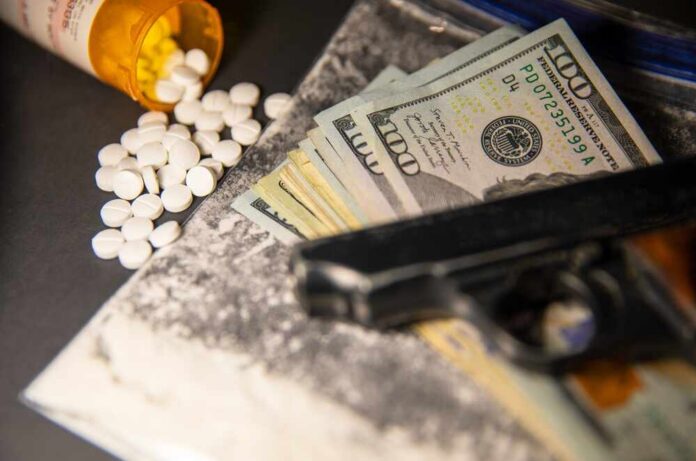
Nearly 3,000 pounds of meth tied to five Mexican nationals was seized in rural California—another reminder of what “catch-and-release” and weak enforcement can unleash on American communities.
Story Snapshot
- A federal grand jury indicted five Mexican nationals on a 10-count case tied to a clandestine meth lab in Calaveras County, California.
- Investigators seized roughly 3,000 pounds of methamphetamine, along with additional drugs, marijuana plants, firearms, ammunition, and magazines at multiple locations.
- Authorities say the operation stretched from remote Valley Springs to distribution-linked sites in Turlock and Modesto.
- The defendants’ immigration histories include prior removals and 2021 entries with notices to appear, highlighting enforcement gaps cited by DOJ leadership.
Grand Jury Indictment Targets Large-Scale Meth Production Network
Federal prosecutors say five Mexican nationals—Luis Reyna Carrillo, Mariana Vanessa Mendoza Camacho, Juan Jesus Manriquez Diaz, Alvaro Rosales, and Manuel Juan Madrid Perez—were indicted in a 10-count case returned March 18 or 19, 2026. The charges include conspiracy to manufacture and distribute methamphetamine, possession with intent to distribute, and firearms-related offenses. Authorities tied the indictment to a clandestine lab discovered in Calaveras County, a rural area north and east of the Bay Area.
Investigators say the February 27 search warrants covered three locations: Valley Springs in Calaveras County, plus Turlock and Modesto in Stanislaus County. Across those sites, authorities reported seizing nearly 3,000 pounds of methamphetamine—about 1,430 pounds processed and roughly 1,270 pounds partially processed. They also reported additional drugs, marijuana, and weapons. The scale matters because it suggests an industrial operation, not a small local lab, with capacity to flood multiple communities quickly.
What the Seizures Show: Rural “Cover,” Urban Distribution, and Weapons
Law enforcement described a setup that used isolation to hide production while maintaining links to more populated corridors for storage and distribution. In Turlock, authorities reported finding about 300 pounds of methamphetamine ready for trafficking. In Modesto, authorities reported seizing processed marijuana and approximately 1,900 marijuana plants. Officials also reported firearms, ammunition, and magazines—details that often become central at sentencing, especially when combined with alleged drug manufacturing and prior criminal histories.
The firearms allegations are not a footnote; they are part of why federal cases like this carry steep penalty ranges. Prosecutors allege specific firearms-related violations, including possession by a noncitizen and possession by a felon, alongside drug counts. Federal statutes can impose mandatory minimums and enhancements when guns are connected to trafficking. The sources available do not include defense responses or court filings beyond the reporting summaries, so the public only has the government’s outline at this stage.
Immigration Histories Raise Hard Questions About Enforcement Gaps
Authorities also highlighted immigration histories that, at minimum, underscore how repeat entry and unresolved immigration proceedings can intersect with public safety threats. Carrillo and Camacho entered the U.S. in March 2021 and received notices to appear. Diaz was reportedly removed in 2018, and Rosales was reportedly removed in 2024. No details on how the defendants re-entered or how each individual’s status changed over time, limiting definitive conclusions.
Attorney General Pamela Bondi used the case to argue that prior “open-border policies” left Americans exposed to organized criminal activity. That framing matches a broader DOJ posture in 2026: targeting cartel-linked trafficking and prioritizing cases where illegal entry or re-entry is part of the story. The sources do not independently verify cartel direction or name a cartel running this specific lab, but the emphasis on transnational sourcing and logistics reflects how meth supply chains commonly operate.
How This Fits the Wider DOJ Push Against Cartels and Transnational Drug Rings
The meth lab case also lands amid other federal announcements targeting transnational narcotics networks, including cases alleging distribution of meth and fentanyl by Mexican nationals and gang-affiliated groups. One DOJ release out of Minnesota describes charges against members of a Sureños-affiliated transnational criminal organization, pairing trafficking allegations with a clear warning message from federal prosecutors. That broader pattern helps explain why the California case is being messaged as more than a local bust: it is being treated as part of a national strategy.
https://twitter.com/FoxNews/status/2034811095597347031
For communities in Northern California, the immediate takeaway is straightforward: a huge quantity of meth and related contraband was intercepted before it could be sold. For voters focused on constitutional order and public safety, the political takeaway is also clear: when enforcement is inconsistent—whether at the border, in immigration court backlogs, or in interior removal priorities—criminal organizations can exploit that chaos. The case is still pretrial, and guilt must be proven in court, but the seizure numbers alone show why aggressive enforcement remains a top voter concern.
Sources:
Five Mexican nationals indicted after massive meth lab bust uncovers enormous quantities of drugs
Five Mexican nationals indicted after massive meth lab bust uncovers enormous quantities of drugs
Five Members of Sureños-Affiliated Transnational Criminal Organization Charged with Narcotics
DEA Press Releases (English filter parameter included)