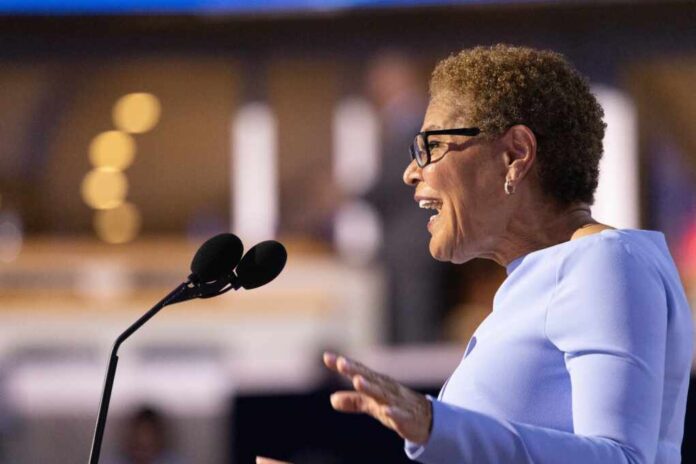
A fire that started on January 1, 2025, and reignited days later to become one of Los Angeles’ deadliest, has now sparked a major political controversy. Allegations of a cover-up involving Mayor Karen Bass and the Los Angeles Fire Department (LAFD) over the Palisades Fire response are drawing intense scrutiny. Critics claim key facts about the fire’s origin, the department’s readiness, and critical operational failures—including hydrant issues—were intentionally misrepresented or withheld, contributing to the catastrophic outcome. The controversy highlights significant challenges in communication, infrastructure, and disaster management within the urban environment.
Story Snapshot
- Allegations of a cover-up in the Palisades Fire response involve Mayor Karen Bass and the LAFD.
- The fire, which started on January 1, 2025, became one of the deadliest in Los Angeles history.
- Federal complaints allege an Uber driver set the initial fire, which was believed to be extinguished but reignited.
- Operational failures and infrastructure stresses are central to the controversy.
Allegations of Mismanagement and Cover-up
The allegations surrounding the handling of the Palisades Fire response by Mayor Karen Bass and the LAFD have been labeled as a politicized interpretation of events. Critics argue that key facts about the fire’s origin and the department’s operational readiness were misrepresented or withheld, contributing to the severe outcomes. The fire, which initially ignited on January 1, 2025, was believed to be extinguished but reignited on January 7, leading to catastrophic damage and loss of life.
The controversy has drawn attention due to the operational challenges and communication gaps revealed in the aftermath. LAFD’s After-Action Review Report highlights significant infrastructure stresses, including hydrant failures, which compounded the challenges faced by firefighters. While the federal complaint against the alleged arsonist provides a detailed timeline, it raises questions about local suppression choices and water infrastructure vulnerabilities.
Mayor Karen Bass and LAFD Caught Red Handed in COVER UP of Palisades Fire Response https://t.co/6AgQR4dN6j
— Ethan Perks (@Ethn5745Michael) December 25, 2025
Impact of the Palisades Fire
The Palisades Fire resulted in over 23,000 acres burned, more than 6,800 structures destroyed, and at least 12 fatalities. The fire’s rapid spread was exacerbated by extreme wind conditions and existing drought, which had left the region dry and vulnerable. The fire’s impact on high-value residential areas has led to significant political pressure on local leaders to account for the delayed emergency response and the infrastructure’s inability to meet the demands of such an extreme event.
In response to the fire, city leaders have outlined commitments to improve inter-agency coordination and enhance water system redundancy. The event has also spurred discussions on urban infrastructure resilience and the risks of “winter wildfires,” as evidenced by the Palisades Fire’s off-season occurrence.
Future Considerations and Lessons Learned
The Palisades Fire serves as a case study in emergency response and the complexities of managing natural disasters within urban environments. As investigations and analyses continue, the focus remains on addressing the shortcomings revealed by the fire. The discourse around the fire emphasizes the need for improved communication protocols and infrastructure planning to mitigate the risks posed by future wildfires in the region.
The scrutiny of the fire response highlights the ongoing challenges faced by municipal authorities in balancing transparency with the need for effective disaster management. As the city continues to rebuild and recover, the lessons learned from the Palisades Fire will be crucial in shaping future policies and preparedness strategies.
Sources:
Timeline: Two fateful hours that planted the seeds of destruction in Pacific Palisades – Los Angeles Times
Wikipedia: Palisades Fire
It is a cover-up. Investigative reporting from the @latimes exposes the redrafting of the official After-Action Report of the Los Angeles Fire Department
LAFD After Action Review Report