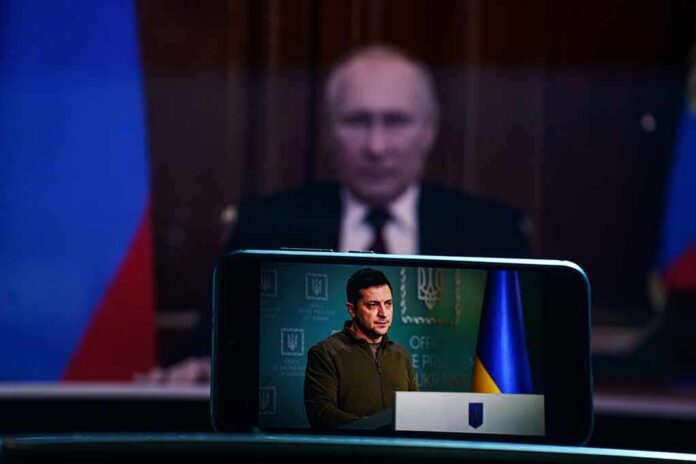
Vladimir Putin said Russia will halt ceasefire talks with Ukraine after new strikes on the Crimean Bridge, vowing a “much more painful” response.
Story Snapshot
- Putin tied a pause in maritime and energy ceasefire talks to bridge strikes.
- Russia’s president warned of a “much more painful” retaliation than the damage done.
- Ukraine cast the bridge as a military route and claimed a planned operation hit it.
- The bridge’s strategic and symbolic roles raise pressure on both sides.
Putin Links Ceasefire Freeze To Crimean Bridge Strikes
At a November 19 press event in China, Putin said Russia discussed limited maritime and energy ceasefires but would not make agreements after the latest strikes on the Crimean Bridge. He stated that Russia would respond to the attacks. His comments followed reports of damage that disrupted traffic on the span connecting Russia to occupied Crimea. The public stance sets a clear condition: no talks while the bridge is under attack, and retaliation is coming.
Putin also said any response would be “much more painful” than the bridge damage. Russian outlets and international media carried those remarks widely. The statement did not name targets, timing, or legal basis for the response. It did, however, make the Kremlin’s red line plain. Moscow is framing the bridge as a civilian route now, though independent verification of current cargo use was not provided in the coverage cited.
Ukraine’s Claim Of Responsibility And Rationale
Ukrainian President Volodymyr Zelenskyy said the operation was a planned strike using domestically made drones and missiles. He called it the seventh stage of a weeks-long effort and described it as a response to Russian attacks on Ukrainian infrastructure. Ukraine’s Security Service and analysts have called the bridge a key military logistics route, not only a civilian link, pointing to its role in moving Russian forces and supplies to Crimea.
Kyiv-based reporting said the bridge is the fastest route to reinforce Crimea, which would explain repeated attempts to hit it. That portrayal challenges Moscow’s claim that the span is outside military use today. The competing narratives matter because they shape how each side justifies future actions. They also set the stage for whether any narrow ceasefires, like sea lanes or energy grids, can survive battlefield shocks.
Why This Matters For Energy, Food, And Risk Of Escalation
Bridge strikes and ceasefire freezes can spill into global markets. In past episodes, limited deals in the Black Sea helped steady grain shipments and fertilizer flows. Talks over maritime and energy pauses aimed to lower civilian harm and price spikes. Putin’s public refusal to continue those talks after the bridge attack signals higher near-term risk for trade, energy grids, and coastal shipping if the conflict widens again.
Putin regarding the Ukrainian (actually UK/NATO) strike on the Kerch Bridge:
“Our response will be much more painful than what Kyiv did to the Crimean Bridge. I want everybody to know that.” pic.twitter.com/55QI2ivdt7
— Professor Iratus Genium (@PGenium) November 19, 2026
The bridge is both a supply artery and a political symbol tied to Russia’s hold on Crimea. That mix raises pressure on leaders to act forcefully after visible damage. It also raises the chance of overreaction that hits power plants, ports, or industry. Independent confirmation of every battlefield claim remains limited in fast-moving conditions, but the direct quotes from leaders set the policy reality: no talks now, and retaliation likely to follow.
Sources:
hromadske.ua, themoscowtimes.com, ukrinform.net, independent.co.uk, cnn.com, yahoo.com