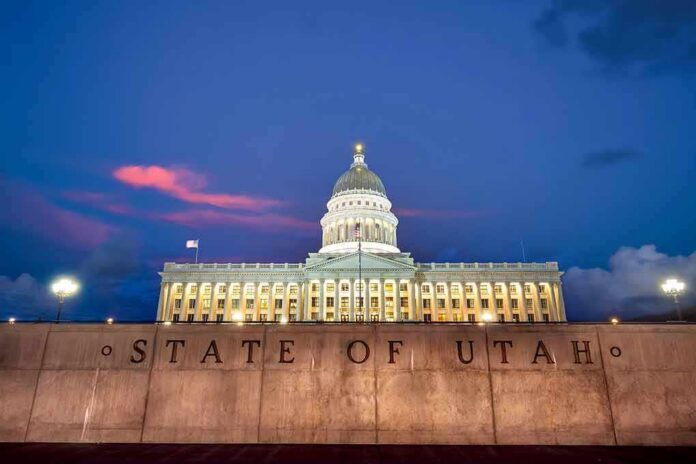
The family of Charlie Kirk has filed a formal notice of claim accusing Utah officials of preventable security failures before his fatal campus shooting.
Story Snapshot
- The notice preserves wrongful-death claims against Utah Valley University and the State of Utah before a lawsuit.
- The filing alleges poor risk assessment, thin security, and no real-time monitoring at the outdoor venue.
- The family says officials were warned about rooftop access risks before the event and failed to act.
- Utah officials say six campus police officers and Kirk’s private security staffed the event and found no credible threats.
What The Family Filed And Why It Matters
Family attorneys sent a formal notice of wrongful-death and survivor claims on September 9 to the Utah Office of the Attorney General. That filing is a required step under Utah law before a lawsuit can be filed. The notice preserves claims against Utah Valley University, its former president Astrid Tuminez, the campus police chief Jeffrey Long, and the State of Utah. Media outlets obtained and summarized the notice, which frames the death as the result of preventable security failures.
The filing argues the university did not run a meaningful risk assessment for an outdoor event with a high-profile speaker. It claims the school did not assign enough security and failed to monitor the site in real time. Attorneys say those choices left Kirk exposed to a rooftop shot. The notice uses strong language like “reckless decisions” and ties liability to specific leaders and departments at the university and the state, signaling a clear legal target.
Alleged Rooftop Warnings And Open-Campus Constraints
The notice says Turning Point USA passed along a tip before the event about student access to rooftops near the speaking area. It claims officials did not fix the issue or secure those sightlines. One outlet reported a promise to cover rooftops that was not carried out, though no written proof is public in the current record. The campus setting was an open courtyard on an open campus, which officials stress limited screening options like metal detectors.
Utah officials have outlined the security that was in place as a baseline for judging adequacy. The Utah Department of Public Safety said Utah Valley University Police Department staffed six officers for the event. Kirk also had a private security detail. University representatives said campus police coordinated with Kirk’s team and judged there were no credible threats at the time. Those points will shape the defense argument on reasonableness and foreseeability.
What We Know, What We Do Not, And Why It Resonates Nationally
Key operational records are not public here. The full notice text, any attached exhibits, the written security plan, camera logs, and internal emails have not been released. That gap limits outside review of claims about real-time monitoring, rooftop control, and specific promises. The university announced an independent third-party security review and said it would release findings, and it moved to hire more officers and security managers after the shooting.
This fight fits a common legal pattern after violent acts at schools and venues. Courts often center on foreseeability. Plaintiffs tend to win if they prove officials had clear notice of a specific risk and failed to act. Defendants often win if judges view the attacker’s act as an independent crime or find the security plan was reasonable under the facts. The outcome will likely turn on proof of rooftop warnings and who owned that risk on event day.
Why This Hits A Nerve Across Politics
Many Americans on the left and right see a system that protects itself first. They hear “no credible threats” and then see a high-profile guest shot from a roof. They hear about reviews and new hires only after a tragedy. The family’s notice presses a simple test: who knew what, when, and what did they do about it. Transparent release of the full plan, logs, and the third-party review would help rebuild trust and show whether officials met their duty.
Sources:
thegatewaypundit.com, abc4.com, abcnews.com, nbcnews.com, x.com, washingtonpost.com, ingest.abcnews.com