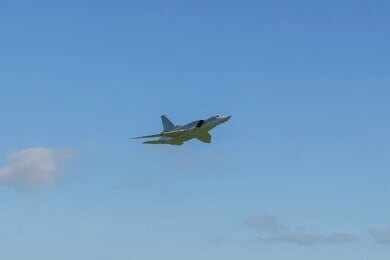
A nuclear‑capable Russian bomber just fell out of the sky in Siberia during a “routine” training flight, raising old questions about how much we can trust what any government says when its war machine breaks down.
Story Snapshot
- Russian officials say a Tu-22M3 nuclear‑capable bomber crashed in Siberia during a routine training flight after a technical malfunction.
- Moscow claims the crew ejected safely and there were no weapons on board, but outside investigators have not verified those details yet.
- Video of the crash shows the bomber in a steep nose‑down dive before it slams into the ground and explodes.
- The incident fits a wider pattern of aging military hardware, thin transparency, and rising accident risks in major powers’ armed forces.
What happened in the Siberia bomber crash
Russian media and officials report that a Tu-22M3 long-range strategic bomber crashed in Russia’s Irkutsk region during what they call a routine training flight near the town of Svirsk.[2] The Defense Ministry says the plane was descending to land when it suddenly went down and hit the ground, sending up a tall column of smoke that was caught on video and shared online.[2] Local reports place the crash near the village of Kamenka on the banks of the Angara River.[3]
Regional governor Igor Kobzev says all four crew members ejected from the bomber before impact and were taken to the hospital with non‑life‑threatening injuries, matching the Defense Ministry’s claim that the pilots survived.[4] Officials also insist the aircraft was not carrying warheads or any other weapons when it crashed, and that there was no damage on the ground.[2] That matters, because the Tu-22M3 is nuclear‑capable and has been used in combat in Ukraine and Syria, so any loss draws global attention.[5]
Russia’s explanation and what we actually know
Russian authorities are blaming the crash on some kind of “technical malfunction,” with local officials pointing to possible engine failure as the likely cause, though they admit the investigation is still underway and not final.[1] Outside coverage of the crash repeats that line but stresses that no formal accident report, flight recorder data, or independent inspection has been released yet, so the exact cause remains unproven.[1] For now, all hard facts about the failure come from the same Defense Ministry that has incentives to protect its image.
Footage analyzed by aviation outlets shows the Tu-22M3 in a very steep nose‑down dive before it hits the ground and explodes, which is consistent with a serious loss of control or power but does not, by itself, reveal why it failed.[3] Aviation tracking reports say the bomber was on approach to land during a planned training mission, not flying a combat sortie, which aligns with Russia’s official story about the flight profile.[1] What remains unclear is whether poor maintenance, pilot error, or deeper design problems played any role, because none of that data is public.
Why this crash fits a bigger and more troubling pattern
This Tu-22M3 loss is not an isolated event; it fits into a long list of Russian military aviation accidents in recent years, many of them also blamed early on “technical malfunctions” during routine flights. That pattern includes past Tu-22M3 crashes and other bombers and transports going down after reported mechanical failures, often involving older Soviet‑era aircraft that are being pushed hard during wartime operations. When governments lean on aging hardware while under budget pressure and sanctions, the risk of deadly mistakes can rise for both their own crews and civilians below.
A long-range supersonic missile carrier-bomber Tu-22M3 crashed in the area of Svirsk, Irkutsk region, Russia. The crew managed to eject.
The cause of the crash is under investigation. pic.twitter.com/lI22InyqdX
— Threat Disseminator Hub Team (@nickngei2) June 16, 2026
Americans watching this story from home may see a mirror they do not like. Russian officials rush out a simple explanation, keep most details locked up, and count on people being too busy or too tired to ask follow‑up questions. Our own government often does the same thing after defense accidents, budget blowouts, or intelligence failures, whether under Republicans or Democrats. Many citizens on both the right and the left now suspect that the real priority is protecting careers and contracts, not telling taxpayers the full truth.
What this says about great‑power militaries and the “deep state”
Major powers like Russia and the United States pour billions into high‑end bombers, missiles, and drones, yet often fly them longer than they were meant to last while cutting corners we are not allowed to see. When a crash like this happens, official statements from Moscow, Washington, or any capital start to sound the same: it was a routine flight, some technical issue, no outside interference, trust the experts. For citizens who already doubt the “deep state,” those stock phrases land as spin, not reassurance, no matter which flag is on the tail.
People across the political spectrum in America are tired of that script. Conservatives see bloated military and foreign‑aid budgets while our border, factories, and power grid feel neglected. Liberals see endless defense spending while social programs and basic services get squeezed. A Russian nuclear‑capable bomber crashing in peacetime training should remind us of one shared concern: when elites run massive war machines with little transparency, regular people, at home and abroad, end up paying the price when something finally goes wrong.
Sources:
[1] YouTube – Russian Tu-22M3 bomber crashes during training flight in Siberia
[2] Web – Tu-22M3 Strategic Bomber Crashes During Training Flight in Irkutsk …
[3] Web – Russian Tu-22M3 Nuclear-Capable Bomber Crashes in Irkutsk …
[4] Web – Russian strategic bomber plane crashes in Siberia, Ifx cites defense …
[5] Web – Footage captured the Tu-22M3’s steep descent moments before the …