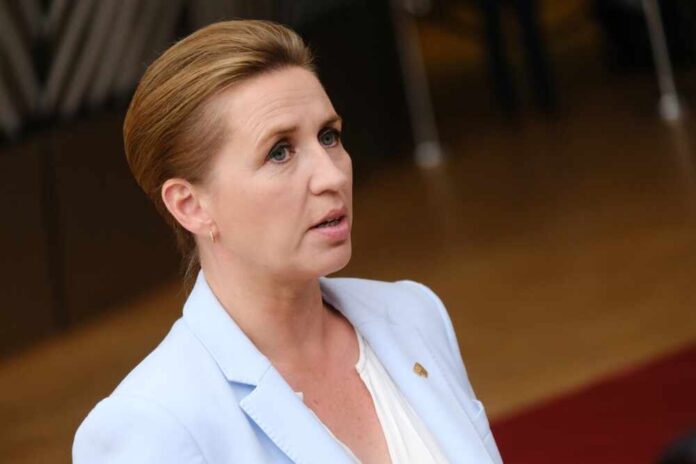
Denmark just triggered a snap national election after President Trump’s Greenland pressure exposed how quickly “allied” politics can turn into a high-stakes sovereignty fight.
Story Snapshot
- Danish Prime Minister Mette Frederiksen called an early parliamentary election for March 24, 2026, months ahead of schedule.
- The move follows a prolonged U.S.-Denmark standoff tied to Trump’s stated interest in acquiring Greenland for national security reasons.
- Trump’s tariff threat against Denmark and other European countries raised the economic stakes of the dispute.
- A February Arctic security framework announcement eased immediate tensions, but Danish leaders signaled the underlying issue remains unresolved.
Denmark’s Snap Election: What Happened and Why It Matters
Denmark’s government announced on February 26, 2026, that voters will head to the polls on March 24 for an early parliamentary election. The timing is unusual because Denmark was not required to hold elections yet, and it arrives amid diplomatic strain with Washington. The dispute centers on Greenland, a semiautonomous Danish territory, and President Trump’s public push for U.S. control tied to Arctic security concerns.
Denmark’s parliament has 179 seats, with 175 elected in Denmark proper and two seats each representing Greenland and the Faroe Islands. The last general election was held November 1, 2022, producing a cross-bloc coalition led by Frederiksen’s Social Democrats alongside the Liberal Party and the Moderate Party. A snap election forces those coalition partners to defend their record under pressure, while giving voters a chance to weigh leadership on security and sovereignty.
Trump’s Greenland Focus Reshaped the Political Calendar
Reporting describes Trump’s push for Greenland as a dominant challenge for Danish leaders over the past year, culminating in a January 2026 tariff threat aimed at Denmark and other European countries. Trump’s stated rationale was national security, pointing to Russia and China’s growing interest in the Arctic. That framing connects Greenland to broader strategic competition, including sea routes, basing, surveillance, and the balance of power in the far north.
Inside Denmark, the standoff spilled beyond elite diplomacy. Coverage described protests and consumer boycotts of American goods in some supermarkets, signaling that the issue activated public emotion as well as political calculation. Frederiksen’s government repeatedly emphasized that Danish sovereignty is non-negotiable, while acknowledging that the relationship with the U.S. now requires clearer boundaries. For conservative American readers, the key point is that national interest—economic leverage included—still drives outcomes, even among NATO partners.
The “Framework Deal” Eased the Moment, Not the Dispute
In February, Trump announced a framework deal aimed at bolstering Arctic security after talks involving NATO’s secretary general at the World Economic Forum in Davos. That announcement reduced the immediate sense of crisis and opened technical talks among U.S., Danish, and Greenlandic officials. Even so, Frederiksen publicly rejected the idea that the conflict is simply over, telling a security conference earlier in February that Trump’s desire remained unchanged.
This is the part many voters miss when global institutions promise stability: frameworks can start cooperation, but they do not settle core political claims. Denmark’s leaders appear to be using the election to secure a stronger domestic mandate to manage Washington, Brussels, and Arctic defense realities simultaneously. The same reporting indicates Denmark is debating greater defense readiness, including winter preparedness and additional military procurement, reflecting how geopolitical competition tends to accelerate spending and planning.
What Danish Voters Will Decide—and What the U.S. Should Watch
Campaigning began quickly after the election call, with political advertising appearing and opposition activists mobilizing in Copenhagen. Analysts quoted in coverage said the Greenland crisis contributed to a noticeable “bump” in support for the governing parties, even if Trump himself may stay more in the background of day-to-day campaigning. That dynamic makes sense: foreign pressure can unify a public behind incumbents, at least temporarily, if voters perceive steady crisis management.
The election will shape Denmark’s posture on European defense, Arctic policy, and how hard Copenhagen leans into “strategic autonomy” from the United States. Frederiksen told parliament that Europeans must “stand on our own two feet,” define their relationship with the U.S., and “arm” themselves to secure peace. Those statements highlight a tension conservatives recognize: allies often want American protection while also seeking distance from American influence. The vote will show how much that message resonates.
For Americans tracking the Arctic, the practical takeaway is that Greenland’s strategic value is no longer theoretical, and U.S. leverage can produce real political aftershocks abroad. At the same time, the available reporting does not establish final terms or outcomes beyond the framework and ongoing technical talks, so predictions about the end state would be premature. What is clear is that the March 24 election will be a referendum on how Denmark navigates sovereignty, alliance politics, and security risk in a faster-changing world.
Sources:
Denmark calls early election in March after Trump-Greenland standoff
Denmark calls an early election following tense US-Greenland standoff
Danish prime minister calls a parliamentary election on March 24