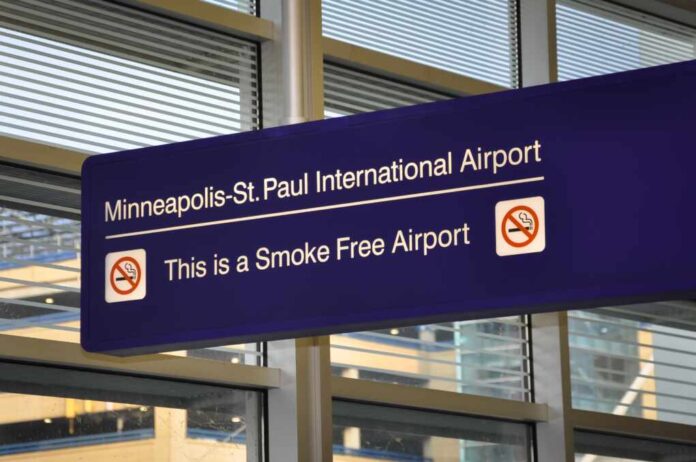
Federal investigators are probing nearly $700 million in cash discovered by TSA in passenger luggage at Minneapolis-St. Paul International Airport over several years. Much of the money is linked to Somali travelers heading to East Africa, and authorities suspect it is part of a massive, unlicensed money transfer operation that may have violated federal banking laws and terrorism financing regulations, leading to investigations by the FBI and Department of Homeland Security.
Story Highlights
- TSA flagged nearly $700 million in cash found in passenger luggage over multiple years at Minneapolis airport.
- FBI and DHS investigating potential unlicensed money transmitting business and terrorism financing violations.
- Significant portion of cash linked to Somali nationals and Somali-American travelers heading to East Africa.
- Investigation focuses on informal hawala networks operating outside regulated banking system.
Massive Cash Discovery Triggers Federal Investigation
Transportation Security Administration screeners at Minneapolis-St. Paul International Airport detected an unprecedented $700 million in cash hidden in passenger luggage over several years. The FBI and Department of Homeland Security launched investigations after recognizing patterns linking much of this money to travelers of Somali origin. Federal authorities suspect the cash movements represent unlicensed money transmitting operations that circumvent U.S. banking regulations and reporting requirements designed to prevent money laundering and terrorism financing.
The scale of cash movement through MSP far exceeds typical airport seizures nationwide. TSA agents discovered the money in both checked and carry-on luggage, often vacuum-sealed or concealed in other ways. While carrying large amounts of cash isn’t illegal, federal law requires travelers to declare currency exceeding $10,000 when crossing international borders. Failure to comply can result in asset forfeiture and criminal charges under the Bank Secrecy Act.
“The Minneapolis Airport [TSA was flagging daily] 99 times larger than all the cash that was…going out of New York's JFK”@TSA flagged nearly $700 million in cash leaving the Minneapolis airport in the last two years, believed to be tied to Somali immigrants and their couriers pic.twitter.com/EmYRJ9D6Rt
— Just the News (@JustTheNews) January 8, 2026
Somali Community Networks Under Scrutiny
Minnesota hosts one of America’s largest Somali diaspora communities, with families regularly sending remittances to relatives in Somalia, Kenya, and neighboring East African countries. Traditional banking channels often refuse to serve these remittance corridors due to anti-money laundering compliance risks, forcing communities to rely on informal hawala networks. These traditional Islamic banking systems operate through trusted brokers who collect cash locally and arrange overseas distribution through international partners.
Federal investigators are examining whether these informal money transfer systems violate U.S. laws requiring money service businesses to register, maintain records, and report suspicious activities. The investigation also explores potential connections to designated terrorist organizations like al-Shabaab, which operates in Somalia and has previously exploited remittance channels. However, authorities acknowledge that most Somali remittances represent legitimate family support rather than criminal activity.
National Security Implications Raise Alarm
The Minneapolis case highlights broader tensions between diaspora financial needs and national security enforcement. Post-9/11 regulations created strict oversight of money flows to conflict regions, leading major banks to close accounts serving Somali money transmitters. This “de-risking” pushed more transactions into informal cash-based channels, ironically reducing government visibility into fund movements while harming legitimate remittance users.
Conservative security advocates view the $700 million discovery as evidence that current immigration and financial oversight policies fail to protect American interests. The investigation underscores how lenient enforcement of existing laws creates opportunities for potential terrorism financing and money laundering schemes to operate with impunity. This case demands stronger border security measures and stricter compliance with federal reporting requirements to prevent similar violations.
Watch the report: $700M Cash Leaving Minneapolis + ICE Shooting Sparks New Flashpoint in Minnesota
Sources:
- Feds probe nearly $700 millions in suspected Somali cash in luggage leaving Minneapolis airport
- TSA Flags Millions in Somali Cash That Left the Minneapolis Airport – Intercessors for America