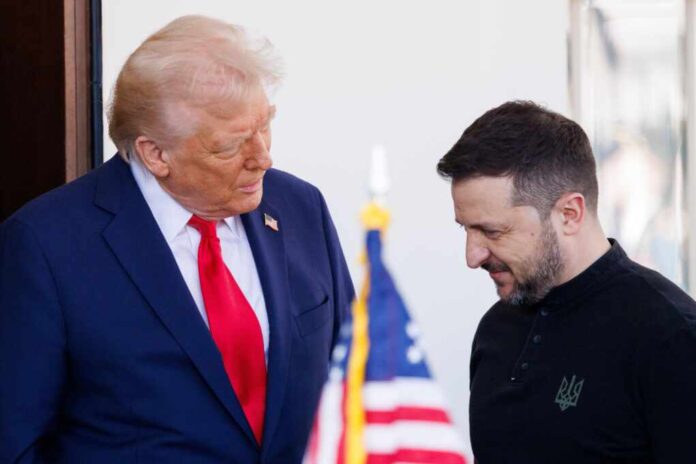
A new peace proposal aimed at resolving the conflict in Ukraine has ignited a major political firestorm, with critics swiftly claiming the plan aligns suspiciously with Russian interests. This controversy has raised deep concerns among American patriots and is fueling a national debate over the integrity of U.S. foreign policy and the extent of Russian influence. This article explores the origins of the controversial proposal, the specific allegations of its alignment with Moscow’s goals, and the ensuing political scrutiny faced by the administration.
Story Highlights
- The Trump administration faces criticism over a proposed Ukraine peace plan.
- Critics argue the plan mirrors Russian objectives, sparking debate on its origins.
- The administration denies claims, asserting the plan’s independence from Moscow.
- Ongoing scrutiny highlights tensions in U.S. foreign policy and Russian relations.
Trump Administration Denies Russian Influence in Peace Plan
During the tumultuous period of 2016-2017, discussions emerged regarding a Ukraine peace plan allegedly involving Trump associates and Russian intermediaries. Critics quickly pointed out that the plan seemed to favor Russian interests, including territorial concessions by Ukraine and military restrictions. Despite these allegations, the Trump administration publicly rejected claims that the peace proposal was a mere ‘wish list’ from Moscow, asserting that their intentions were independent and focused on resolving the conflict with integrity.
The controversy surrounding this plan was amplified by the broader context of alleged Russian interference in U.S. politics during the 2016 elections. The plan’s content was seen as aligning with longstanding Russian goals, putting the administration under intense scrutiny. This has led to debates about the integrity of U.S. foreign policy decisions and raised questions about the administration’s relationship with Moscow.
⚡️Ukraine – Reviewing The Peace Plan
A newly revealed 28-point “peace plan” under the Trump administration has alarmed analysts. Economist Timothy Ash argues it heavily favors Russia, leaves Ukraine vulnerable, and risks destabilizing Europe. pic.twitter.com/qJWUTIeovP
— The Global Monitor (@theglobal4u) November 21, 2025
Background and Historical Context
The conflict between Russia and Ukraine has its roots in 2014 when Russia annexed Crimea and supported separatist movements in Eastern Ukraine. Despite international efforts like the Minsk agreements, these initiatives failed to address core issues, leading to ongoing instability. The Trump administration’s approach to this conflict was scrutinized heavily, with critics alleging a pattern of policies that seemed to be more aligned with Russian interests rather than supporting Ukrainian sovereignty and independence.
Previous U.S. administrations had taken a more adversarial stance towards Russia’s actions in Ukraine, making the Trump administration’s proposed plan particularly controversial. The plan’s emergence in 2016 was met with skepticism, especially given the concurrent investigations into Russian interference in U.S. political affairs.
Impact and Specialist Opinions
The short-term implications of this controversy included an erosion of trust in American foreign policy decision-making and increased political polarization. In the long-term, there remains skepticism about the independence of U.S. policy towards Russia and Ukraine. This has implications for future diplomatic efforts and the stability of transatlantic alliances.
Policy analysts, such as those from the Center for American Progress, have argued that the plan risked undermining Ukraine’s sovereignty and might have emboldened Russian aggression. While some viewed the plan as a pragmatic approach to conflict resolution, others saw it as a concession to Russian demands, which could set a dangerous precedent of legitimizing territorial changes by force.
Watch the report: Trump BOWS DOWN to Putin? US Backed Russia’s ‘WISH LIST’? Rubio makes Surprising Claim on Ukraine Plan
Sources:
- Center for American Progress, “Trump’s 28-Point Peace Plan Will Invite the Next War”
- Trump Live Updates: U.S. Officials Are Expected to Press On With Ukraine Talks – The New York Times
- The case against — and for — Trump’s plan for Ukraine peace deal – The Washington Post
- Trump hints at ‘big progress’ in Ukraine talks as Zelensky warns against giving away territory – BBC News