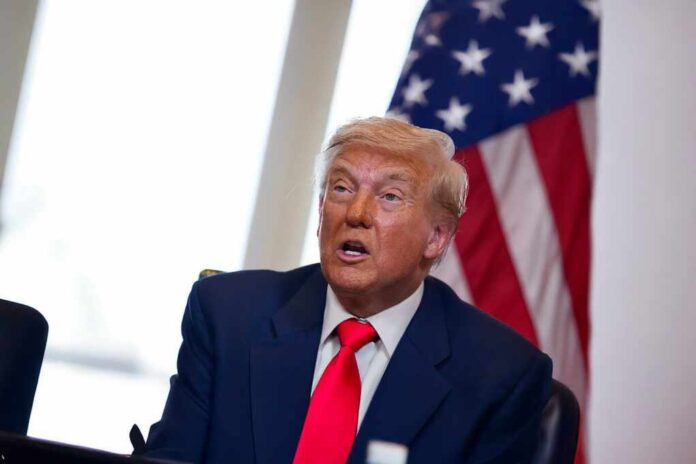
President Trump’s sweeping 2025 executive orders are designed to fundamentally reshape federal civil rights enforcement, declaring that decades of Diversity, Equity, and Inclusion (DEI) and racial preferences have unfairly disadvantaged white Americans. His administration’s new policy centers on “colorblind law” and individual merit, immediately dismantling federal DEI programs, affirmative action in contracting, and the use of disparate-impact rules across agencies, universities, and federal contractors.
Story Snapsho
- Trump’s 2025 executive orders dismantle federal DEI, affirmative action, and disparate-impact rules in the name of colorblind law and merit.
- Civil-rights groups claim these changes “gut protections,” but many conservatives see long-overdue relief from reverse discrimination.
- Federal contractors, universities, and agencies must scrap race-preference regimes or risk being accused of illegal discrimination.
- Legal fights are brewing over whether colorblind enforcement restores or rewrites the meaning of civil rights in America.
Trump Recasts Civil Rights Around Merit And Colorblind Law
When President Trump told the country that civil-rights policies had left white Americans “very badly treated,” he was not just sounding off; he was rolling out a coordinated plan to remake how Washington thinks about discrimination. His signature order, “Ending Illegal Discrimination and Restoring Merit-Based Opportunity,” directs every federal agency to end DEI mandates, racial preferences, and long-running affirmative-action requirements in contracting, all under the banner of returning to colorblind equality and individual merit.
For many conservative voters who watched DEI trainings shame employees or saw promotions tied to racial quotas instead of performance, Trump’s framing resonates. The administration argues that DEI and some civil-rights enforcement tools morphed into a new system of preference that punished high performers and especially white and some Asian Americans. Officials now claim they are “protecting civil rights of all Americans” by recasting DEI-heavy practices themselves as illegal discrimination and putting merit back at the center of government and contractor hiring
Trump Says Civil Rights Led to White People Being ‘Very Badly Treated’
President Trump’s comments were a blunt distillation of his adm’s racial politics, which rest on the belief that white people have become the real victims of discrimination in America.https://t.co/ZmOdT4kkwM— Bit~3~Snake!!! (@Bit3Snake) January 12, 2026
From DEI Crackdown To Ending Disparate-Impact Rules
The immediate headline was Trump’s move to terminate DEI and affirmative-action programs in federal contracting, but the deeper legal shift targets something most Americans never hear about: disparate-impact liability. For decades, bureaucrats could label a policy discriminatory if it produced different racial outcomes, even without proof of intent. Trump’s April 2025 order tells agencies to eliminate this theory “to the maximum degree possible,” undoing regulations that let statistics substitute for evidence of deliberate bias.
Conservatives have long argued that disparate-impact rules invited social engineering and soft quotas, forcing businesses, schools, and housing providers to chase racial numbers instead of applying neutral standards. With the Justice Department now freezing many new civil-rights cases and agencies instructed to rewrite their rulebooks, the federal government is stepping back from policing statistical “disparities” as discrimination in itself. Supporters see this as restoring common sense: equal rules for everyone, not outcome-balancing that fuels resentment and undermines trust in institutions.
Trump said civil rights have led to white people being “very badly treated.” – YouTube
Universities, Contractors, And Agencies Face A New Legal Reality
Trump’s program also reaches deep into universities and big employers that built sprawling DEI bureaucracies after 2020. Following the Supreme Court decision striking down race-based admissions, the administration is pressing schools to purge race-conscious practices in admissions, scholarships, and staffing, warning that “equity” schemes could themselves trigger federal investigations. Federal contractors now must attest they are not engaging in “illegal DEI,” sending an unmistakable signal that race preferences, affinity-based quotas, and similar programs are legal liabilities, not badges of virtue.
Inside Washington, cabinet departments from Education to Defense are under orders to end funding for what the White House calls “discriminatory equity ideology.” That means internal trainings, grant conditions, and guidance that previously pushed institutions toward identity politics are being scrapped or rewritten. For a conservative base tired of paying tax dollars to be lectured about privilege, this marks a cultural as well as legal shift. Yet it also forces countless HR offices, university counsels, and nonprofit boards to quickly re-evaluate whether long-standing diversity plans now risk being labeled discriminatory by the very government that once encouraged them.
Clash With Civil-Rights Groups And What Comes Next
Civil-rights advocacy organizations are sounding the alarm, accusing Trump of “reversing the fundamental meaning of civil rights in America” and dismantling protections for minorities, immigrants, women, and LGBTQ+ people. They argue that tools like disparate impact and language-access guidance were vital for exposing hidden barriers in housing, voting, education, and healthcare. Now, with DOJ pulling back and regulations being repealed or rewritten, these groups warn that discrimination will become harder to prove and easier for powerful institutions to deny, even when patterns look obvious on the ground.
For readers who care about ordered liberty and equal treatment under law, the stakes are high. Trump is betting that most Americans, especially those exhausted by years of “woke” lectures and quota politics, prefer a civil-rights regime that treats group-based preferences as the problem, not the solution. Courts will now decide how far this colorblind revolution can go, and whether new rules hold up against legal challenges. In the meantime, the practical message is clear: in Trump’s Washington, merit is back, and DEI is on defense.
Watch: Trump Administration Urges White Men to File Workplace Discrimination Claims | Firstpost America
Sources:
Fact Sheet: President Donald J. Trump Protects Civil Rights and Merit-Based Opportunity by Ending Illegal DEI
Civil Rights Under Attack: The Trump Administration’s Rollbacks
President Trump Signs Executive Order Seeking to End Disparate Impact Discrimination
President Trump Ends Affirmative Action Requirements for Government Contractors
Trump Administration Axes Disparate Impact Civil Rights Protections
Withdrawal From Wasteful, Ineffective, or Harmful International Organizations
Joint Statement on the Situation in Venezuela
Trump Administration’s Attempts to Dismantle Language Access Do Not Erase Civil Rights Law
Analyzing President Trump’s Executive Order “Ending Illegal Discrimination and Restoring Merit-Based Opportunity”